
New Old Stock


Campagnolo Veloce (BR9-VL8) Black NOS/NIB Classic Dual Pivot Brake Calipers
£48.75 £65.00
✓ Original parts - produced in the 2000s
✓ New old stock & still in the original packaging!
✓ Lightweight for the era - just 342 grams
✓ Worldwide shipping
Campagnolo Veloce brake calipers, hailing from Italy and in production during the 2000s. Made from aluminium and weighing in at 342 grams - pretty lightweight for a pair of brake calipers at that time. A fine choice for keeping your classic bike authentic, but also great for any other compatible bike.
OVERVIEW
Model ID - BR9-VL8
Production Era - 2000s
Country - Italian
Material - Aluminium
Weight - 342 g
Stock Code - D-CP121C
*New old stock items may have marks from storage over the years, and as we often have multiples they can vary from piece to piece, but they are always genuine new & unused items.
TECHNICAL INFO
Caliper Type - Dual Pivot (Side Pull)
Front Brake Drop - 40 mm - 52 mm
Rear Brake Drop - 40 mm - 52 mm
Brake Fixing - Recessed Allen Key
-
▼SHIPPING, TAXES & RETURNS
-
We've been safely sending orders around the world since 2010. Orders are carefully packed, sent with tracking & insurance, and normally collected around midday on Tuesdays and Fridays. Larger items may occasionally require an extra day or two to prepare.
We accept returns, please notify us within 14 days and ensure the item arrives back with us no later than 30 days after the order was received.
EU orders under €150 (excluding shipping) - import VAT and the new €3 customs duty are paid as part of your order, so there's nothing further to pay on delivery.
EU orders over €150 (excluding shipping) - import fees are payable to the carrier before delivery, with nothing collected at checkout.
USA orders - import fees are collected at checkout for all orders to the USA, so there won’t be any surprise charges when your order arrives.
Other international orders - local import fees may apply and are not collected by us. Please check your country's import rules before purchasing.
-
▼HELP SECTION
-
Caliper Type - side pull calipers (single or dual pivot) require nothing more than a brake hole to fix them to as the cable feeds straight into one of the arms, whereas centre pull calipers require a brazed-on or fitted cable hanger to allow the cable to be pulled from the centre.
Brake Drop - measured from the centre of the brake mounting hole to the centre of the wheel rim in a straight line. Your measurement must be well within the range of the caliper's given brake drop to allow the brakes to have good contact with the rim's braking surface.
Brake Fixing - this refers to the way the brake is secured to the bike. For recessed allen key fixings the hole to the rear of the the fork crown/brake bridge should measure around 8mm, allowing the allen key head to be inserted and fixed to the brake bolt. External hex nut fixings require a hole of around 6mm, the hex nut is fixed to the protruding part of the brake bolt.
For a more detailed guide on getting the right brakes check out our journal.


Campagnolo Veloce (CS01-EC0936) NOS/NIB Classic 9 Speed Ultra-Drive 13-26 Cassette
£76.50 £90.00
✓ Original part - produced in the 2000s
✓ New old stock & still in the original packaging!
✓ Worldwide shipping
Campagnolo Veloce cassette, hailing from Italy and in production during the 2000s. Made from steel and weighing in at 299 grams. A fine choice for keeping your classic bike authentic, but also great for any other compatible bike.
OVERVIEW
Model ID - CS01-EC0936
Production Era - 2000s
Country - Italian
Material - Steel
Weight - 299 g
Stock Code - D-CAS50C
*New old stock items may have marks from storage over the years, and as we often have multiples they can vary from piece to piece, but they are always genuine new & unused items.
TECHNICAL INFO
Speed - 9 Speed
Spline Pattern - Campagnolo Ultra-Drive (Exa-Drive)
Range - 13-26
-
▼SHIPPING, TAXES & RETURNS
-
We've been safely sending orders around the world since 2010. Orders are carefully packed, sent with tracking & insurance, and normally collected around midday on Tuesdays and Fridays. Larger items may occasionally require an extra day or two to prepare.
We accept returns, please notify us within 14 days and ensure the item arrives back with us no later than 30 days after the order was received.
EU orders under €150 (excluding shipping) - import VAT and the new €3 customs duty are paid as part of your order, so there's nothing further to pay on delivery.
EU orders over €150 (excluding shipping) - import fees are payable to the carrier before delivery, with nothing collected at checkout.
USA orders - import fees are collected at checkout for all orders to the USA, so there won’t be any surprise charges when your order arrives.
Other international orders - local import fees may apply and are not collected by us. Please check your country's import rules before purchasing.
-
▼HELP SECTION
-
Speed - the number of cogs on the cassette.
Spline Pattern - the shape of the cogs where they slide on to the freehub body, this must match the spline pattern of your hub to able to fit. In the 1980s Shimano introduced Uniglide cassettes that share the same spline pattern as their now standard Hyperglide, but the smallest sprocket threads on to the hub to secure it rather than using a conventional lockring, these will only fit hubs with a threaded section on the outside of the freehub body.
Range - the number of teeth on the smalles and largest cogs, this gives you an indication of how hard or easy the gearing will be, the lower the number the harder the gears. The tooth count of the cogs inbetween are usually evenly spaced, ie: a 6 speed 14-24 freewheel would likely have cog sizes 14, 16, 18, 20, 22 & 24.


Campagnolo Veloce (FC-VL242) 10 Speed NOS/NIB Classic 42T 135 BCD Inner Chainring
£49.50 £55.00
✓ Original part - produced in the 2000s
✓ New old stock & still in the original packaging!
✓ Worldwide shipping
Campagnolo Veloce chainring, hailing from Italy and in production during the 2000s. Made from aluminium and weighing in at 49 grams. A fine choice for keeping your classic bike authentic, but also great for any other compatible bike too.
OVERVIEW
Model ID - FC-VL242
Production Era - 2000s
Country - Italian
Material - Aluminium
Weight - 49 g
Stock Code - D-CRI38C
*New old stock items may have marks from storage over the years, and as we often have multiples they can vary from piece to piece, but they are always genuine new & unused items.
TECHNICAL INFO
Tooth Count - 42
Between Adjacent Bolt Holes - 79.4 mm
BCD - 135 BCD
Bolt Count - 5-Bolt
Chain Width - 3/32" (Standard)
Intended Speed* - 10 Speed
-
▼SHIPPING, TAXES & RETURNS
-
We've been safely sending orders around the world since 2010. Orders are carefully packed, sent with tracking & insurance, and normally collected around midday on Tuesdays and Fridays. Larger items may occasionally require an extra day or two to prepare.
We accept returns, please notify us within 14 days and ensure the item arrives back with us no later than 30 days after the order was received.
EU orders under €150 (excluding shipping) - import VAT and the new €3 customs duty are paid as part of your order, so there's nothing further to pay on delivery.
EU orders over €150 (excluding shipping) - import fees are payable to the carrier before delivery, with nothing collected at checkout.
USA orders - import fees are collected at checkout for all orders to the USA, so there won’t be any surprise charges when your order arrives.
Other international orders - local import fees may apply and are not collected by us. Please check your country's import rules before purchasing.
-
▼HELP SECTION
-
Tooth Count - the number of teeth on the chainring, the higher the number the harder the gear.
Between Adjacent Bolt Holes - the measurement from the centre of any bolt hole to the centre of an adjacent one, if this measurement is the same as that of your crankset and the bolt count is the same then the chainring should fit.
BCD - stands for Bolt Circle Diameter (sometimes referred to as PCD - Pitch Circle Diameter) and is the technical way to determine whether the chainring fits your crankset. To calculate, multiply the distance between adjacent holes (in mm) by 1.709 (you’ll likely need to round the resulting number up or down a little).
Bolt Count - the number of bolts securing the chainring to the chainset. As with the BCD, this must be the same as your chainset.
Chain Width - 3/32” is the standard width for double and triple chainsets, wherease 1/8” chainrings are only found on single ring chainsets, generally for track / singlespeed use and can only be used with a wide 1/8" chain.
Intended Speed - the number of cogs at the back the chainring was designed to be used with. We refer to it as ‘intended’ speed as most double and triple chainsets will actually work with different speeds than originally intended, but the further away you get from the intended speed the more likely you are to experience minor setup issues. The exception being some chainrings intended for 10 speed use or higher, with these it’s better to stick to the intended speed.


Campagnolo Veloce (FD-41FVL) NOS Classic Clamp-On 28.6 mm Front Derailleur / Mech
£60.00
✓ Original part - produced in the 1990s
✓ New old stock! Still unused after all these years
✓ Worldwide shipping
Campagnolo Veloce front derailleur / mech, hailing from Italy and in production during the 1990s (yet still new & unused after all this time!). Made from aluminium/steel and weighing in at 107 grams. A fine choice for keeping your classic bike authentic, but also great for any other compatible bike too.
OVERVIEW
Model ID - FD-41FVL
Production Era - 1990s
Country - Italian
Material - Aluminium / Steel
Weight - 107 g
Stock Code - D-FM119C
*New old stock items may have marks from storage over the years, and as we often have multiples they can vary from piece to piece, but they are always genuine new & unused items.
TECHNICAL INFO
Chainset Type - Double
Frame Fixing - Clamp-On 28.6 mm
Pull Type - Bottom Pull
*See help section.
-
▼SHIPPING, TAXES & RETURNS
-
We've been safely sending orders around the world since 2010. Orders are carefully packed, sent with tracking & insurance, and normally collected around midday on Tuesdays and Fridays. Larger items may occasionally require an extra day or two to prepare.
We accept returns, please notify us within 14 days and ensure the item arrives back with us no later than 30 days after the order was received.
EU orders under €150 (excluding shipping) - import VAT and the new €3 customs duty are paid as part of your order, so there's nothing further to pay on delivery.
EU orders over €150 (excluding shipping) - import fees are payable to the carrier before delivery, with nothing collected at checkout.
USA orders - import fees are collected at checkout for all orders to the USA, so there won’t be any surprise charges when your order arrives.
Other international orders - local import fees may apply and are not collected by us. Please check your country's import rules before purchasing.
-
▼HELP SECTION
-
Chainset Type - the number of chainrings the derailleur was designed to work with. ‘Double’ derailleurs are actually capable of working on ‘triple’ chainsets but they may struggle when shifting, especially if there’s a big step down from the middle to inner ring, so it’s better to match these correctly.
Frame Fixing - the way the derailleur fixes to the frame, if you have a tab on your frame to mount the derailleur to you need braze-on. If there’s no tab then you require a clamp-on type (also referred to as band-on or clip-on), these come in different sizes to match the diameter of your seat tube.
Pull Type - the direction of which the cable needs to ‘pull’ the mech in order to shift. If your cable runs up to the derailleur from the bottom bracket area then you need bottom pull, if your cable comes down from above you need top pull. Some later derailleurs can be used for either setups, these are referred to as dual pull.
Designated Speed (9 Speed & Above) - the speed of the chain that the mech was designed to be used with. This only becomes relevant for mechs marketed as 9 speed or above when chains became narrower, as the derailleur cage plates became marginally narrower too. We refer to it as ‘designated’ speed as technically you can use (almost) any derailleur with any chain, however if you want optimum performance it’s best to stay close to the manufacturers recommendations.
Indexing System (Shimano Only) - this is only applicable when using Shimano shifters that have an indexed left shifter such as STI or Rapidfire. For the indexing to work correctly when using these shifters the derailleur and shifters must be of the same type, so Shimano drop bar shifters need to be matched with a Shimano ‘road’ derailleur, and Shimano flat bar shifters must be used with Shimano ‘MTB’ derailleurs.


Campagnolo Veloce (FD-41SVL) NOS Classic Braze-On Front Derailleur / Mech
£49.50 £55.00
✓ Original part - produced in the 1990s
✓ New old stock! Still unused after all these years
✓ Worldwide shipping
Campagnolo Veloce front derailleur / mech, hailing from Italy and in production during the 1990s (yet still new & unused after all this time!). Made from aluminium/steel and weighing in at 94 grams. A fine choice for keeping your classic bike authentic, but also great for any other compatible bike too.
OVERVIEW
Model ID - FD-41SVL
Production Era - 1990s
Country - Italian
Material - Aluminium / Steel
Weight - 94 g
Stock Code - D-FM118C
*New old stock items may have marks from storage over the years, and as we often have multiples they can vary from piece to piece, but they are always genuine new & unused items.
TECHNICAL INFO
Chainset Type - Double
Frame Fixing - Braze-On
Pull Type - Bottom Pull
*See help section.
-
▼SHIPPING, TAXES & RETURNS
-
We've been safely sending orders around the world since 2010. Orders are carefully packed, sent with tracking & insurance, and normally collected around midday on Tuesdays and Fridays. Larger items may occasionally require an extra day or two to prepare.
We accept returns, please notify us within 14 days and ensure the item arrives back with us no later than 30 days after the order was received.
EU orders under €150 (excluding shipping) - import VAT and the new €3 customs duty are paid as part of your order, so there's nothing further to pay on delivery.
EU orders over €150 (excluding shipping) - import fees are payable to the carrier before delivery, with nothing collected at checkout.
USA orders - import fees are collected at checkout for all orders to the USA, so there won’t be any surprise charges when your order arrives.
Other international orders - local import fees may apply and are not collected by us. Please check your country's import rules before purchasing.
-
▼HELP SECTION
-
Chainset Type - the number of chainrings the derailleur was designed to work with. ‘Double’ derailleurs are actually capable of working on ‘triple’ chainsets but they may struggle when shifting, especially if there’s a big step down from the middle to inner ring, so it’s better to match these correctly.
Frame Fixing - the way the derailleur fixes to the frame, if you have a tab on your frame to mount the derailleur to you need braze-on. If there’s no tab then you require a clamp-on type (also referred to as band-on or clip-on), these come in different sizes to match the diameter of your seat tube.
Pull Type - the direction of which the cable needs to ‘pull’ the mech in order to shift. If your cable runs up to the derailleur from the bottom bracket area then you need bottom pull, if your cable comes down from above you need top pull. Some later derailleurs can be used for either setups, these are referred to as dual pull.
Designated Speed (9 Speed & Above) - the speed of the chain that the mech was designed to be used with. This only becomes relevant for mechs marketed as 9 speed or above when chains became narrower, as the derailleur cage plates became marginally narrower too. We refer to it as ‘designated’ speed as technically you can use (almost) any derailleur with any chain, however if you want optimum performance it’s best to stay close to the manufacturers recommendations.
Indexing System (Shimano Only) - this is only applicable when using Shimano shifters that have an indexed left shifter such as STI or Rapidfire. For the indexing to work correctly when using these shifters the derailleur and shifters must be of the same type, so Shimano drop bar shifters need to be matched with a Shimano ‘road’ derailleur, and Shimano flat bar shifters must be used with Shimano ‘MTB’ derailleurs.


Campagnolo Veloce (FD01-VL2) NOS Classic Clamp-On 28.6 mm Front Derailleur / Mech
£54.00 £60.00
✓ Original part - produced in the 2000s
✓ New old stock! Still unused after all these years
✓ Worldwide shipping
Campagnolo Veloce front derailleur / mech, hailing from Italy and in production during the 2000s . Made from steel/aluminium and weighing in at 106 grams. A fine choice for keeping your classic bike authentic, but also great for any other compatible bike too.
OVERVIEW
Model ID - FD01-VL2
Production Era - 2000s
Country - Italian
Material - Steel / Aluminium
Weight - 106 g
Stock Code - D-FM58C
*New old stock items may have marks from storage over the years, and as we often have multiples they can vary from piece to piece, but they are always genuine new & unused items.
TECHNICAL INFO
Chainset Type - Double
Frame Fixing - Clamp-On 28.6 mm
Pull Type - Bottom Pull
Designated Speed* - 9 Speed
*See help section.
-
▼SHIPPING, TAXES & RETURNS
-
We've been safely sending orders around the world since 2010. Orders are carefully packed, sent with tracking & insurance, and normally collected around midday on Tuesdays and Fridays. Larger items may occasionally require an extra day or two to prepare.
We accept returns, please notify us within 14 days and ensure the item arrives back with us no later than 30 days after the order was received.
EU orders under €150 (excluding shipping) - import VAT and the new €3 customs duty are paid as part of your order, so there's nothing further to pay on delivery.
EU orders over €150 (excluding shipping) - import fees are payable to the carrier before delivery, with nothing collected at checkout.
USA orders - import fees are collected at checkout for all orders to the USA, so there won’t be any surprise charges when your order arrives.
Other international orders - local import fees may apply and are not collected by us. Please check your country's import rules before purchasing.
-
▼HELP SECTION
-
Chainset Type - the number of chainrings the derailleur was designed to work with. ‘Double’ derailleurs are actually capable of working on ‘triple’ chainsets but they may struggle when shifting, especially if there’s a big step down from the middle to inner ring, so it’s better to match these correctly.
Frame Fixing - the way the derailleur fixes to the frame, if you have a tab on your frame to mount the derailleur to you need braze-on. If there’s no tab then you require a clamp-on type (also referred to as band-on or clip-on), these come in different sizes to match the diameter of your seat tube.
Pull Type - the direction of which the cable needs to ‘pull’ the mech in order to shift. If your cable runs up to the derailleur from the bottom bracket area then you need bottom pull, if your cable comes down from above you need top pull. Some later derailleurs can be used for either setups, these are referred to as dual pull.
Designated Speed (9 Speed & Above) - the speed of the chain that the mech was designed to be used with. This only becomes relevant for mechs marketed as 9 speed or above when chains became narrower, as the derailleur cage plates became marginally narrower too. We refer to it as ‘designated’ speed as technically you can use (almost) any derailleur with any chain, however if you want optimum performance it’s best to stay close to the manufacturers recommendations.
Indexing System (Shimano Only) - this is only applicable when using Shimano shifters that have an indexed left shifter such as STI or Rapidfire. For the indexing to work correctly when using these shifters the derailleur and shifters must be of the same type, so Shimano drop bar shifters need to be matched with a Shimano ‘road’ derailleur, and Shimano flat bar shifters must be used with Shimano ‘MTB’ derailleurs.


Campagnolo Veloce (FD01-VL2F32) 9 Speed NOS Classic Clamp-On 32.0 mm Front Derailleur
£48.75 £65.00
✓ Original part - produced in the 2000s
✓ New old stock! Still unused after all these years
✓ Worldwide shipping
Campagnolo Veloce front derailleur, hailing from Italy and in production during the 2000s. Made from aluminium/steel and weighing in at 109 grams. A fine choice for keeping your classic bike authentic, but also great for any other compatible bike.
OVERVIEW
Model ID - FD01-VL2F32
Production Era - 2000s
Country - Italian
Material - Aluminium / Steel
Weight - 109 g
Stock Code - D-FM167C
*New old stock items may have marks from storage over the years, and as we often have multiples they can vary from piece to piece, but they are always genuine new & unused items.
TECHNICAL INFO
Chainset Type - Double
Frame Fixing - Clamp-On 32.0 mm
Pull Type - Bottom Pull
Designated Speed* - 9 Speed
*See help section.
-
▼SHIPPING, TAXES & RETURNS
-
We've been safely sending orders around the world since 2010. Orders are carefully packed, sent with tracking & insurance, and normally collected around midday on Tuesdays and Fridays. Larger items may occasionally require an extra day or two to prepare.
We accept returns, please notify us within 14 days and ensure the item arrives back with us no later than 30 days after the order was received.
EU orders under €150 (excluding shipping) - import VAT and the new €3 customs duty are paid as part of your order, so there's nothing further to pay on delivery.
EU orders over €150 (excluding shipping) - import fees are payable to the carrier before delivery, with nothing collected at checkout.
USA orders - import fees are collected at checkout for all orders to the USA, so there won’t be any surprise charges when your order arrives.
Other international orders - local import fees may apply and are not collected by us. Please check your country's import rules before purchasing.
-
▼HELP SECTION
-
Chainset Type - the number of chainrings the derailleur was designed to work with. ‘Double’ derailleurs are actually capable of working on ‘triple’ chainsets but they may struggle when shifting, especially if there’s a big step down from the middle to inner ring, so it’s better to match these correctly.
Frame Fixing - the way the derailleur fixes to the frame, if you have a tab on your frame to mount the derailleur to you need braze-on. If there’s no tab then you require a clamp-on type (also referred to as band-on or clip-on), these come in different sizes to match the diameter of your seat tube.
Pull Type - the direction of which the cable needs to ‘pull’ the mech in order to shift. If your cable runs up to the derailleur from the bottom bracket area then you need bottom pull, if your cable comes down from above you need top pull. Some later derailleurs can be used for either setups, these are referred to as dual pull.
Designated Speed (9 Speed & Above) - the speed of the chain that the mech was designed to be used with. This only becomes relevant for mechs marketed as 9 speed or above when chains became narrower, as the derailleur cage plates became marginally narrower too. We refer to it as ‘designated’ speed as technically you can use (almost) any derailleur with any chain, however if you want optimum performance it’s best to stay close to the manufacturers recommendations.
Indexing System (Shimano Only) - this is only applicable when using Shimano shifters that have an indexed left shifter such as STI or Rapidfire. For the indexing to work correctly when using these shifters the derailleur and shifters must be of the same type, so Shimano drop bar shifters need to be matched with a Shimano ‘road’ derailleur, and Shimano flat bar shifters must be used with Shimano ‘MTB’ derailleurs.


Campagnolo Veloce (SL-01SVL CG) NOS Classic Braze-On Downtube Shifters
£93.75 £125.00
✓ Original shifters - produced in the 1990s
✓ New old stock! Still unused after all these years
✓ Worldwide shipping
Campagnolo Veloce downtube shifters, hailing from Italy and in production during the 1990s (yet still new & unused after all this time!). Made from aluminium/steel and weighing in at 77 grams. A fine choice for keeping your classic bike authentic, but also great for any other compatible bike too.
OVERVIEW
Model ID - SL-01SVL CG
Production Era - 1990s
Country - Italian
Material - Aluminium/Steel
Weight - 77 g
Stock Code - D-S-B84C
*New old stock items may have marks from storage over the years, and as we often have multiples they can vary from piece to piece, but they are always genuine new & unused items.
TECHNICAL INFO
Fixing Type - Braze-On
Shift Type - Indexed, Friction
Speed* - 8 Speed
Shifter Boss Type - Standard (ISO / Campagnolo)
Boss Thread Size - M5 / 5 mm (Standard)
*See help section.
-
▼SHIPPING, TAXES & RETURNS
-
We've been safely sending orders around the world since 2010. Orders are carefully packed, sent with tracking & insurance, and normally collected around midday on Tuesdays and Fridays. Larger items may occasionally require an extra day or two to prepare.
We accept returns, please notify us within 14 days and ensure the item arrives back with us no later than 30 days after the order was received.
EU orders under €150 (excluding shipping) - import VAT and the new €3 customs duty are paid as part of your order, so there's nothing further to pay on delivery.
EU orders over €150 (excluding shipping) - import fees are payable to the carrier before delivery, with nothing collected at checkout.
USA orders - import fees are collected at checkout for all orders to the USA, so there won’t be any surprise charges when your order arrives.
Other international orders - local import fees may apply and are not collected by us. Please check your country's import rules before purchasing.
-
▼HELP SECTION
-
Fixing Type - if you have small mounts on either side of the frame’s down tube you need braze-on shifters, if there are no mounts you’ll need clamp-on (sometimes referred to as band-on). Some 'aero' frames have mounts fixed to the top of the down tube, for these frames you require top mount shifters for the correct boss type (see below).
Shift Type - friction shifters don't click into gear when you change, when they do click it's referred to as indexed shifting. For this to work correctly you must use the same system as your rear derailleur, if you're using friction levers you can mix and match. You don't need to worry about the front derailleur as left downtube shifters aren't indexed.
Speed - the number of cogs at the back the right shifter is designed to be used with. This is important with indexed shifting but with friction shifters you can in theory run any shifters with any speed setup, although the right lever will need to be pulled back further to shift into the larger cogs.
Shifter Boss Type - the shape of the mount (for braze-on fixings only). Campagnolo / ISO is standard and easily identified by the flat sections on either side, usually combined with a square base for the backing stop plates to fit. There are also Shimano ones with a keyhole shaped base and much less common French ones that are round with no flat sections.
Boss Thread Size - M5 (5 mm) is standard for Campagnolo / ISO bosses, but Shimano bosses will often have M4.5 (4.5 mm) threads and the French bosses would likely have 5 x 1 mm threads.


Campagnolo Veloce NOS/NIB Classic Dual Pivot Brake Calipers
£75.00
✓ Original parts - produced in the 1990s
✓ New old stock & still in the original packaging!
✓ Worldwide shipping
Campagnolo Veloce brake calipers, hailing from Italy and in production during the 1990s (yet still new & unused after all this time!). Made from aluminium/steel and weighing in at 392 grams. A fine choice for keeping your classic bike authentic, but also great for any other compatible bike too.
OVERVIEW
Production Era - 1990s
Country - Italian
Material - Aluminium/Steel
Weight - 392 g
Stock Code - D-CP26C
*New old stock items may have marks from storage over the years, and as we often have multiples they can vary from piece to piece, but they are always genuine new & unused items.
TECHNICAL INFO
Caliper Type - Dual Pivot (Side Pull)
Brake Drop - 39 mm - 52 mm
Brake Fixing - Recessed Allen Key
-
▼SHIPPING, TAXES & RETURNS
-
We've been safely sending orders around the world since 2010. Orders are carefully packed, sent with tracking & insurance, and normally collected around midday on Tuesdays and Fridays. Larger items may occasionally require an extra day or two to prepare.
We accept returns, please notify us within 14 days and ensure the item arrives back with us no later than 30 days after the order was received.
EU orders under €150 (excluding shipping) - import VAT and the new €3 customs duty are paid as part of your order, so there's nothing further to pay on delivery.
EU orders over €150 (excluding shipping) - import fees are payable to the carrier before delivery, with nothing collected at checkout.
USA orders - import fees are collected at checkout for all orders to the USA, so there won’t be any surprise charges when your order arrives.
Other international orders - local import fees may apply and are not collected by us. Please check your country's import rules before purchasing.


Campagnolo Victory (422) NOS/NIB Vintage 36/36h Hubs
£262.50 £350.00
✓ Original hubs - produced in the 1980s
✓ New old stock & still in the original packaging!
✓ Lightweight for the era - just 557 grams
✓ Suitable for historic cycling events such as L'Eroica
✓ Worldwide shipping
Campagnolo Victory hubs, hailing from Italy and in production during the 1980s (yet still new & unused after all this time!). Made from aluminium/steel and weighing in at 557 grams - pretty lightweight for a pair of hubs at that time. A fine choice for keeping your vintage bike authentic, but also great for any other compatible bike too.
If you're taking part in L'Eroica or a similar vintage event, these are fully compliant - so rest assured, the pre-1987 police won't lock you up for having the wrong hubs!
OVERVIEW
Bearing / Race Condition - New Old Stock - In Original Packaging*
Model ID - 422
Production Era - 1980s
Country - Italian
Material - Aluminium/Steel
Weight - 557 g
Stock Code - D-HU-P21V
*New old stock items may have marks from storage over the years, and as we often have multiples they can vary from piece to piece, but they are always genuine new & unused items.
TECHNICAL INFO
Drilling (F/R) - 36/36 Hole
Spacing (O.L.D.) (F/R) - 100 mm / 126 mm
Speed - 5 Speed, 6 Speed, 7 Speed
Sprocket Fitting - Screw-On (Italian 1.378 x 24 TPI)
-
▼SHIPPING, TAXES & RETURNS
-
We've been safely sending orders around the world since 2010. Orders are carefully packed, sent with tracking & insurance, and normally collected around midday on Tuesdays and Fridays. Larger items may occasionally require an extra day or two to prepare.
We accept returns, please notify us within 14 days and ensure the item arrives back with us no later than 30 days after the order was received.
EU orders under €150 (excluding shipping) - import VAT and the new €3 customs duty are paid as part of your order, so there's nothing further to pay on delivery.
EU orders over €150 (excluding shipping) - import fees are payable to the carrier before delivery, with nothing collected at checkout.
USA orders - import fees are collected at checkout for all orders to the USA, so there won’t be any surprise charges when your order arrives.
Other international orders - local import fees may apply and are not collected by us. Please check your country's import rules before purchasing.


Campagnolo Victory / Triomphe (3327/GS) NOS Vintage 53T 116 BCD Outer Chainring
£54.00 £60.00
✓ Original part - produced in the 1980s
✓ New old stock! Still unused after all these years
✓ Suitable for historic cycling events such as L'Eroica
✓ Worldwide shipping
Campagnolo Victory / Triomphe chainring, hailing from Italy and in production during the 1980s (yet still new & unused after all this time!). Made from aluminium and weighing in at 125 grams. A fine choice for keeping your vintage bike authentic, but also great for any other compatible bike too.
If you're taking part in L'Eroica, Anjou Velo, Velo Retro or another similar vintage cycling event, this is fully compliant - so rest assured, the pre-1987 police won't lock you up for having the wrong chainring!
OVERVIEW
Model ID - 3327/GS
Production Era - 1980s
Country - Italian
Material - Aluminium
Weight - 125 g
Stock Code - D-CRO44V
*New old stock items may have marks from storage over the years, and as we often have multiples they can vary from piece to piece, but they are always genuine new & unused items.
TECHNICAL INFO
Tooth Count - 53
Between Adjacent Bolt Holes - 68.2 mm
BCD - 116 BCD
Bolt Count - 5-Bolt
Chain Width - 3/32" (Standard)
Intended Speed* - 5 Speed, 6 Speed, 7 Speed
-
▼SHIPPING, TAXES & RETURNS
-
We've been safely sending orders around the world since 2010. Orders are carefully packed, sent with tracking & insurance, and normally collected around midday on Tuesdays and Fridays. Larger items may occasionally require an extra day or two to prepare.
We accept returns, please notify us within 14 days and ensure the item arrives back with us no later than 30 days after the order was received.
EU orders under €150 (excluding shipping) - import VAT and the new €3 customs duty are paid as part of your order, so there's nothing further to pay on delivery.
EU orders over €150 (excluding shipping) - import fees are payable to the carrier before delivery, with nothing collected at checkout.
USA orders - import fees are collected at checkout for all orders to the USA, so there won’t be any surprise charges when your order arrives.
Other international orders - local import fees may apply and are not collected by us. Please check your country's import rules before purchasing.
-
▼HELP SECTION
-
Tooth Count - the number of teeth on the chainring, the higher the number the harder the gear.
Between Adjacent Bolt Holes - the measurement from the centre of any bolt hole to the centre of an adjacent one, if this measurement is the same as that of your crankset and the bolt count is the same then the chainring should fit.
BCD - stands for Bolt Circle Diameter (sometimes referred to as PCD - Pitch Circle Diameter) and is the technical way to determine whether the chainring fits your crankset. To calculate, multiply the distance between adjacent holes (in mm) by 1.709 (you’ll likely need to round the resulting number up or down a little).
Bolt Count - the number of bolts securing the chainring to the chainset. As with the BCD, this must be the same as your chainset.
Chain Width - 3/32” is the standard width for double and triple chainsets, wherease 1/8” chainrings are only found on single ring chainsets, generally for track / singlespeed use and can only be used with a wide 1/8" chain.
Intended Speed - the number of cogs at the back the chainring was designed to be used with. We refer to it as ‘intended’ speed as most double and triple chainsets will actually work with different speeds than originally intended, but the further away you get from the intended speed the more likely you are to experience minor setup issues. The exception being some chainrings intended for 10 speed use or higher, with these it’s better to stick to the intended speed.

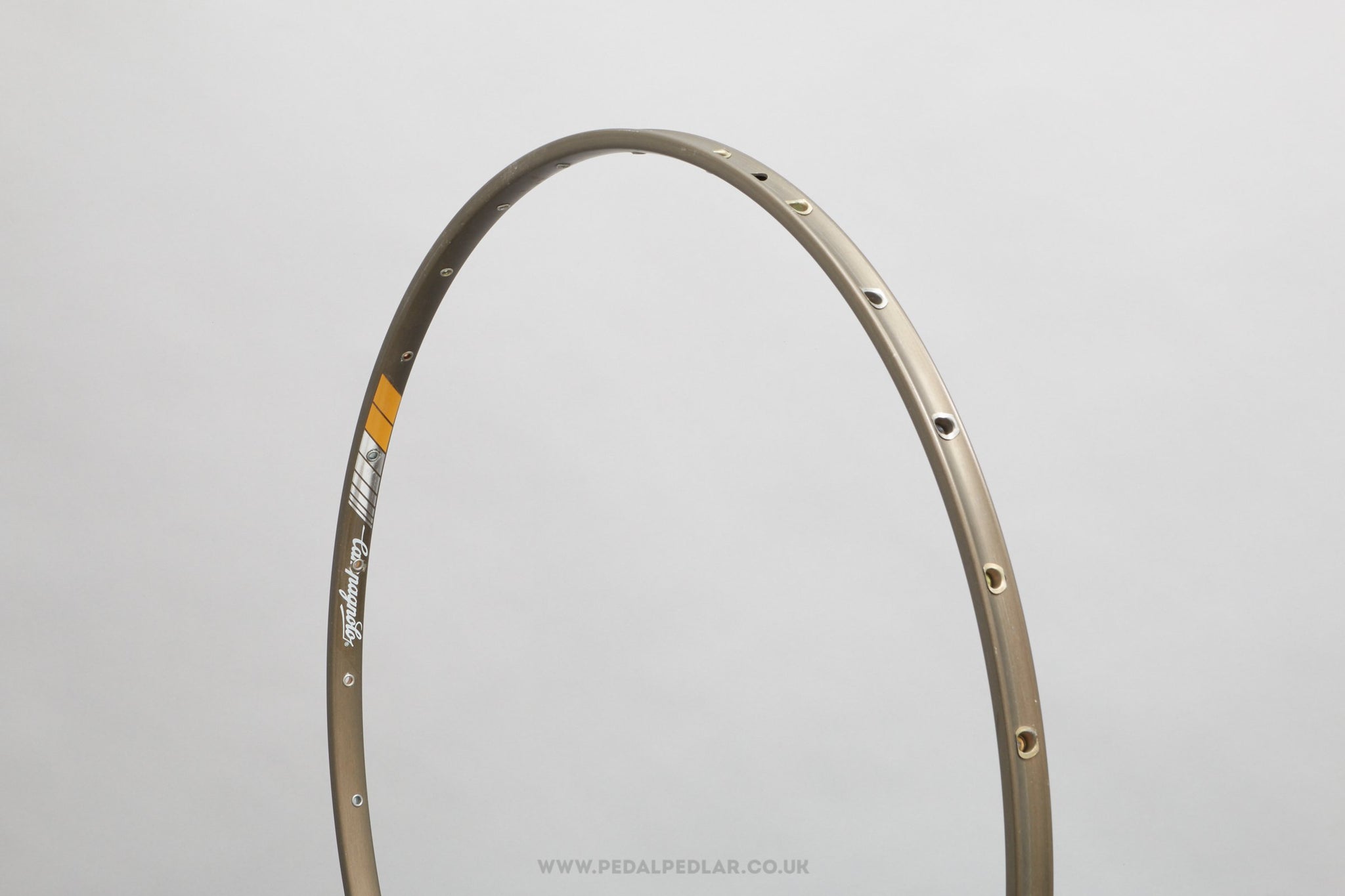


Campagnolo Victory Strada NOS Vintage 28h 28"/700c Tubular Rim
£71.25 £95.00
✓ Original part - produced in the 1980s
✓ New old stock! Still unused after all these years
✓ Super lightweight for the era - only 366 grams!
✓ Suitable for historic cycling events such as L'Eroica
✓ Worldwide shipping
Campagnolo Victory Strada rim, hailing from Italy and in production during the 1980s (yet still new & unused after all this time!). Made from aluminium and weighing in at 366 grams - incredibly lightweight for a rim at that time. A fine choice for keeping your vintage bike authentic, but also great for any other compatible bike too.
If you're taking part in L'Eroica or a similar vintage event, this is fully compliant - so rest assured, the pre-1987 police won't lock you up for having the wrong rim!
OVERVIEW
Production Era - 1980s
Country - Italian
Material - Aluminium
Weight - 366 grams
Stock Code - D-RS44V
*New old stock items may have marks from storage over the years, and as we often have multiples they can vary from piece to piece, but they are always genuine new & unused items.
TECHNICAL INFO
Drilling - 28 Hole
Rim Size - 28"/700c Tubular
ISO Diameter - 622 mm
Valve Type - Presta
Rim Width (OD) - 20 mm
Rim Height - 12 mm
-
▼SHIPPING, TAXES & RETURNS
-
We've been safely sending orders around the world since 2010. Orders are carefully packed, sent with tracking & insurance, and normally collected around midday on Tuesdays and Fridays. Larger items may occasionally require an extra day or two to prepare.
We accept returns, please notify us within 14 days and ensure the item arrives back with us no later than 30 days after the order was received.
EU orders under €150 (excluding shipping) - import VAT and the new €3 customs duty are paid as part of your order, so there's nothing further to pay on delivery.
EU orders over €150 (excluding shipping) - import fees are payable to the carrier before delivery, with nothing collected at checkout.
USA orders - import fees are collected at checkout for all orders to the USA, so there won’t be any surprise charges when your order arrives.
Other international orders - local import fees may apply and are not collected by us. Please check your country's import rules before purchasing.

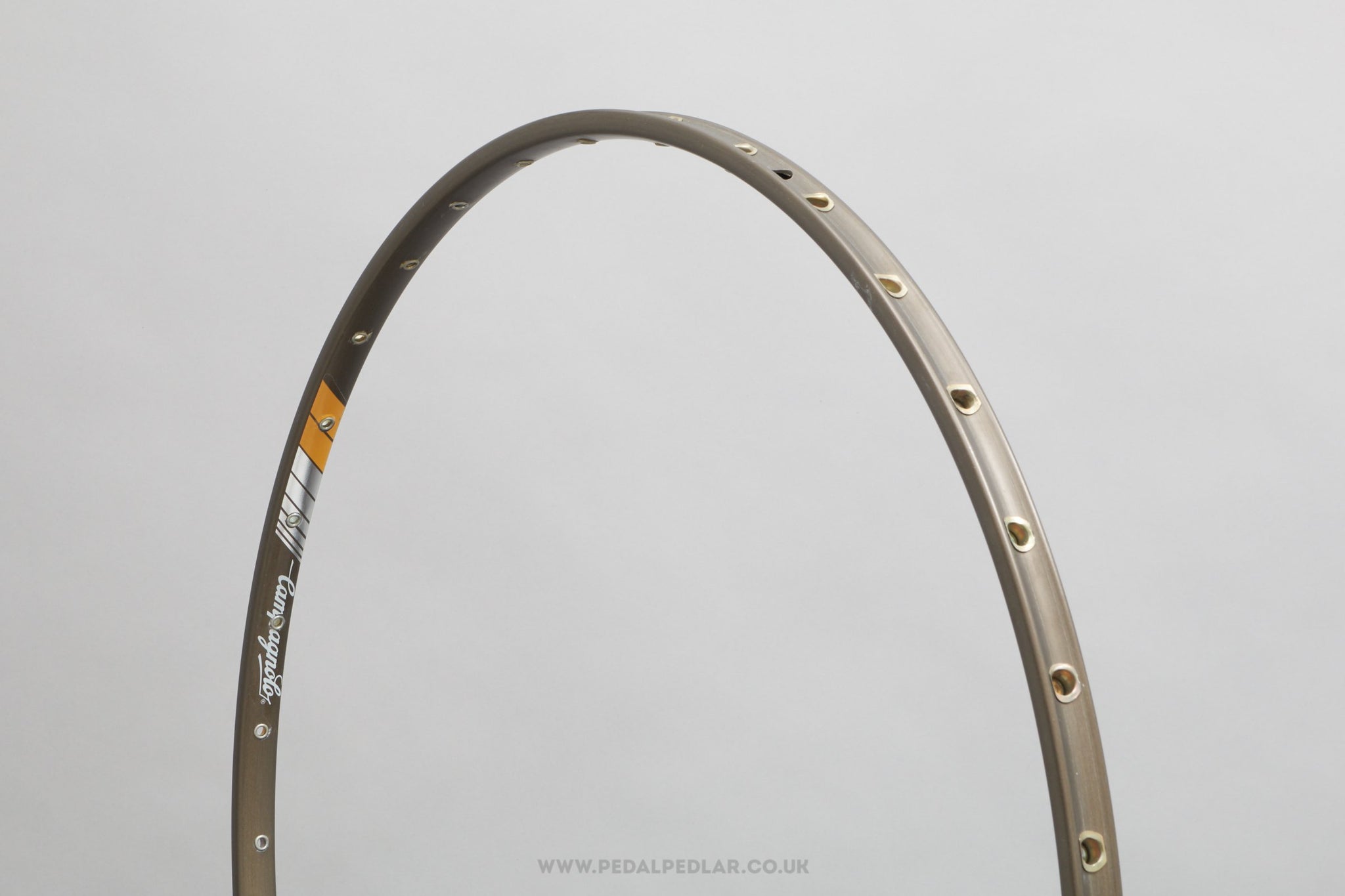


Campagnolo Victory Strada NOS Vintage 36h 28"/700c Tubular Rim
£71.25 £95.00
✓ Original part - produced in the 1980s
✓ New old stock! Still unused after all these years
✓ Super lightweight for the era - only 375 grams!
✓ Suitable for historic cycling events such as L'Eroica
✓ Worldwide shipping
Campagnolo Victory Strada rim, hailing from Italy and in production during the 1980s (yet still new & unused after all this time!). Made from aluminium and weighing in at 375 grams - incredibly lightweight for a rim at that time. A fine choice for keeping your vintage bike authentic, but also great for any other compatible bike too.
If you're taking part in L'Eroica or a similar vintage event, this is fully compliant - so rest assured, the pre-1987 police won't lock you up for having the wrong rim!
OVERVIEW
Production Era - 1980s
Country - Italian
Material - Aluminium
Weight - 375 grams
Stock Code - D-RS45V
*New old stock items may have marks from storage over the years, and as we often have multiples they can vary from piece to piece, but they are always genuine new & unused items.
TECHNICAL INFO
Drilling - 36 Hole
Rim Size - 28"/700c Tubular
ISO Diameter - 622 mm
Valve Type - Presta
Rim Width (OD) - 20 mm
Rim Height - 12 mm
-
▼SHIPPING, TAXES & RETURNS
-
We've been safely sending orders around the world since 2010. Orders are carefully packed, sent with tracking & insurance, and normally collected around midday on Tuesdays and Fridays. Larger items may occasionally require an extra day or two to prepare.
We accept returns, please notify us within 14 days and ensure the item arrives back with us no later than 30 days after the order was received.
EU orders under €150 (excluding shipping) - import VAT and the new €3 customs duty are paid as part of your order, so there's nothing further to pay on delivery.
EU orders over €150 (excluding shipping) - import fees are payable to the carrier before delivery, with nothing collected at checkout.
USA orders - import fees are collected at checkout for all orders to the USA, so there won’t be any surprise charges when your order arrives.
Other international orders - local import fees may apply and are not collected by us. Please check your country's import rules before purchasing.

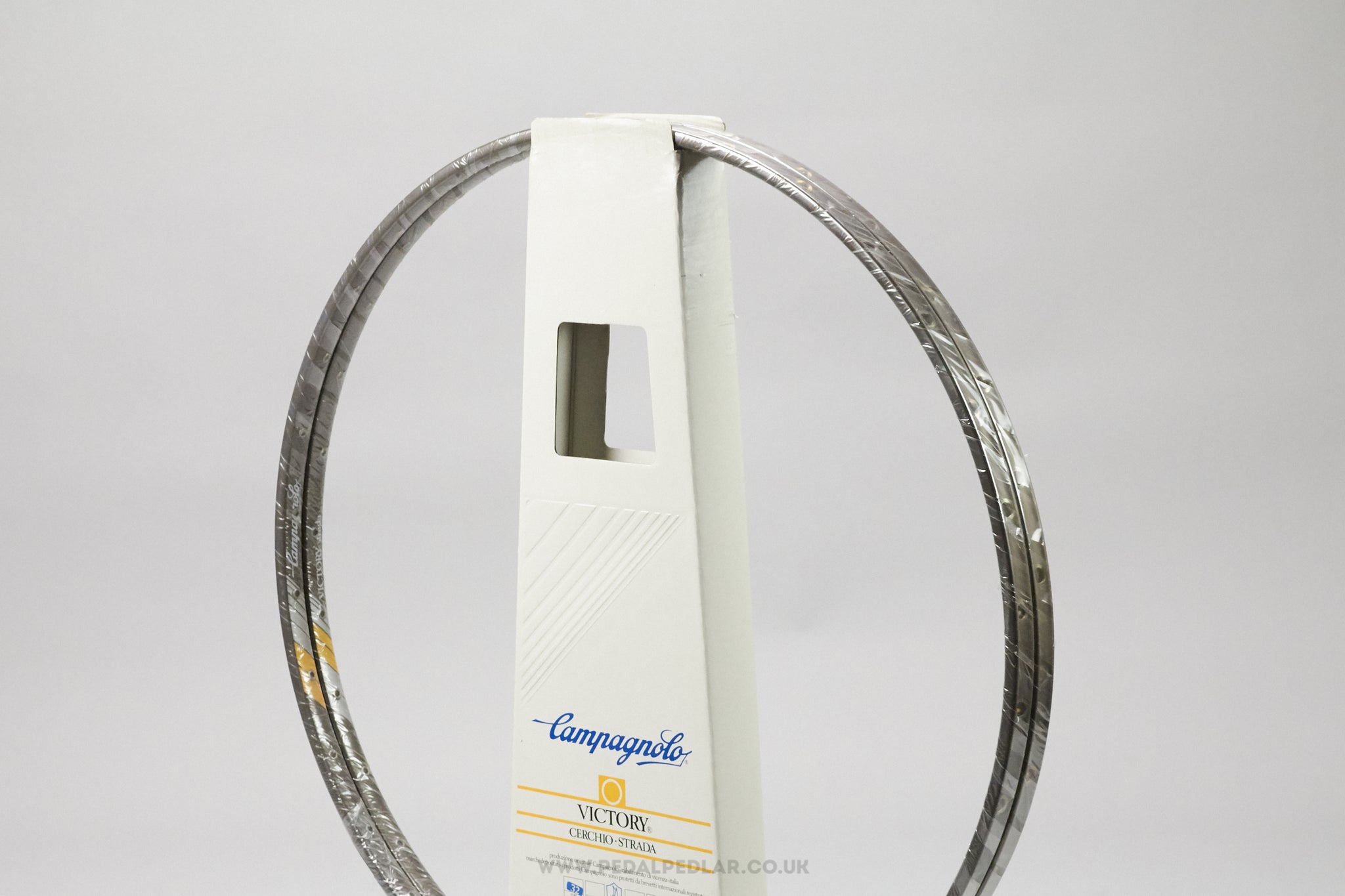


Campagnolo Victory Strada NOS/NIB Vintage 32h 28"/700c Tubular Rims
£165.00 £220.00
✓ Original parts - produced in the 1980s
✓ New old stock & still in the original packaging!
✓ Super lightweight for the era - only 732 grams (for the pair)!
✓ Suitable for historic cycling events such as L'Eroica
✓ Worldwide shipping
Campagnolo Victory Strada rims, hailing from Italy and in production during the 1980s (yet still new & unused after all this time!). Made from aluminium and weighing in at 732 grams (for the pair) - incredibly lightweight for a pair of rims at that time. A fine choice for keeping your vintage bike authentic, but also great for any other compatible bike too.
If you're taking part in L'Eroica or a similar vintage event, these are fully compliant - so rest assured, the pre-1987 police won't lock you up for having the wrong rims!
OVERVIEW
Production Era - 1980s
Country - Italian
Material - Aluminium
Weight - 732 grams (for the pair)
Stock Code - D-RP5V
*New old stock items may have marks from storage over the years, and as we often have multiples they can vary from piece to piece, but they are always genuine new & unused items.
TECHNICAL INFO
Drilling - 32 Hole
Rim Size - 28"/700c Tubular
ISO Diameter - 622 mm
Valve Type - Presta
Rim Width (OD) - 20 mm
Rim Height - 12 mm
-
▼SHIPPING, TAXES & RETURNS
-
We've been safely sending orders around the world since 2010. Orders are carefully packed, sent with tracking & insurance, and normally collected around midday on Tuesdays and Fridays. Larger items may occasionally require an extra day or two to prepare.
We accept returns, please notify us within 14 days and ensure the item arrives back with us no later than 30 days after the order was received.
EU orders under €150 (excluding shipping) - import VAT and the new €3 customs duty are paid as part of your order, so there's nothing further to pay on delivery.
EU orders over €150 (excluding shipping) - import fees are payable to the carrier before delivery, with nothing collected at checkout.
USA orders - import fees are collected at checkout for all orders to the USA, so there won’t be any surprise charges when your order arrives.
Other international orders - local import fees may apply and are not collected by us. Please check your country's import rules before purchasing.


Campagnolo Xenon (F010) NOS/NIB Classic Rear Mech
£85.00
✓ Original part - produced in the 1990s
✓ New old stock & still in the original packaging!
✓ Lightweight for the era - just 233 grams
✓ Worldwide shipping
Campagnolo Xenon rear mech, hailing from Italy and in production during the 1990s (yet still new & unused after all this time!). Made from aluminium/steel and weighing in at 233 grams - pretty lightweight for a rear derailleur at that time. A fine choice for keeping your classic bike authentic, but also great for any other compatible bike too.
OVERVIEW
Jockey Wheel Condition - New Old Stock*
Model ID - F010
Production Era - 1990s
Country - Italian
Material - Aluminium/Steel
Weight - 233 g
Stock Code - D-RM21C
*New old stock items may have marks from storage over the years, and as we often have multiples they can vary from piece to piece, but they are always genuine new & unused items.
TECHNICAL INFO
Shifting System - Campagnolo Syncro, Campagnolo Syncro II, Friction
Speed* - 5 Speed, 6 Speed, 7 Speed
Max Sprocket Size - 30 Teeth
Max Chain Wrap - 30
Chain Width - 3/32"
*See help section.
-
▼SHIPPING, TAXES & RETURNS
-
We've been safely sending orders around the world since 2010. Orders are carefully packed, sent with tracking & insurance, and normally collected around midday on Tuesdays and Fridays. Larger items may occasionally require an extra day or two to prepare.
We accept returns, please notify us within 14 days and ensure the item arrives back with us no later than 30 days after the order was received.
EU orders under €150 (excluding shipping) - import VAT and the new €3 customs duty are paid as part of your order, so there's nothing further to pay on delivery.
EU orders over €150 (excluding shipping) - import fees are payable to the carrier before delivery, with nothing collected at checkout.
USA orders - import fees are collected at checkout for all orders to the USA, so there won’t be any surprise charges when your order arrives.
Other international orders - local import fees may apply and are not collected by us. Please check your country's import rules before purchasing.
-
▼HELP SECTION
-
Shifting system - friction means your gear levers don't click when you change gear, when they do click it's referred to as indexed shifting. If you have indexed gear levers they must use the same system as the rear derailleur, if you're using friction levers you can mix and match.
*Speed - the number of cogs at the back the derailleur was designed to be used with. This is important with indexed shifting, but with friction shifters you can in theory run any rear mech with any number of cogs, but you are more likely to have issues running high numbers of cogs with mechs from earlier eras.
Max cog size - the amount of teeth on the largest cog of your freewheel/cassette can be no greater than this to work with this derailleur.
Chain wrap - subtract the size of your smallest rear cog from your biggest, then do the same with your chainrings, add the 2 numbers together and you have your chain wrap.
Chain width - generally speaking, derailleurs designed for more than 3 speed use will fit a standard 3/32'' chain, the exception being some Cyclo & Simplex models from around the mid 1900s.


Campagnolo Xenon (FD4-XE2) 9 Speed NOS Classic Braze-On Front Derailleur
£33.25 £35.00
✓ Original part - produced in the 2000s
✓ New old stock! Still unused after all these years
✓ Worldwide shipping
Campagnolo Xenon front derailleur, hailing from Italy and in production during the 2000s. Made from aluminium/steel and weighing in at 101 grams. A fine choice for keeping your classic bike authentic, but also great for any other compatible bike.
OVERVIEW
Model ID - FD4-XE2
Production Era - 2000s
Country - Italian
Material - Aluminium / Steel
Weight - 101 g
Stock Code - D-FM150C
*New old stock items may have marks from storage over the years, and as we often have multiples they can vary from piece to piece, but they are always genuine new & unused items.
TECHNICAL INFO
Chainset Type - Double
Frame Fixing - Braze-On
Pull Type - Bottom Pull
Designated Speed* - 9 Speed
*See help section.
-
▼SHIPPING, TAXES & RETURNS
-
We've been safely sending orders around the world since 2010. Orders are carefully packed, sent with tracking & insurance, and normally collected around midday on Tuesdays and Fridays. Larger items may occasionally require an extra day or two to prepare.
We accept returns, please notify us within 14 days and ensure the item arrives back with us no later than 30 days after the order was received.
EU orders under €150 (excluding shipping) - import VAT and the new €3 customs duty are paid as part of your order, so there's nothing further to pay on delivery.
EU orders over €150 (excluding shipping) - import fees are payable to the carrier before delivery, with nothing collected at checkout.
USA orders - import fees are collected at checkout for all orders to the USA, so there won’t be any surprise charges when your order arrives.
Other international orders - local import fees may apply and are not collected by us. Please check your country's import rules before purchasing.
-
▼HELP SECTION
-
Chainset Type - the number of chainrings the derailleur was designed to work with. ‘Double’ derailleurs are actually capable of working on ‘triple’ chainsets but they may struggle when shifting, especially if there’s a big step down from the middle to inner ring, so it’s better to match these correctly.
Frame Fixing - the way the derailleur fixes to the frame, if you have a tab on your frame to mount the derailleur to you need braze-on. If there’s no tab then you require a clamp-on type (also referred to as band-on or clip-on), these come in different sizes to match the diameter of your seat tube.
Pull Type - the direction of which the cable needs to ‘pull’ the mech in order to shift. If your cable runs up to the derailleur from the bottom bracket area then you need bottom pull, if your cable comes down from above you need top pull. Some later derailleurs can be used for either setups, these are referred to as dual pull.
Designated Speed (9 Speed & Above) - the speed of the chain that the mech was designed to be used with. This only becomes relevant for mechs marketed as 9 speed or above when chains became narrower, as the derailleur cage plates became marginally narrower too. We refer to it as ‘designated’ speed as technically you can use (almost) any derailleur with any chain, however if you want optimum performance it’s best to stay close to the manufacturers recommendations.
Indexing System (Shimano Only) - this is only applicable when using Shimano shifters that have an indexed left shifter such as STI or Rapidfire. For the indexing to work correctly when using these shifters the derailleur and shifters must be of the same type, so Shimano drop bar shifters need to be matched with a Shimano ‘road’ derailleur, and Shimano flat bar shifters must be used with Shimano ‘MTB’ derailleurs.

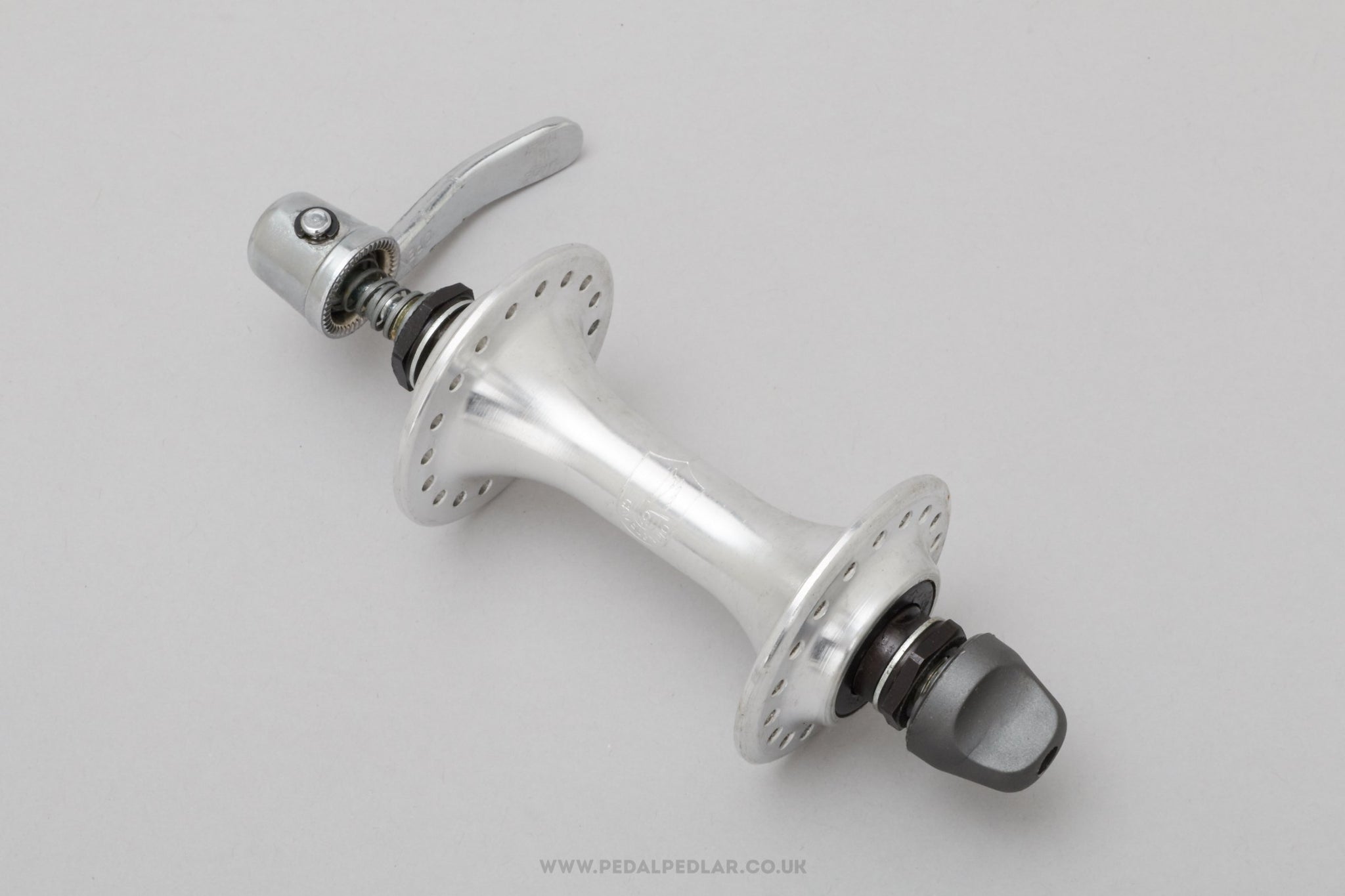


Campagnolo Xenon NOS Classic 36h Front Hub
£41.25 £55.00
✓ Original part - produced in the 1990s
✓ New old stock! Still unused after all these years
✓ Made in Italy
✓ Worldwide shipping
Campagnolo Xenon front hub, made in Italy and in production during the 1990s (yet still new & unused after all this time!). Made from aluminium/steel and weighing in at 234 grams. A fine choice for keeping your classic bike authentic, but also great for any other compatible bike too.
OVERVIEW
Bearing / Race Condition - New Old Stock*
Production Era - 1990s
Country - Italian
Material - Aluminium/Steel
Weight - 234 grams
Stock Code - D-HU-F18C
*New old stock items may have marks from storage over the years, and as we often have multiples they can vary from piece to piece, but they are always genuine new & unused items.
TECHNICAL INFO
Drilling - 36 Hole
Spacing (O.L.D.) - 100 mm
-
▼SHIPPING, TAXES & RETURNS
-
We've been safely sending orders around the world since 2010. Orders are carefully packed, sent with tracking & insurance, and normally collected around midday on Tuesdays and Fridays. Larger items may occasionally require an extra day or two to prepare.
We accept returns, please notify us within 14 days and ensure the item arrives back with us no later than 30 days after the order was received.
EU orders under €150 (excluding shipping) - import VAT and the new €3 customs duty are paid as part of your order, so there's nothing further to pay on delivery.
EU orders over €150 (excluding shipping) - import fees are payable to the carrier before delivery, with nothing collected at checkout.
USA orders - import fees are collected at checkout for all orders to the USA, so there won’t be any surprise charges when your order arrives.
Other international orders - local import fees may apply and are not collected by us. Please check your country's import rules before purchasing.


Campagnolo Xenon NOS Classic Quick Release Front Skewer
£20.00
✓ Original skewer - produced in the 1990s
✓ New old stock! Still unused after all these years
✓ Worldwide shipping
Campagnolo Xenon front wheel skewer (or hub spindle if you prefer), hailing from Italy and in production during the 1990s (yet still new & unused after all this time). Made from steel/plastic and weighing in at 71 grams. A fine choice for keeping your classic bike authentic, but also great for any other compatible bike.
OVERVIEW
Production Era - 1990s
Country - Italian
Material - Steel / Plastic
Weight - 71 g
Stock Code - D-G2-SKW-F31C
*New old stock items may have marks from storage over the years, and as we often have multiples they can vary from piece to piece, but they are always genuine new & unused items.
TECHNICAL INFO
Skewer Type - Quick Release
Spacing* - 110 mm
Threaded Section - 23 mm
End Nut Length - 16 mm
*See help section.
-
▼SHIPPING, TAXES & RETURNS
-
We've been safely sending orders around the world since 2010. Orders are carefully packed, sent with tracking & insurance, and normally collected around midday on Tuesdays and Fridays. Larger items may occasionally require an extra day or two to prepare.
We accept returns, please notify us within 14 days and ensure the item arrives back with us no later than 30 days after the order was received.
EU orders under €150 (excluding shipping) - import VAT and the new €3 customs duty are paid as part of your order, so there's nothing further to pay on delivery.
EU orders over €150 (excluding shipping) - import fees are payable to the carrier before delivery, with nothing collected at checkout.
USA orders - import fees are collected at checkout for all orders to the USA, so there won’t be any surprise charges when your order arrives.
Other international orders - local import fees may apply and are not collected by us. Please check your country's import rules before purchasing.
-
▼SAFETY & COMPLIANCE
- This product complies with the EU General Product Safety Regulation (GPSR). Professional installation and regular inspections are strongly recommended. Due to the product's age, extra care should be taken during use.
Product Manufacturer - CAMPAGNOLO Srl, Via della Chimica 4, 36100, Vicenza, Italy
EU Authorised Representative - Global Trade Department NI Ltd, Office 834, Unit 6, 100 Lisburn Road, Belfast BT9 6AG, Northern Ireland
-
▼HELP SECTION
-
Skewer type - quick release skewers allow you to remove the wheel without any tools, whereas allen key and security skewers require a tool to allow the wheel to be removed.
*Spacing - this should be within a few milimetres of your fork's outer dropout spacing (measured from the outside where the skewers clamp down). The measurement provided was taken with the exiting hole of the end nut flush with the end of the skewer. There will be some wiggle room to allow a narrower or wider dropout spacing to fit, we've provided the threaded section and end nut measurements to give you an indication of how much.
Threaded section - the amount of thread on the skewers for the end nut to be threaded onto.
End nut length - the total length of the nut from end to end.