
New Old Stock
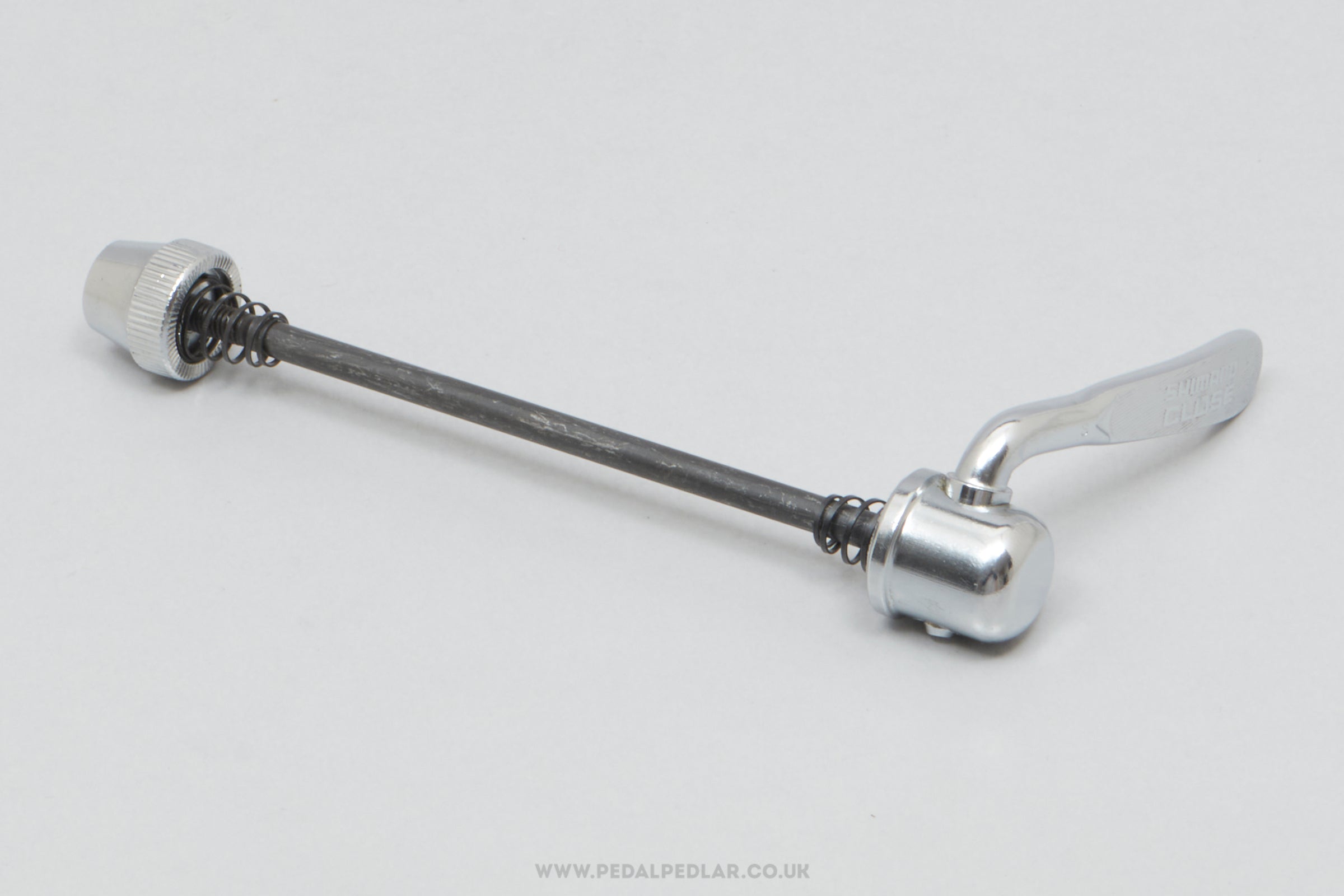


Shimano NOS Classic Quick Release Front Skewer
£12.75 £15.00
✓ Original skewer - produced in the 1990s
✓ New old stock! Still unused after all these years
✓ Worldwide shipping
Shimano front wheel skewer (or hub spindle if you prefer), hailing from Japan and in production during the 1990s (yet still new & unused after all this time!). Made from steel/plastic and weighing in at 93 grams. A fine choice for keeping your classic bike authentic, but also great for any other compatible bike.
OVERVIEW
Production Era - 1990s
Country - Japanese
Material - Steel / Plastic
Weight - 93 g
Stock Code - D-SKW-F30C
*New old stock items may have marks from storage over the years, and as we often have multiples they can vary from piece to piece, but they are always genuine new & unused items.
TECHNICAL INFO
Skewer Type - Quick Release
Spacing* - 109 mm
Threaded Section - 22 mm
End Nut Length - 16 mm
*See help section.
-
▼SHIPPING, TAXES & RETURNS
-
We've been safely sending orders around the world since 2010. Orders are carefully packed, sent with tracking & insurance, and normally collected around midday on Tuesdays and Fridays. Larger items may occasionally require an extra day or two to prepare.
We accept returns, please notify us within 14 days and ensure the item arrives back with us no later than 30 days after the order was received.
EU orders under €150 (excluding shipping) - import VAT and the new €3 customs duty are paid as part of your order, so there's nothing further to pay on delivery.
EU orders over €150 (excluding shipping) - import fees are payable to the carrier before delivery, with nothing collected at checkout.
USA orders - import fees are collected at checkout for all orders to the USA, so there won’t be any surprise charges when your order arrives.
Other international orders - local import fees may apply and are not collected by us. Please check your country's import rules before purchasing.
-
▼HELP SECTION
-
Skewer type - quick release skewers allow you to remove the wheel without any tools, whereas allen key and security skewers require a tool to allow the wheel to be removed.
*Spacing - this should be within a few milimetres of your fork's outer dropout spacing (measured from the outside where the skewers clamp down). The measurement provided was taken with the exiting hole of the end nut flush with the end of the skewer. There will be some wiggle room to allow a narrower or wider dropout spacing to fit, we've provided the threaded section and end nut measurements to give you an indication of how much.
Threaded section - the amount of thread on the skewers for the end nut to be threaded onto.
End nut length - the total length of the nut from end to end.


Shimano NOS Vintage 16.5 cm Steel Derailleur Gear Cable Housing
£15.00
✓ Original cable housing - in production from the 1970s to the 1980s
✓ New old stock! Still unused after all these years
✓ Suitable for historic cycling events such as L'Eroica
✓ Worldwide shipping
Shimano cable housing (or outer casing if you prefer), hailing from Japan and in production from the 1970s to the 1980s (yet still new & unused after all this time). The perfect finishing touch for your vintage bike, but great for bikes of the non-vintage variety too!
If you're taking part in L'Eroica or any other vintage event, this is fully compliant - so rest assured, the pre-1987 police won't lock you up for having the wrong cable!
OVERVIEW
Production Era - 1970s & 1980s
Country - Japanese
Stock Code - D-CAB-O12V
*New old stock items may have marks from storage over the years, and as we often have multiples they can vary from piece to piece, but they are always genuine new & unused items.
TECHNICAL INFO
Length - 16.5 cm
Colour* - Steel (Stainless)
Housing Type - Gear Shifter - Derailleur (Front Mech)
Casing Width (OD) - 4.2 mm
Ferrule Size (OD) - 5.8 mm
*The colour description is just a guide, please check the photos too as we make sure these are as close to the true colour as possible.
-
▼SHIPPING, TAXES & RETURNS
-
We've been safely sending orders around the world since 2010. Orders are carefully packed, sent with tracking & insurance, and normally collected around midday on Tuesdays and Fridays. Larger items may occasionally require an extra day or two to prepare.
We accept returns, please notify us within 14 days and ensure the item arrives back with us no later than 30 days after the order was received.
EU orders under €150 (excluding shipping) - import VAT and the new €3 customs duty are paid as part of your order, so there's nothing further to pay on delivery.
EU orders over €150 (excluding shipping) - import fees are payable to the carrier before delivery, with nothing collected at checkout.
USA orders - import fees are collected at checkout for all orders to the USA, so there won’t be any surprise charges when your order arrives.
Other international orders - local import fees may apply and are not collected by us. Please check your country's import rules before purchasing.
-
▼HELP SECTION
-
Housing Type - brake and gear cables have different specifications and are generally not interchangeable, although older bikes with non-index shifting often used brake housing instead of gear. We'd still recommend using the dedicated front or rear derailleur cable housings for non-index setups whenever possible.
Casing Width - the outside diameter of the housing. Brake cable housing is a little wider in diameter than gear, this is to accommodate the slightly thicker inner cables.
Ferrule Size - if ferrules are included, this measurement is of the outside diameter at the widest part.


Shimano NOS Vintage 25 cm Steel Derailleur Gear Cable Housing
£20.00
✓ Original cable housing - in production from the 1970s to the 1980s
✓ New old stock! Still unused after all these years
✓ Suitable for historic cycling events such as L'Eroica
✓ Worldwide shipping
Shimano cable housing (or outer casing if you prefer), hailing from Japan and in production from the 1970s to the 1980s (yet still new & unused after all this time). The perfect finishing touch for your vintage bike, but great for bikes of the non-vintage variety too!
If you're taking part in L'Eroica or any other vintage event, this is fully compliant - so rest assured, the pre-1987 police won't lock you up for having the wrong cable!
OVERVIEW
Production Era - 1970s & 1980s
Country - Japanese
Stock Code - D-CAB-O11V
*New old stock items may have marks from storage over the years, and as we often have multiples they can vary from piece to piece, but they are always genuine new & unused items.
TECHNICAL INFO
Length - 25 cm
Colour* - Steel (Stainless)
Housing Type - Gear Shifter - Derailleur (Rear Mech)
Casing Width (OD) - 4.2 mm
Ferrule Size (OD) - 5.8 mm
*The colour description is just a guide, please check the photos too as we make sure these are as close to the true colour as possible.
-
▼SHIPPING, TAXES & RETURNS
-
We've been safely sending orders around the world since 2010. Orders are carefully packed, sent with tracking & insurance, and normally collected around midday on Tuesdays and Fridays. Larger items may occasionally require an extra day or two to prepare.
We accept returns, please notify us within 14 days and ensure the item arrives back with us no later than 30 days after the order was received.
EU orders under €150 (excluding shipping) - import VAT and the new €3 customs duty are paid as part of your order, so there's nothing further to pay on delivery.
EU orders over €150 (excluding shipping) - import fees are payable to the carrier before delivery, with nothing collected at checkout.
USA orders - import fees are collected at checkout for all orders to the USA, so there won’t be any surprise charges when your order arrives.
Other international orders - local import fees may apply and are not collected by us. Please check your country's import rules before purchasing.
-
▼HELP SECTION
-
Housing Type - brake and gear cables have different specifications and are generally not interchangeable, although older bikes with non-index shifting often used brake housing instead of gear. We'd still recommend using the dedicated front or rear derailleur cable housings for non-index setups whenever possible.
Casing Width - the outside diameter of the housing. Brake cable housing is a little wider in diameter than gear, this is to accommodate the slightly thicker inner cables.
Ferrule Size - if ferrules are included, this measurement is of the outside diameter at the widest part.


Shimano NOS Vintage 5 Speed Uniglide 14-24 Cassette
£63.75 £85.00
✓ Original part - produced in the 1980s
✓ New old stock! Still unused after all these years
✓ Suitable for historic cycling events such as L'Eroica
✓ Worldwide shipping
Shimano cassette, hailing from Japan and in production during the 1980s (yet still new & unused after all this time!). Made from steel and weighing in at 211 grams. A fine choice for keeping your vintage bike authentic, but also great for any other compatible bike too.
If you're taking part in L'Eroica, Anjou Velo, Velo Retro or another similar vintage cycling event, this is fully compliant - so rest assured, the pre-1987 police won't lock you up for having the wrong cassette!
OVERVIEW
Condition Notes - Some of these have a few cosmetic rusty spots from storage over the years
Production Era - 1980s
Country - Japanese
Material - Steel
Weight - 211 g
Stock Code - D-CAS3V
*New old stock items may have marks from storage over the years, and as we often have multiples they can vary from piece to piece, but they are always genuine new & unused items.
TECHNICAL INFO
Speed - 5 Speed
Spline Pattern - Shimano Uniglide
Range - 14-24
-
▼SHIPPING, TAXES & RETURNS
-
We've been safely sending orders around the world since 2010. Orders are carefully packed, sent with tracking & insurance, and normally collected around midday on Tuesdays and Fridays. Larger items may occasionally require an extra day or two to prepare.
We accept returns, please notify us within 14 days and ensure the item arrives back with us no later than 30 days after the order was received.
EU orders under €150 (excluding shipping) - import VAT and the new €3 customs duty are paid as part of your order, so there's nothing further to pay on delivery.
EU orders over €150 (excluding shipping) - import fees are payable to the carrier before delivery, with nothing collected at checkout.
USA orders - import fees are collected at checkout for all orders to the USA, so there won’t be any surprise charges when your order arrives.
Other international orders - local import fees may apply and are not collected by us. Please check your country's import rules before purchasing.


Shimano NOS Vintage Top Tube Brake Cable Guides / Housing Clips Set
£17.50
✓ Original parts - produced in the 1970s
✓ New old stock! Still unused after all these years
✓ Suitable for historic cycling events such as L'Eroica
✓ Worldwide shipping
Shimano top tube cable guides, hailing from Japan and in production during the 1970s (yet still new & unused after all this time!). Made from steel and weighing in at 10 grams. A fine choice for keeping your vintage bike authentic, but also great for any other compatible bike too.
If you're taking part in L'Eroica or any other vintage event, this is fully compliant - so rest assured, the pre-1987 police won't lock you up for having the wrong cable guides!
OVERVIEW
Condition - New Old Stock*
Production Era - 1970s
Country - Japanese
Material - Steel
Weight - 10 g
Stock Code - D-CGT26V
*New old stock items may have marks from storage over the years, and as we often have multiples they can vary from piece to piece, but they are always genuine new & unused items.
TECHNICAL INFO
Tube Diameter - 25.4 mm (Standard Steel Frame)
Number of Cables - Single
-
▼SHIPPING, TAXES & RETURNS
-
We've been safely sending orders around the world since 2010. Orders are carefully packed, sent with tracking & insurance, and normally collected around midday on Tuesdays and Fridays. Larger items may occasionally require an extra day or two to prepare.
We accept returns, please notify us within 14 days and ensure the item arrives back with us no later than 30 days after the order was received.
EU orders under €150 (excluding shipping) - import VAT and the new €3 customs duty are paid as part of your order, so there's nothing further to pay on delivery.
EU orders over €150 (excluding shipping) - import fees are payable to the carrier before delivery, with nothing collected at checkout.
USA orders - import fees are collected at checkout for all orders to the USA, so there won’t be any surprise charges when your order arrives.
Other international orders - local import fees may apply and are not collected by us. Please check your country's import rules before purchasing.
-
▼HELP SECTION
-
Tube Diameter - most steel frames will have a top tube with an outside diameter of 25.4 mm, this was standard for a long time but there are 'oversized' tubes that have a diameter of 28.6 mm. Most aluminium frames will have larger 31.8 mm tubes, the exception being earlier ones with lugged construction that have 25.4 mm tubes.
Number of Cables - the number of cables the guides are designed to accept.


Shimano RX100 (FD-A551) c.1997 NOS Classic Braze-On Front Mech
£33.25 £35.00
✓ Original part - produced in the 1990s
✓ New old stock! Still unused after all these years
✓ Worldwide shipping
Shimano RX100 front mech, hailing from Japan and dating back to 1997 (yet still new & unused after all this time!). Made from aluminium/steel and weighing in at 110 grams. A fine choice for keeping your classic bike authentic, but also great for any other compatible bike too.
OVERVIEW
Model ID - FD-A551
Production Era - 1990s
Country - Japanese
Material - Aluminium/Steel
Weight - 110 g
Stock Code - D-FM25C
*New old stock items may have marks from storage over the years, and as we often have multiples they can vary from piece to piece, but they are always genuine new & unused items.
TECHNICAL INFO
Chainset Type - Double
Frame Fixing - Braze-On
Pull Type - Bottom Pull
-
▼SHIPPING, TAXES & RETURNS
-
We've been safely sending orders around the world since 2010. Orders are carefully packed, sent with tracking & insurance, and normally collected around midday on Tuesdays and Fridays. Larger items may occasionally require an extra day or two to prepare.
We accept returns, please notify us within 14 days and ensure the item arrives back with us no later than 30 days after the order was received.
EU orders under €150 (excluding shipping) - import VAT and the new €3 customs duty are paid as part of your order, so there's nothing further to pay on delivery.
EU orders over €150 (excluding shipping) - import fees are payable to the carrier before delivery, with nothing collected at checkout.
USA orders - import fees are collected at checkout for all orders to the USA, so there won’t be any surprise charges when your order arrives.
Other international orders - local import fees may apply and are not collected by us. Please check your country's import rules before purchasing.


Shimano RX100 (HB-A550 / FH-A551) NOS Classic 32/32h Hubs
£85.00
✓ Original hubs - produced in the 1990s
✓ New old stock! Still unused after all these years
✓ Worldwide shipping
Shimano RX100 hubs, hailing from Japan and in production during the 1990s (yet still new & unused after all this time!). Made from aluminium/steel and weighing in at 662 grams. A fine choice for keeping your classic bike authentic, but also great for any other compatible bike too.
OVERVIEW
Bearing / Race Condition - New Old Stock*
Model ID - HB-A550 / FH-A551
Production Era - 1990s
Country - Japanese
Material - Aluminium / Steel
Weight - 662 g
Stock Code - D-HU-P40C
*New old stock items may have marks from storage over the years, and as we often have multiples they can vary from piece to piece, but they are always genuine new & unused items.
TECHNICAL INFO
Spoke Drilling (F/R) - 32/32 Hole
Spacing (O.L.D.) (F/R) - 100 mm / 130 mm
Speed - 8 Speed
Sprocket Fitting - Shimano Hyperglide
-
▼SHIPPING, TAXES & RETURNS
-
We've been safely sending orders around the world since 2010. Orders are carefully packed, sent with tracking & insurance, and normally collected around midday on Tuesdays and Fridays. Larger items may occasionally require an extra day or two to prepare.
We accept returns, please notify us within 14 days and ensure the item arrives back with us no later than 30 days after the order was received.
EU orders under €150 (excluding shipping) - import VAT and the new €3 customs duty are paid as part of your order, so there's nothing further to pay on delivery.
EU orders over €150 (excluding shipping) - import fees are payable to the carrier before delivery, with nothing collected at checkout.
USA orders - import fees are collected at checkout for all orders to the USA, so there won’t be any surprise charges when your order arrives.
Other international orders - local import fees may apply and are not collected by us. Please check your country's import rules before purchasing.
-
▼HELP SECTION
-
Spoke Drilling - the number of holes for the spokes (front/rear), your wheel rims need to match the hubs exactly.
Spacing (O.L.D.) - the width of the hubs measured at their widest point, from the outside of the locking end nuts (O.L.D. = Over Locknut Dimension), not including the hub axle. These measurements need to match the inside of your frame and fork’s dropouts. Steel frames can be stretched or squeezed a few mm but it's always best to avoid this if possible, aluminium or carbon frames should never be stretched.
Speed - the number of cogs the rear hub was designed to be used with.
Sprocket Fitting - for cassette hubs this refers to the spline pattern (the shape of the cogs where they slide on to the hub) and this must match the cassette you intend to use. With freewheel hubs it refers to the thread, ISO is the modern standard and is almost exactly the same as older English/British and Italian thread, allowing you to mix and match between these thread types as long as it's not going to be under extreme force, in which case it's best to stick to an exact match. Freewheel hubs with a French thread must be used with a French threaded freewheel.


Shimano RX100 (HB-A550 / FH-A551) NOS Classic 36/36h Hubs
£80.00
✓ Original hubs - produced in the 1990s
✓ New old stock! Still unused after all these years
✓ Worldwide shipping
Shimano RX100 hubs, hailing from Japan and in production during the 1990s (yet still new & unused after all this time!). Made from aluminium/steel and weighing in at 655 grams. A fine choice for keeping your classic bike authentic, but also great for any other compatible bike too.
OVERVIEW
Bearing / Race Condition - New Old Stock*
Model ID - HB-A550 / FH-A551
Production Era - 1990s
Country - Japanese
Material - Aluminium / Steel
Weight - 655 g
Stock Code - D-HU-P41C
*New old stock items may have marks from storage over the years, and as we often have multiples they can vary from piece to piece, but they are always genuine new & unused items.
TECHNICAL INFO
Spoke Drilling (F/R) - 36/36 Hole
Spacing (O.L.D.) (F/R) - 100 mm / 130 mm
Speed - 8 Speed
Sprocket Fitting - Shimano Hyperglide
-
▼SHIPPING, TAXES & RETURNS
-
We've been safely sending orders around the world since 2010. Orders are carefully packed, sent with tracking & insurance, and normally collected around midday on Tuesdays and Fridays. Larger items may occasionally require an extra day or two to prepare.
We accept returns, please notify us within 14 days and ensure the item arrives back with us no later than 30 days after the order was received.
EU orders under €150 (excluding shipping) - import VAT and the new €3 customs duty are paid as part of your order, so there's nothing further to pay on delivery.
EU orders over €150 (excluding shipping) - import fees are payable to the carrier before delivery, with nothing collected at checkout.
USA orders - import fees are collected at checkout for all orders to the USA, so there won’t be any surprise charges when your order arrives.
Other international orders - local import fees may apply and are not collected by us. Please check your country's import rules before purchasing.
-
▼HELP SECTION
-
Spoke Drilling - the number of holes for the spokes (front/rear), your wheel rims need to match the hubs exactly.
Spacing (O.L.D.) - the width of the hubs measured at their widest point, from the outside of the locking end nuts (O.L.D. = Over Locknut Dimension), not including the hub axle. These measurements need to match the inside of your frame and fork’s dropouts. Steel frames can be stretched or squeezed a few mm but it's always best to avoid this if possible, aluminium or carbon frames should never be stretched.
Speed - the number of cogs the rear hub was designed to be used with.
Sprocket Fitting - for cassette hubs this refers to the spline pattern (the shape of the cogs where they slide on to the hub) and this must match the cassette you intend to use. With freewheel hubs it refers to the thread, ISO is the modern standard and is almost exactly the same as older English/British and Italian thread, allowing you to mix and match between these thread types as long as it's not going to be under extreme force, in which case it's best to stick to an exact match. Freewheel hubs with a French thread must be used with a French threaded freewheel.


Shimano Sora (FD-3300) NOS Classic Braze-On Front Derailleur
£33.25 £35.00
✓ Original part - produced in the 1990s
✓ New old stock! Still unused after all these years
✓ Worldwide shipping
Shimano Sora front derailleur, hailing from Japan and in production during the 1990s (yet still new & unused after all this time!). Made from aluminium/steel and weighing in at 91 grams. A fine choice for keeping your classic bike authentic, but also great for any other compatible bike.
OVERVIEW
Condition - New Old Stock*
Model ID - FD-3300
Production Era - 1990s
Country - Japanese
Material - Aluminium / Steel
Weight - 91 g
Stock Code - D-FM185C
*New old stock items may have marks from storage over the years, and as we often have multiples they can vary from piece to piece, but they are always genuine new & unused items.
TECHNICAL INFO
Chainset Type - Double
Frame Fixing - Braze-On
Pull Type - Bottom Pull
*See help section.
-
▼SHIPPING, TAXES & RETURNS
-
We've been safely sending orders around the world since 2010. Orders are carefully packed, sent with tracking & insurance, and normally collected around midday on Tuesdays and Fridays. Larger items may occasionally require an extra day or two to prepare.
We accept returns, please notify us within 14 days and ensure the item arrives back with us no later than 30 days after the order was received.
EU orders under €150 (excluding shipping) - import VAT and the new €3 customs duty are paid as part of your order, so there's nothing further to pay on delivery.
EU orders over €150 (excluding shipping) - import fees are payable to the carrier before delivery, with nothing collected at checkout.
USA orders - import fees are collected at checkout for all orders to the USA, so there won’t be any surprise charges when your order arrives.
Other international orders - local import fees may apply and are not collected by us. Please check your country's import rules before purchasing.
-
▼HELP SECTION
-
Chainset Type - the number of chainrings the derailleur was designed to work with. ‘Double’ derailleurs are actually capable of working on ‘triple’ chainsets but they may struggle when shifting, especially if there’s a big step down from the middle to inner ring, so it’s better to match these correctly.
Frame Fixing - the way the derailleur fixes to the frame, if you have a tab on your frame to mount the derailleur to you need braze-on. If there’s no tab then you require a clamp-on type (also referred to as band-on or clip-on), these come in different sizes to match the diameter of your seat tube.
Pull Type - the direction of which the cable needs to ‘pull’ the mech in order to shift. If your cable runs up to the derailleur from the bottom bracket area then you need bottom pull, if your cable comes down from above you need top pull. Some later derailleurs can be used for either setups, these are referred to as dual pull.
Designated Speed (9 Speed & Above) - the speed of the chain that the mech was designed to be used with. This only becomes relevant for mechs marketed as 9 speed or above when chains became narrower, as the derailleur cage plates became marginally narrower too. We refer to it as ‘designated’ speed as technically you can use (almost) any derailleur with any chain, however if you want optimum performance it’s best to stay close to the manufacturers recommendations.
Indexing System (Shimano Only) - this is only applicable when using Shimano shifters that have an indexed left shifter such as STI or Rapidfire. For the indexing to work correctly when using these shifters the derailleur and shifters must be of the same type, so Shimano drop bar shifters need to be matched with a Shimano ‘road’ derailleur, and Shimano flat bar shifters must be used with Shimano ‘MTB’ derailleurs.


Shimano STX (FD-MC32) c.1996 NOS Classic Triple Clamp-On 31.8 mm Front Mech
£29.75 £35.00
✓ Original part - produced in the 1990s
✓ New old stock! Still unused after all these years
✓ Worldwide shipping
Shimano STX front mech, hailing from Japan and dating back to 1996 (yet still new & unused after all this time!). Made from aluminium/steel and weighing in at 151 grams. A fine choice for keeping your classic bike authentic, but also great for any other compatible bike too.
OVERVIEW
Model ID - FD-MC32
Production Era - 1990s
Country - Japanese
Material - Aluminium/Steel
Weight - 151 g
Stock Code - D-FM24C
*New old stock items may have marks from storage over the years, and as we often have multiples they can vary from piece to piece, but they are always genuine new & unused items.
TECHNICAL INFO
Chainset Type - Triple (MTB/Touring)
Frame Fixing - Clamp-On 31.8 mm
Pull Type - Top Pull
-
▼SHIPPING, TAXES & RETURNS
-
We've been safely sending orders around the world since 2010. Orders are carefully packed, sent with tracking & insurance, and normally collected around midday on Tuesdays and Fridays. Larger items may occasionally require an extra day or two to prepare.
We accept returns, please notify us within 14 days and ensure the item arrives back with us no later than 30 days after the order was received.
EU orders under €150 (excluding shipping) - import VAT and the new €3 customs duty are paid as part of your order, so there's nothing further to pay on delivery.
EU orders over €150 (excluding shipping) - import fees are payable to the carrier before delivery, with nothing collected at checkout.
USA orders - import fees are collected at checkout for all orders to the USA, so there won’t be any surprise charges when your order arrives.
Other international orders - local import fees may apply and are not collected by us. Please check your country's import rules before purchasing.


Shimano STX (HB-MC32-7) c.1996 NOS Classic 36h Rear Hub
£47.50 £50.00
✓ Original hub - produced in the 1990s
✓ New old stock! Still unused after all these years
✓ Worldwide shipping
Shimano STX rear hub, hailing from Japan and dating back to 1996 (yet still new & unused after all this time!). Made from aluminium/steel and weighing in at 434 grams. A fine choice for keeping your classic bike authentic, but also great for any other compatible bike too.
OVERVIEW
Bearing / Race Condition - New Old Stock*
Model ID - HB-MC32-7
Production Era - 1990s
Country - Japanese
Material - Aluminium/Steel
Weight - 434 g
Stock Code - D-HU-R22C
*New old stock items may have marks from storage over the years, and as we often have multiples they can vary from piece to piece, but they are always genuine new & unused items.
TECHNICAL INFO
Drilling - 36 Hole
Spacing (O.L.D.) - 135 mm
Speed - 7 Speed
Sprocket Fitting - Shimano Hyperglide
-
▼SHIPPING, TAXES & RETURNS
-
We've been safely sending orders around the world since 2010. Orders are carefully packed, sent with tracking & insurance, and normally collected around midday on Tuesdays and Fridays. Larger items may occasionally require an extra day or two to prepare.
We accept returns, please notify us within 14 days and ensure the item arrives back with us no later than 30 days after the order was received.
EU orders under €150 (excluding shipping) - import VAT and the new €3 customs duty are paid as part of your order, so there's nothing further to pay on delivery.
EU orders over €150 (excluding shipping) - import fees are payable to the carrier before delivery, with nothing collected at checkout.
USA orders - import fees are collected at checkout for all orders to the USA, so there won’t be any surprise charges when your order arrives.
Other international orders - local import fees may apply and are not collected by us. Please check your country's import rules before purchasing.


Shimano STX (HB/FH-MC32-7) c.1998 NOS Classic 32/32h Hubs
£71.25 £95.00
✓ Original hubs - produced in the 1990s
✓ New old stock! Still unused after all these years
✓ Worldwide shipping
Shimano STX hubs, hailing from Japan and dating back to 1998 (yet still new & unused after all this time!). Made from aluminium/steel and weighing in at 638 grams. A fine choice for keeping your classic bike authentic, but also great for any other compatible bike too.
OVERVIEW
Bearing / Race Condition - New Old Stock*
Model ID - HB/FH-MC32-7
Production Era - 1990s
Country - Japanese
Material - Aluminium/Steel
Weight - 638 g
Stock Code - D-HU-P15C
*New old stock items may have marks from storage over the years, and as we often have multiples they can vary from piece to piece, but they are always genuine new & unused items.
TECHNICAL INFO
Drilling (F/R) - 32/32 Hole
Spacing (O.L.D.) (F/R) - 100 mm / 135 mm
Speed - 7 Speed
Sprocket Fitting - Shimano Hyperglide
-
▼SHIPPING, TAXES & RETURNS
-
We've been safely sending orders around the world since 2010. Orders are carefully packed, sent with tracking & insurance, and normally collected around midday on Tuesdays and Fridays. Larger items may occasionally require an extra day or two to prepare.
We accept returns, please notify us within 14 days and ensure the item arrives back with us no later than 30 days after the order was received.
EU orders under €150 (excluding shipping) - import VAT and the new €3 customs duty are paid as part of your order, so there's nothing further to pay on delivery.
EU orders over €150 (excluding shipping) - import fees are payable to the carrier before delivery, with nothing collected at checkout.
USA orders - import fees are collected at checkout for all orders to the USA, so there won’t be any surprise charges when your order arrives.
Other international orders - local import fees may apply and are not collected by us. Please check your country's import rules before purchasing.
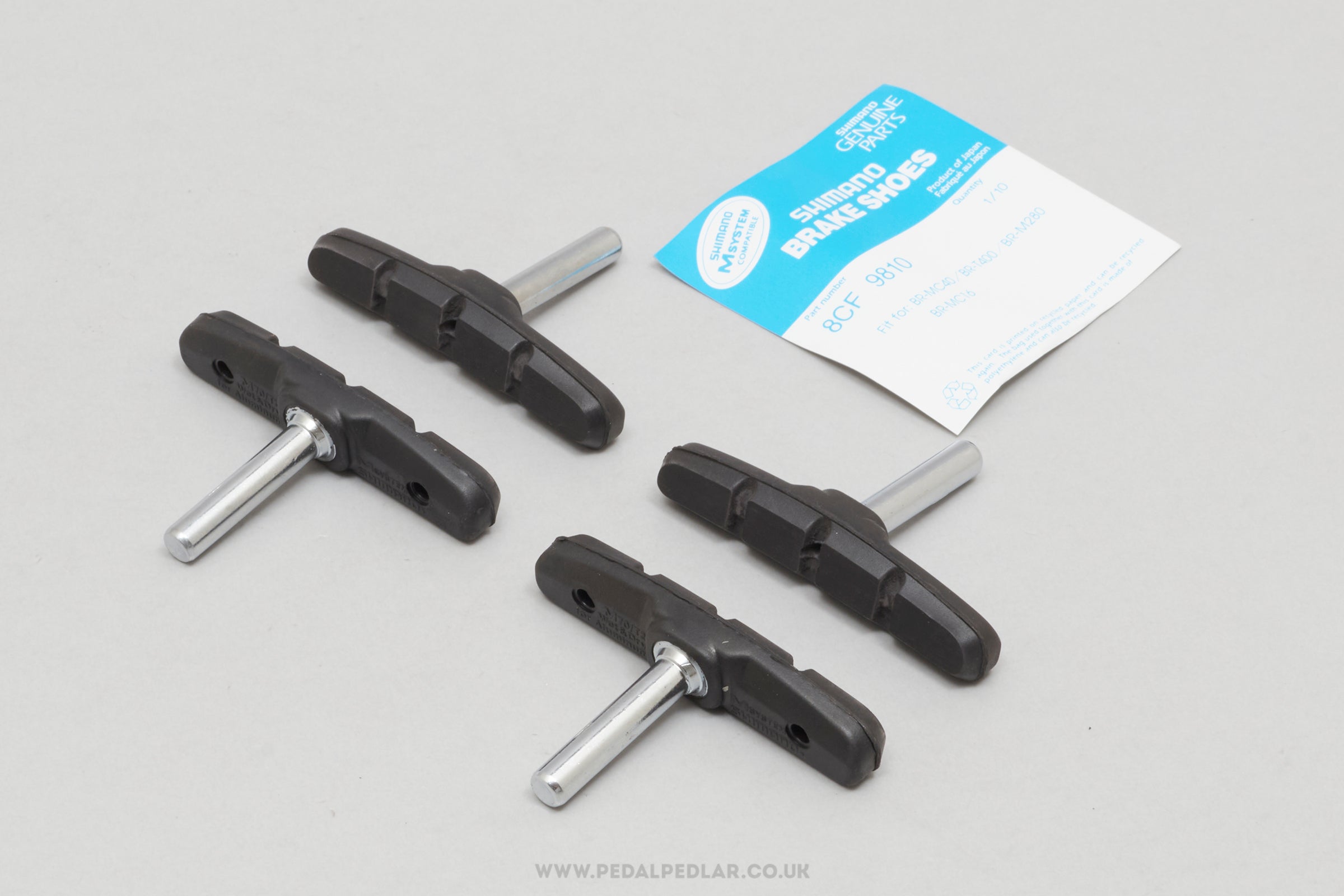


Shimano STX RC (8CF 9810) BR-MC40 NOS/NIB Classic V-Brake Pads
£27.00 £30.00
✓ Original brake pads - in production from the 1990s to the 2000s
✓ New old stock & still in the original packaging!
✓ Worldwide shipping
Shimano STX RC set of 4 rim brake pads (or blocks, or shoes if you prefer), hailing from Japan and in production from the 1990s to the 2000s (yet still new & unused after all this time). Weighing in at 150 grams (the weight and price displayed is for 4 pads). A fine choice for keeping your classic bike authentic, but also great for any other compatible bike.
OVERVIEW
Model ID - 8CF 9810
Production Era - 1990s & 2000s
Weight - 150 g
Country - Japanese
Stock Code - D-BP-S16C
*New old stock items may have marks from storage over the years, and as we often have multiples they can vary from piece to piece, but they are always genuine new & unused items.
TECHNICAL INFO
Brake Fit - V-Brake
Pad Type - One Piece
Length - 70 mm
Height - 15 mm
Rim Type - Alloy
NB: Modern production brake pads will normally offer the best performance, but if you wish to keep everything period correct original ones are still a great option. As with all classic parts though, they must be installed correctly and ridden with care.
-
▼SHIPPING, TAXES & RETURNS
-
We've been safely sending orders around the world since 2010. Orders are carefully packed, sent with tracking & insurance, and normally collected around midday on Tuesdays and Fridays. Larger items may occasionally require an extra day or two to prepare.
We accept returns, please notify us within 14 days and ensure the item arrives back with us no later than 30 days after the order was received.
EU orders under €150 (excluding shipping) - import VAT and the new €3 customs duty are paid as part of your order, so there's nothing further to pay on delivery.
EU orders over €150 (excluding shipping) - import fees are payable to the carrier before delivery, with nothing collected at checkout.
USA orders - import fees are collected at checkout for all orders to the USA, so there won’t be any surprise charges when your order arrives.
Other international orders - local import fees may apply and are not collected by us. Please check your country's import rules before purchasing.
-
▼HELP SECTION
-
Brake Fit - brake pads are specific to the type of brake so you need to use the correct ones.
Pad Type - replaceable (also known as cartridge) brake pads have inserts that can be replaced once they wear out. With one piece pads you do not have this option.
Rim Type - some wheel rims such as ceramic or carbon ones require brake pads to be made of specific compounds. If you have steel rims you can use pads designed for alloy rims but you will get much better performance when using the correct pads.


Shimano STX Special Edition (HB-MC30) c.1993 NOS Classic 36h Front Hub
£33.75 £45.00
✓ Original hub - produced in the 1990s
✓ New old stock! Still unused after all these years
✓ Worldwide shipping
Shimano STX Special Edition front hub, hailing from Japan and dating back to 1993 (yet still new & unused after all this time!). Made from aluminium/steel and weighing in at 232 grams. A fine choice for keeping your classic bike authentic, but also great for any other compatible bike too.
OVERVIEW
Bearing / Race Condition - New Old Stock*
Model ID - HB-MC30
Production Era - 1990s
Country - Japanese
Material - Aluminium/Steel
Weight - 232 g
Stock Code - D-HU-F41C
*New old stock items may have marks from storage over the years, and as we often have multiples they can vary from piece to piece, but they are always genuine new & unused items.
TECHNICAL INFO
Drilling - 36 Hole
Spacing (O.L.D.) - 100 mm
-
▼SHIPPING, TAXES & RETURNS
-
We've been safely sending orders around the world since 2010. Orders are carefully packed, sent with tracking & insurance, and normally collected around midday on Tuesdays and Fridays. Larger items may occasionally require an extra day or two to prepare.
We accept returns, please notify us within 14 days and ensure the item arrives back with us no later than 30 days after the order was received.
EU orders under €150 (excluding shipping) - import VAT and the new €3 customs duty are paid as part of your order, so there's nothing further to pay on delivery.
EU orders over €150 (excluding shipping) - import fees are payable to the carrier before delivery, with nothing collected at checkout.
USA orders - import fees are collected at checkout for all orders to the USA, so there won’t be any surprise charges when your order arrives.
Other international orders - local import fees may apply and are not collected by us. Please check your country's import rules before purchasing.


Shimano Tiagra (HB-4500) NOS/NIB Classic 32h Front Hub
£40.50 £45.00
✓ Original hub - produced in the 2000s
✓ New old stock & still in the original packaging!
✓ Worldwide shipping
Shimano Tiagra front hub, hailing from Japan and in production during the 2000s. Made from aluminium/steel and weighing in at 208 grams - pretty lightweight for a front hub at that time. A fine choice for keeping your classic bike authentic, but also great for any other compatible bike.
OVERVIEW
Bearing / Race Condition - New Old Stock*
Model ID - HB-4500
Production Era - 2000s
Country - Japanese
Material - Aluminium / Steel
Weight - 208 g
Stock Code - D-G3-HU-F57C
*New old stock items may have marks from storage over the years, and as we often have multiples they can vary from piece to piece, but they are always genuine new & unused items.
TECHNICAL INFO
Spoke Drilling - 32 Hole
Spacing (O.L.D.) - 100 mm
-
▼SHIPPING, TAXES & RETURNS
-
We've been safely sending orders around the world since 2010. Orders are carefully packed, sent with tracking & insurance, and normally collected around midday on Tuesdays and Fridays. Larger items may occasionally require an extra day or two to prepare.
We accept returns, please notify us within 14 days and ensure the item arrives back with us no later than 30 days after the order was received.
EU orders under €150 (excluding shipping) - import VAT and the new €3 customs duty are paid as part of your order, so there's nothing further to pay on delivery.
EU orders over €150 (excluding shipping) - import fees are payable to the carrier before delivery, with nothing collected at checkout.
USA orders - import fees are collected at checkout for all orders to the USA, so there won’t be any surprise charges when your order arrives.
Other international orders - local import fees may apply and are not collected by us. Please check your country's import rules before purchasing.
-
▼SAFETY & COMPLIANCE
- This product complies with the EU General Product Safety Regulation (GPSR). Professional installation and regular inspections are recommended. Due to the product's age, extra care should be taken during use.
Product Manufacturer - Shimano Inc. 3-77 Oimatsu-cho, Sakai-ku, Sakai-shi, Osaka 590-8577, Japan
EU Authorised Representative - Global Trade Department NI Ltd, Office 834, Unit 6, 100 Lisburn Road, Belfast BT9 6AG, Northern Ireland
-
▼HELP SECTION
-
Spoke Drilling - the number of holes for the spokes, your wheel rim needs to match the hub exactly.
Spacing (O.L.D.) - the width of the hub measured at its widest point, from the outside of the locking end nuts (O.L.D. = Over Locknut Dimension), not including the hub axle. This measurement needs to match the inside of your fork's dropouts. Steel forks can be stretched or squeezed a few mm but it's always best to avoid this if possible, aluminium or carbon forks should never be stretched.


Shimano Tourney (FD-TY30) NOS Classic Clamp-On 28.6 mm Front Derailleur
£20.00
✓ Original part - produced in the 1990s
✓ New old stock! Still unused after all these years
✓ Worldwide shipping
Shimano Tourney front derailleur, hailing from Japan and in production during the 1990s (yet still new & unused after all this time!). Made from steel/plastic and weighing in at 169 grams. A fine choice for keeping your classic bike authentic, but also great for any other compatible bike.
OVERVIEW
Model ID - FD-TY30
Production Era - 1990s
Country - Japanese
Material - Steel / Plastic
Weight - 169 g
Stock Code - D-FM176C
*New old stock items may have marks from storage over the years, and as we often have multiples they can vary from piece to piece, but they are always genuine new & unused items.
TECHNICAL INFO
Chainset Type - Double / Triple
Frame Fixing - Clamp-On 28.6 mm
Pull Type - Bottom Pull
*See help section.
-
▼SHIPPING, TAXES & RETURNS
-
We've been safely sending orders around the world since 2010. Orders are carefully packed, sent with tracking & insurance, and normally collected around midday on Tuesdays and Fridays. Larger items may occasionally require an extra day or two to prepare.
We accept returns, please notify us within 14 days and ensure the item arrives back with us no later than 30 days after the order was received.
EU orders under €150 (excluding shipping) - import VAT and the new €3 customs duty are paid as part of your order, so there's nothing further to pay on delivery.
EU orders over €150 (excluding shipping) - import fees are payable to the carrier before delivery, with nothing collected at checkout.
USA orders - import fees are collected at checkout for all orders to the USA, so there won’t be any surprise charges when your order arrives.
Other international orders - local import fees may apply and are not collected by us. Please check your country's import rules before purchasing.
-
▼HELP SECTION
-
Chainset Type - the number of chainrings the derailleur was designed to work with. ‘Double’ derailleurs are actually capable of working on ‘triple’ chainsets but they may struggle when shifting, especially if there’s a big step down from the middle to inner ring, so it’s better to match these correctly.
Frame Fixing - the way the derailleur fixes to the frame, if you have a tab on your frame to mount the derailleur to you need braze-on. If there’s no tab then you require a clamp-on type (also referred to as band-on or clip-on), these come in different sizes to match the diameter of your seat tube.
Pull Type - the direction of which the cable needs to ‘pull’ the mech in order to shift. If your cable runs up to the derailleur from the bottom bracket area then you need bottom pull, if your cable comes down from above you need top pull. Some later derailleurs can be used for either setups, these are referred to as dual pull.
Designated Speed (9 Speed & Above) - the speed of the chain that the mech was designed to be used with. This only becomes relevant for mechs marketed as 9 speed or above when chains became narrower, as the derailleur cage plates became marginally narrower too. We refer to it as ‘designated’ speed as technically you can use (almost) any derailleur with any chain, however if you want optimum performance it’s best to stay close to the manufacturers recommendations.
Indexing System (Shimano Only) - this is only applicable when using Shimano shifters that have an indexed left shifter such as STI or Rapidfire. For the indexing to work correctly when using these shifters the derailleur and shifters must be of the same type, so Shimano drop bar shifters need to be matched with a Shimano ‘road’ derailleur, and Shimano flat bar shifters must be used with Shimano ‘MTB’ derailleurs.


Shimano Tourney (Y563 98100) NOS/NIB Classic 10T Jockey Wheels
£10.00
✓ Original jockey wheels - in production from the 1990s to the 2000s
✓ New old stock & still in the original packaging!
✓ Worldwide shipping
Shimano Tourney jockey wheels (or derailleur pulleys if you prefer), hailing from Japan and in production from the 1990s to the 2000s (yet still new & unused after all this time). Made from plastic and weighing in at 27 grams. A fine choice for keeping your classic bike authentic, but also great for any other compatible bike.
OVERVIEW
Model ID - Y563 98100
Production Era - 1990s & 2000s
Country - Japanese
Material - Plastic
Weight - 27 g
Stock Code - D-JCK17C
*New old stock items may have marks from storage over the years, and as we often have multiples they can vary from piece to piece, but they are always genuine new & unused items.
TECHNICAL INFO
Teeth - 10
Compatible Speed* - 5 Speed, 6 Speed, 7 Speed
Diameter (OD) - 38 mm
Thickness - 10.4 mm
Centre Hole (ID) - 5.3 mm
*See help section.
-
▼SHIPPING, TAXES & RETURNS
-
We've been safely sending orders around the world since 2010. Orders are carefully packed, sent with tracking & insurance, and normally collected around midday on Tuesdays and Fridays. Larger items may occasionally require an extra day or two to prepare.
We accept returns, please notify us within 14 days and ensure the item arrives back with us no later than 30 days after the order was received.
EU orders under €150 (excluding shipping) - import VAT and the new €3 customs duty are paid as part of your order, so there's nothing further to pay on delivery.
EU orders over €150 (excluding shipping) - import fees are payable to the carrier before delivery, with nothing collected at checkout.
USA orders - import fees are collected at checkout for all orders to the USA, so there won’t be any surprise charges when your order arrives.
Other international orders - local import fees may apply and are not collected by us. Please check your country's import rules before purchasing.
-
▼HELP SECTION
-
Teeth - the tooth count has increased with the introduction of more gears, but this happened very gradually so 10 tooth jockey wheels were standard for a very long time.
*Compatible Speed - the number of cogs the jockey wheels were designed to be used with. When using derailleurs for indexed shifting it's important to stick to this, but friction shifting is much more forgiving so you're unlikely to have any problems using the next speed up or down, providing all the measurements are correct.
Diameter (OD) - the diameter of the jockey wheels, from the outside edge of the teeth. It’s important to stay close to the ones you're replacing to ensure they fit.
Thickness - measured at the widest point, by the centre hole. The spacing has generally become narrower over the years to accommodate more gears.
Centre Hole (ID) - the inside diameter (usually inside the bushing/spacer if present). This rarely presents a problem, but some older jockey wheels have a different diameter so it's worth double checking.


Shimano Ultegra (CS-6500) NOS Classic 9 Speed Hyperglide 12-21 Cassette
£72.25 £85.00
✓ Original part - produced in the 2000s
✓ New old stock! Still unused after all these years
✓ Worldwide shipping
Shimano Ultegra cassette, hailing from Japan and in production during the 2000s. Made from steel/aluminium and weighing in at 204 grams. A fine choice for keeping your classic bike authentic, but also great for any other compatible bike too.
OVERVIEW
Model ID - CS-6500
Production Era - 2000s
Country - Japanese
Material - Steel / Aluminium
Weight - 204 g
Stock Code - D-CAS43C
*New old stock items may have marks from storage over the years, and as we often have multiples they can vary from piece to piece, but they are always genuine new & unused items.
TECHNICAL INFO
Speed - 9 Speed
Spline Pattern - Shimano Hyperglide
Range - 12-21
-
▼SHIPPING, TAXES & RETURNS
-
We've been safely sending orders around the world since 2010. Orders are carefully packed, sent with tracking & insurance, and normally collected around midday on Tuesdays and Fridays. Larger items may occasionally require an extra day or two to prepare.
We accept returns, please notify us within 14 days and ensure the item arrives back with us no later than 30 days after the order was received.
EU orders under €150 (excluding shipping) - import VAT and the new €3 customs duty are paid as part of your order, so there's nothing further to pay on delivery.
EU orders over €150 (excluding shipping) - import fees are payable to the carrier before delivery, with nothing collected at checkout.
USA orders - import fees are collected at checkout for all orders to the USA, so there won’t be any surprise charges when your order arrives.
Other international orders - local import fees may apply and are not collected by us. Please check your country's import rules before purchasing.
-
▼HELP SECTION
-
Speed - the number of cogs on the cassette.
Spline Pattern - the shape of the cogs where they slide on to the freehub body, this must match the spline pattern of your hub to able to fit. In the 1980s Shimano introduced Uniglide cassettes that share the same spline pattern as their now standard Hyperglide, but the smallest sprocket threads on to the hub to secure it rather than using a conventional lockring, these will only fit hubs with a threaded section on the outside of the freehub body.
Range - the number of teeth on the smalles and largest cogs, this gives you an indication of how hard or easy the gearing will be, the lower the number the harder the gears. The tooth count of the cogs inbetween are usually evenly spaced, ie: a 6 speed 14-24 freewheel would likely have cog sizes 14, 16, 18, 20, 22 & 24.


Shimano Ultegra (CS-6500) NOS Classic 9 Speed Hyperglide 12-23 Cassette
£56.25 £75.00
✓ Original part - produced in the 2000s
✓ New old stock! Still unused after all these years
✓ Worldwide shipping
Shimano Ultegra cassette, hailing from Japan and in production during the 2000s. Made from steel/aluminium and weighing in at 210 grams. A fine choice for keeping your classic bike authentic, but also great for any other compatible bike too.
OVERVIEW
Model ID - CS-6500
Production Era - 2000s
Country - Japanese
Material - Steel / Aluminium
Weight - 210 g
Stock Code - D-CAS44C
*New old stock items may have marks from storage over the years, and as we often have multiples they can vary from piece to piece, but they are always genuine new & unused items.
TECHNICAL INFO
Speed - 9 Speed
Spline Pattern - Shimano Hyperglide
Range - 12-23
-
▼SHIPPING, TAXES & RETURNS
-
We've been safely sending orders around the world since 2010. Orders are carefully packed, sent with tracking & insurance, and normally collected around midday on Tuesdays and Fridays. Larger items may occasionally require an extra day or two to prepare.
We accept returns, please notify us within 14 days and ensure the item arrives back with us no later than 30 days after the order was received.
EU orders under €150 (excluding shipping) - import VAT and the new €3 customs duty are paid as part of your order, so there's nothing further to pay on delivery.
EU orders over €150 (excluding shipping) - import fees are payable to the carrier before delivery, with nothing collected at checkout.
USA orders - import fees are collected at checkout for all orders to the USA, so there won’t be any surprise charges when your order arrives.
Other international orders - local import fees may apply and are not collected by us. Please check your country's import rules before purchasing.
-
▼HELP SECTION
-
Speed - the number of cogs on the cassette.
Spline Pattern - the shape of the cogs where they slide on to the freehub body, this must match the spline pattern of your hub to able to fit. In the 1980s Shimano introduced Uniglide cassettes that share the same spline pattern as their now standard Hyperglide, but the smallest sprocket threads on to the hub to secure it rather than using a conventional lockring, these will only fit hubs with a threaded section on the outside of the freehub body.
Range - the number of teeth on the smalles and largest cogs, this gives you an indication of how hard or easy the gearing will be, the lower the number the harder the gears. The tooth count of the cogs inbetween are usually evenly spaced, ie: a 6 speed 14-24 freewheel would likely have cog sizes 14, 16, 18, 20, 22 & 24.


Shimano Ultegra (CS-6500) NOS Classic 9 Speed Hyperglide 14-25 Cassette
£60.00 £80.00
✓ Original part - produced in the 2000s
✓ New old stock! Still unused after all these years
✓ Worldwide shipping
Shimano Ultegra cassette, hailing from Japan and in production during the 2000s. Made from steel/aluminium and weighing in at 260 grams. A fine choice for keeping your classic bike authentic, but also great for any other compatible bike too.
OVERVIEW
Model ID - CS-6500
Production Era - 2000s
Country - Japanese
Material - Steel / Aluminium
Weight - 260 g
Stock Code - D-CAS45C
*New old stock items may have marks from storage over the years, and as we often have multiples they can vary from piece to piece, but they are always genuine new & unused items.
TECHNICAL INFO
Speed - 9 Speed
Spline Pattern - Shimano Hyperglide
Range - 14-25
-
▼SHIPPING, TAXES & RETURNS
-
We've been safely sending orders around the world since 2010. Orders are carefully packed, sent with tracking & insurance, and normally collected around midday on Tuesdays and Fridays. Larger items may occasionally require an extra day or two to prepare.
We accept returns, please notify us within 14 days and ensure the item arrives back with us no later than 30 days after the order was received.
EU orders under €150 (excluding shipping) - import VAT and the new €3 customs duty are paid as part of your order, so there's nothing further to pay on delivery.
EU orders over €150 (excluding shipping) - import fees are payable to the carrier before delivery, with nothing collected at checkout.
USA orders - import fees are collected at checkout for all orders to the USA, so there won’t be any surprise charges when your order arrives.
Other international orders - local import fees may apply and are not collected by us. Please check your country's import rules before purchasing.
-
▼HELP SECTION
-
Speed - the number of cogs on the cassette.
Spline Pattern - the shape of the cogs where they slide on to the freehub body, this must match the spline pattern of your hub to able to fit. In the 1980s Shimano introduced Uniglide cassettes that share the same spline pattern as their now standard Hyperglide, but the smallest sprocket threads on to the hub to secure it rather than using a conventional lockring, these will only fit hubs with a threaded section on the outside of the freehub body.
Range - the number of teeth on the smalles and largest cogs, this gives you an indication of how hard or easy the gearing will be, the lower the number the harder the gears. The tooth count of the cogs inbetween are usually evenly spaced, ie: a 6 speed 14-24 freewheel would likely have cog sizes 14, 16, 18, 20, 22 & 24.


Shimano Z Series (BL-AT50) NOS Vintage MTB / BMX Brake Levers
£58.50 £65.00
✓ Original levers - produced in the 1980s
✓ New old stock! Still unused after all these years
✓ Worldwide shipping
Shimano Z Series flat bar brake levers (or handles if you prefer), hailing from Japan and in production during the 1980s (yet still new & unused after all this time!). Made from aluminium/steel and weighing in at 267 grams. A fine choice for keeping your vintage bike authentic, but also great for any other compatible bike.
OVERVIEW
Model ID - BL-AT50
Production Era - 1980s
Country - Japanese
Material - Aluminium / Steel
Weight - 267 g
Stock Code - D-LEV-F12V
*New old stock items may have marks from storage over the years, and as we often have multiples they can vary from piece to piece, but they are always genuine new & unused items.
TECHNICAL INFO
Bike Type - MTB / BMX
Brake Type - Cantilevers
Bar Clamp Size - 22.2 mm
-
▼SHIPPING, TAXES & RETURNS
-
We've been safely sending orders around the world since 2010. Orders are carefully packed, sent with tracking & insurance, and normally collected around midday on Tuesdays and Fridays. Larger items may occasionally require an extra day or two to prepare.
We accept returns, please notify us within 14 days and ensure the item arrives back with us no later than 30 days after the order was received.
EU orders under €150 (excluding shipping) - import VAT and the new €3 customs duty are paid as part of your order, so there's nothing further to pay on delivery.
EU orders over €150 (excluding shipping) - import fees are payable to the carrier before delivery, with nothing collected at checkout.
USA orders - import fees are collected at checkout for all orders to the USA, so there won’t be any surprise charges when your order arrives.
Other international orders - local import fees may apply and are not collected by us. Please check your country's import rules before purchasing.
-
▼HELP SECTION
-
Bike Type - this is just a guide, any brake levers can technically be used on any bike as long as everything's compatible.
Brake Type - if you’re running direct pull cantilevers (V-Brakes), you’ll need compatible brake levers. For calipers, cantilevers and mini V-brakes you’ll need levers designed to be used with these as the cable pull is different.
Bar Clamp Size - this should be close to the outside diameter of your handlebars at the point the brake levers will be fitted. 23.8 mm is standard for drop bars and 22.2 mm is standard for 'flat' bars (including risers & swept-back types), but they can differ so this should be checked.