
All


Italmanubri (ITM) Fluted Vintage 27.2 mm Seatpost
£30.00
✓ Original part - produced in the 1980s
✓ Suitable for historic cycling events such as L'Eroica
✓ Professionally checked & cleaned
✓ Worldwide shipping
Italmanubri (ITM) seatpost (or seat pin if you prefer), hailing from Italy and in production during the 1980s. Made from aluminium and weighing in at 303 grams. A fine choice for keeping your vintage bike authentic, but also great for any other compatible bike.
If you're taking part in L'Eroica or a similar vintage event, this is fully compliant - so rest assured, the pre-1987 police won't lock you up for having the wrong seatpost!
The seat post has been carefully cleaned, thoroughly checked by one of our mechanics and graded as good condition, but do take a good look at the detailed photos so you can see the cosmetic condition before you buy.OVERVIEW
Production Era - 1980s
Country - Italian
Material - Aluminium
Weight - 303 g
Stock Code - U-G3-SP219V
TECHNICAL INFO
Seatpost Diameter - 27.2 mm
Length (Centre of Rails to Base) - 210 mm
-
▼SHIPPING, TAXES & RETURNS
-
We've been safely sending orders around the world since 2010. Orders are carefully packed, sent with tracking & insurance, and normally collected around midday on Tuesdays and Fridays. Larger items may occasionally require an extra day or two to prepare.
We accept returns, please notify us within 14 days and ensure the item arrives back with us no later than 30 days after the order was received.
EU orders under €150 (excluding shipping) - import VAT and the new €3 customs duty are paid as part of your order, so there's nothing further to pay on delivery.
EU orders over €150 (excluding shipping) - import fees are payable to the carrier before delivery, with nothing collected at checkout.
USA orders - import fees are collected at checkout for all orders to the USA, so there won’t be any surprise charges when your order arrives.
Other international orders - local import fees may apply and are not collected by us. Please check your country's import rules before purchasing.
-
▼SAFETY & COMPLIANCE
- This product complies with the EU General Product Safety Regulation (GPSR). Professional installation and regular inspections are recommended. Due to the product's age, extra care should be taken during use.
Product Manufacturer - Via Arciprete Arici 80, 24060, Telgate (BG), Italy
EU Authorised Representative - Global Trade Department NI Ltd, Office 834, Unit 6, 100 Lisburn Road, Belfast BT9 6AG, Northern Ireland
-
▼HELP SECTION
-
Seatpost Diameter - this needs to match the internal diameter of your frame’s seat tube closely, it should be possible to insert the seatpost without force but the fit should be tight enough so it doesn’t just drop in, with no play once inserted. If you have a post that fits the measurement should be stamped somewhere near the bottom, if not you’ll need to measure with a caliper or seatpost sizing tool as the sizes go up in 0.2 mm increments.
Length (Centre of Rails to Base) - measured from where the centre of the saddle rails will sit once installed, all the way to the bottom of the seatpost. Normally there’s a mark to tell you how much of the seatpost needs to be inserted in the frame, however this isn’t always the case so we’d recommend allowing a minimum of 6 cm.


Italmanubri (ITM) Mondial Vintage 42 cm Drop Handlebars
£38.25 £45.00
✓ Original bars - produced in the 1980s
✓ Checked, cleaned & tape residue removed
✓ Worldwide shipping
Italmanubri (ITM) Mondial drop handlebars, hailing from Italy and in production during the 1980s. Made from aluminium and weighing in at 285 grams. A fine choice for keeping your vintage bike authentic, but also great for any other compatible bike.
The bars have been checked, handlebar tape residue removed and graded as very good condition, but do take a good look at the detailed photos so you can see the cosmetic condition before you buy.OVERVIEW
Production Era - 1980s
Country - Italian
Material - Aluminium
Weight - 285 g
Stock Code - U-HB146V
TECHNICAL INFO
Width (ctc) - 42 cm
Shape - Classic
Clamp Size - 25.8 mm / 26.0 mm
Drop (ctc) - 152 mm
Reach (ctc) - 76 mm
Cable Groove - Single
-
▼SHIPPING, TAXES & RETURNS
-
We've been safely sending orders around the world since 2010. Orders are carefully packed, sent with tracking & insurance, and normally collected around midday on Tuesdays and Fridays. Larger items may occasionally require an extra day or two to prepare.
We accept returns, please notify us within 14 days and ensure the item arrives back with us no later than 30 days after the order was received.
EU orders under €150 (excluding shipping) - import VAT and the new €3 customs duty are paid as part of your order, so there's nothing further to pay on delivery.
EU orders over €150 (excluding shipping) - import fees are payable to the carrier before delivery, with nothing collected at checkout.
USA orders - import fees are collected at checkout for all orders to the USA, so there won’t be any surprise charges when your order arrives.
Other international orders - local import fees may apply and are not collected by us. Please check your country's import rules before purchasing.
-
▼HELP SECTION
-
Width (ctc)* - measured at the ends of the drops, from the centre of one side to the other (ctc), to the nearest cm. In some cases the bars may display a different width as some brands measure outside to outside rather than ctc, but we always use this measurement for consistency.
Shape - Classic' drops have a smooth curve, 'anatomic' have multiple angles for different hand positions, 'compact' are short reach with a shallow drop and randonneur bars are usually classic in shape but flare out at the drops.
Clamp Size - this should match the internal diameter of your handlebar stem clamp, and should be as close as possible to ensure a good and safe fit.
Drop (ctc) - from the top flat section to the bottom of the drops, measured from the centre of one to the other with the flat part at the end of the drops parrallel to the ground.
Reach (ctc) - measured from the centre of the top section to the centre of the 'curve' at its furthest point, giving you the maximum reach. We measure this with the flat part at the end of of the drops parrallel to the ground.
Cable Groove - these allow you to run your cables neatly underneath the handlebar tape, if your setup requires this.


Italmanubri (ITM) NOS Vintage 27.4 mm Seatpost
£37.50 £50.00
✓ Original part - produced in the 1980s
✓ New old stock! Still unused after all these years
✓ Suitable for historic cycling events such as L'Eroica
✓ Worldwide shipping
Italmanubri (ITM) seatpost, hailing from Italy and in production during the 1980s (yet still new & unused after all this time!). Made from aluminium and weighing in at 332 grams. A fine choice for keeping your vintage bike authentic, but also great for any other compatible bike.
If you're taking part in L'Eroica or a similar vintage event, this is fully compliant - so rest assured, the pre-1987 police won't lock you up for having the wrong seatpost!
Please note: Once inserted into a frame this cannot be returned, so please make sure to double check the diameter is correct before installing.OVERVIEW
Production Era - 1980s
Country - Italian
Material - Aluminium
Weight - 332 g
Stock Code - D-SP178V
*New old stock items may have marks from storage over the years, and as we often have multiples they can vary from piece to piece, but they are always genuine new & unused items.
TECHNICAL INFO
Seatpost Diameter - 27.4 mm
Length (Centre of Rails to Base) - 220 mm
-
▼SHIPPING, TAXES & RETURNS
-
We've been safely sending orders around the world since 2010. Orders are carefully packed, sent with tracking & insurance, and normally collected around midday on Tuesdays and Fridays. Larger items may occasionally require an extra day or two to prepare.
We accept returns, please notify us within 14 days and ensure the item arrives back with us no later than 30 days after the order was received.
EU orders under €150 (excluding shipping) - import VAT and the new €3 customs duty are paid as part of your order, so there's nothing further to pay on delivery.
EU orders over €150 (excluding shipping) - import fees are payable to the carrier before delivery, with nothing collected at checkout.
USA orders - import fees are collected at checkout for all orders to the USA, so there won’t be any surprise charges when your order arrives.
Other international orders - local import fees may apply and are not collected by us. Please check your country's import rules before purchasing.
-
▼HELP SECTION
-
Seatpost Diameter - this needs to match the internal diameter of your frame’s seat tube closely, it should be possible to insert the seatpost without force but the fit should be tight enough so it doesn’t just drop in, with no play once inserted. If you have a post that fits the measurement should be stamped somewhere near the bottom, if not you’ll need to measure with a caliper or seatpost sizing tool as the sizes go up in 0.2 mm increments.
Length (Centre of Rails to Base) - measured from where the centre of the saddle rails will sit once installed, all the way to the bottom of the seatpost. Normally there’s a mark to tell you how much of the seatpost needs to be inserted in the frame, however this isn’t always the case so we’d recommend allowing a minimum of 6 cm.


Italmanubri (ITM) Steel NOS Vintage 40 cm Drop Handlebars
£36.00 £40.00
✓ Original bars - in production from the 1970s to the 1980s
✓ New old stock! Still unused after all these years
✓ Suitable for historic cycling events such as L'Eroica
✓ Worldwide shipping
Italmanubri (ITM) drop handlebars, hailing from Italy and in production from the 1970s to the 1980s (yet still new & unused after all this time!). Made from steel and weighing in at 565 grams. A fine choice for keeping your vintage bike authentic, but also great for any other compatible bike.
If you're taking part in L'Eroica or a similar vintage event, these are fully compliant - so rest assured, the pre-1987 police won't lock you up for having the wrong bars!
OVERVIEW
Production Era - 1970s & 1980s
Country - Italian
Material - Steel
Weight - 565 g
Stock Code - D-HB160V
*New old stock items may have marks from storage over the years, and as we often have multiples they can vary from piece to piece, but they are always genuine new & unused items.
TECHNICAL INFO
Width (ctc) - 40 cm
Shape - Classic
Clamp Size - 25.4 mm
Drop (ctc) - 138 mm
Reach (ctc) - 66 mm
Cable Groove - None
-
▼SHIPPING, TAXES & RETURNS
-
We've been safely sending orders around the world since 2010. Orders are carefully packed, sent with tracking & insurance, and normally collected around midday on Tuesdays and Fridays. Larger items may occasionally require an extra day or two to prepare.
We accept returns, please notify us within 14 days and ensure the item arrives back with us no later than 30 days after the order was received.
EU orders under €150 (excluding shipping) - import VAT and the new €3 customs duty are paid as part of your order, so there's nothing further to pay on delivery.
EU orders over €150 (excluding shipping) - import fees are payable to the carrier before delivery, with nothing collected at checkout.
USA orders - import fees are collected at checkout for all orders to the USA, so there won’t be any surprise charges when your order arrives.
Other international orders - local import fees may apply and are not collected by us. Please check your country's import rules before purchasing.
-
▼HELP SECTION
-
Width (ctc)* - measured at the ends of the drops, from the centre of one side to the other (ctc), to the nearest cm. In some cases the bars may display a different width as some brands measure outside to outside rather than ctc, but we always use this measurement for consistency.
Shape - Classic' drops have a smooth curve, 'anatomic' have multiple angles for different hand positions, 'compact' are short reach with a shallow drop and randonneur bars are usually classic in shape but flare out at the drops.
Clamp Size - this should match the internal diameter of your handlebar stem clamp, and should be as close as possible to ensure a good and safe fit.
Drop (ctc) - from the top flat section to the bottom of the drops, measured from the centre of one to the other with the flat part at the end of the drops parrallel to the ground.
Reach (ctc) - measured from the centre of the top section to the centre of the 'curve' at its furthest point, giving you the maximum reach. We measure this with the flat part at the end of of the drops parrallel to the ground.
Cable Groove - these allow you to run your cables neatly underneath the handlebar tape, if your setup requires this.


ITM 400 Racing Classic 120 mm 1" Quill Stem
£45.00
✓ Original part - produced in the 1990s
✓ Checked & cleaned
✓ Worldwide shipping
ITM 400 Racing handlebar stem (or gooseneck if you prefer), hailing from Italy and in production during the 1990s. Made from aluminium and weighing in at 310 grams. A fine choice for keeping your classic bike authentic, but also great for any other compatible bike.
The stem's been carefully cleaned, thoroughly checked and graded as very good condition, but do take a good look at the detailed photos so you can see the cosmetic condition before you buy.OVERVIEW
Production Era - 1990s
Country - Italian
Material - Aluminium
Weight - 310 g
Stock Code - U-G1-ST245C
TECHNICAL INFO
Extension Length (ctc)* - 120 mm
Quill Size - 1"
Steerer Size (ID) - 22.2 mm (Standard)
Total Shaft Height - 135 mm
Clamp Size - 26.0 mm
*See help section.
-
▼SHIPPING, TAXES & RETURNS
-
We've been safely sending orders around the world since 2010. Orders are carefully packed, sent with tracking & insurance, and normally collected around midday on Tuesdays and Fridays. Larger items may occasionally require an extra day or two to prepare.
We accept returns, please notify us within 14 days and ensure the item arrives back with us no later than 30 days after the order was received.
EU orders under €150 (excluding shipping) - import VAT and the new €3 customs duty are paid as part of your order, so there's nothing further to pay on delivery.
EU orders over €150 (excluding shipping) - import fees are payable to the carrier before delivery, with nothing collected at checkout.
USA orders - import fees are collected at checkout for all orders to the USA, so there won’t be any surprise charges when your order arrives.
Other international orders - local import fees may apply and are not collected by us. Please check your country's import rules before purchasing.
-
▼SAFETY & COMPLIANCE
- This product complies with the EU General Product Safety Regulation (GPSR). Professional installation and regular inspections are strongly recommended. Due to the product's age, extra care should be taken during use.
Product Manufacturer - Via Arciprete Arici 80, 24060, Telgate (BG), Italy
EU Authorised Representative - Global Trade Department NI Ltd, Office 834, Unit 6, 100 Lisburn Road, Belfast BT9 6AG, Northern Ireland
-
▼HELP SECTION
-
Extension Length (ctc)* - we measure from the centre of the handlebar clamp to the centre of the shaft, to the point where the stem bolt passes through, to the nearest 5 mm. We always take this measurement in a straight line through the middle of the extension, not along the top. In some cases the stem may be stamped with a different extension length as some manufacturers measured differently, but we always use our own measurement for consitency.
Quill Size - the most common size for classic and vintage road bikes is 1", this should be the same as the outside diameter of your fork's steerer column. Oversized steerers found on mountain bikes and later road bikes will be either 1 1/8" or 1 1/4".
Steerer Size (ID) - this is the most important measurement when checking the stem fits your bike. This should match the measurement of the inside of your fork's steerer column, where the stem will be inserted. The standard size for road quill stems was 22.2 mm, or 22.0 mm in France until the 1980s.
Total Shaft Height - measured from the top where the expander bolt head sits, to the bottom of the stem's shaft. To give you an idea of how high the stem can be set, there should be an absolute minimum of 50 mm inserted into the fork steerer, although most stems come with a 'minimum insertion line' to help with this.
Clamp Size - this should match the outside diameter of your handlebars and should be as close as possible to ensure a good and safe fit.


ITM Classic 43 cm Drop Handlebars
£26.25 £35.00
✓ Original bars - produced in the 1990s
✓ Checked, cleaned & tape residue removed
✓ Worldwide shipping
ITM drop handlebars, hailing from Italy and in production during the 1990s. Made from steel and weighing in at 600 grams. A fine choice for keeping your classic bike authentic, but also great for any other compatible bike too.
The bars have been checked by one of our mechanics, handlebar tape residue removed and graded as good condition, but do take a good look at the detailed photos so you can see the cosmetic condition before you buy.OVERVIEW
Production Era - 1990s
Country - Italian
Material - Steel
Weight - 600 g
Stock Code - U-HB106C
TECHNICAL INFO
Width (ctc) - 43 cm
Shape - Classic
Clamp Size - 25.4 mm
Drop (ctc) - 150 mm
Reach (ctc) - 80 mm
Cable Groove - Single
-
▼SHIPPING, TAXES & RETURNS
-
We've been safely sending orders around the world since 2010. Orders are carefully packed, sent with tracking & insurance, and normally collected around midday on Tuesdays and Fridays. Larger items may occasionally require an extra day or two to prepare.
We accept returns, please notify us within 14 days and ensure the item arrives back with us no later than 30 days after the order was received.
EU orders under €150 (excluding shipping) - import VAT and the new €3 customs duty are paid as part of your order, so there's nothing further to pay on delivery.
EU orders over €150 (excluding shipping) - import fees are payable to the carrier before delivery, with nothing collected at checkout.
USA orders - import fees are collected at checkout for all orders to the USA, so there won’t be any surprise charges when your order arrives.
Other international orders - local import fees may apply and are not collected by us. Please check your country's import rules before purchasing.


ITM Cromoly De Luxe NOS Classic 120 mm 1 1/8" Quill Stem
£30.00
✓ Original part - produced in the 1990s
✓ New old stock! Still unused after all these years
✓ Worldwide shipping
ITM Cromoly De Luxe stem, hailing from Italy and in production during the 1990s (yet still new & unused after all this time!). Made from steel and weighing in at 384 grams. A fine choice for keeping your classic bike authentic, but also great for any other compatible bike too.
OVERVIEW
Production Era - 1990s
Country - Italian
Material - Steel
Weight - 384 g
Stock Code - D-ST51C
Condition Notes- Storage marks are present on these
*New old stock items may have marks from storage over the years, and as we often have multiples they can vary from piece to piece, but they are always genuine new & unused items.
TECHNICAL INFO
Extension Length - 120 mm
Quill Size - 1 1/8"
Steerer Size (ID) - 25.4 mm (Standard)
Shaft Height - 145 mm
Clamp Size - 25.4 mm
-
▼SHIPPING, TAXES & RETURNS
-
We've been safely sending orders around the world since 2010. Orders are carefully packed, sent with tracking & insurance, and normally collected around midday on Tuesdays and Fridays. Larger items may occasionally require an extra day or two to prepare.
We accept returns, please notify us within 14 days and ensure the item arrives back with us no later than 30 days after the order was received.
EU orders under €150 (excluding shipping) - import VAT and the new €3 customs duty are paid as part of your order, so there's nothing further to pay on delivery.
EU orders over €150 (excluding shipping) - import fees are payable to the carrier before delivery, with nothing collected at checkout.
USA orders - import fees are collected at checkout for all orders to the USA, so there won’t be any surprise charges when your order arrives.
Other international orders - local import fees may apply and are not collected by us. Please check your country's import rules before purchasing.


ITM Europa 2 Classic 41 cm Drop Handlebars
£33.75 £45.00
✓ Original bars - produced in the 1990s
✓ Checked, cleaned & tape residue removed
✓ Worldwide shipping
ITM Europa 2 drop handlebars, hailing from Italy and in production during the 1990s. Made from aluminium and weighing in at 317 grams. A fine choice for keeping your classic bike authentic, but also great for any other compatible bike too.
The bars have been checked by one of our mechanics, handlebar tape residue removed and graded as very good condition, but do take a good look at the detailed photos so you can see the cosmetic condition before you buy.OVERVIEW
Production Era - 1990s
Country - Italian
Material - Aluminium
Weight - 317 g
Stock Code - U-HB85C
TECHNICAL INFO
Width (ctc) - 41 cm
Shape - Classic
Clamp Size - 25.4 mm
Drop (ctc) - 156 mm
Reach (ctc) - 84 mm
Cable Groove - Double
-
▼SHIPPING, TAXES & RETURNS
-
We've been safely sending orders around the world since 2010. Orders are carefully packed, sent with tracking & insurance, and normally collected around midday on Tuesdays and Fridays. Larger items may occasionally require an extra day or two to prepare.
We accept returns, please notify us within 14 days and ensure the item arrives back with us no later than 30 days after the order was received.
EU orders under €150 (excluding shipping) - import VAT and the new €3 customs duty are paid as part of your order, so there's nothing further to pay on delivery.
EU orders over €150 (excluding shipping) - import fees are payable to the carrier before delivery, with nothing collected at checkout.
USA orders - import fees are collected at checkout for all orders to the USA, so there won’t be any surprise charges when your order arrives.
Other international orders - local import fees may apply and are not collected by us. Please check your country's import rules before purchasing.
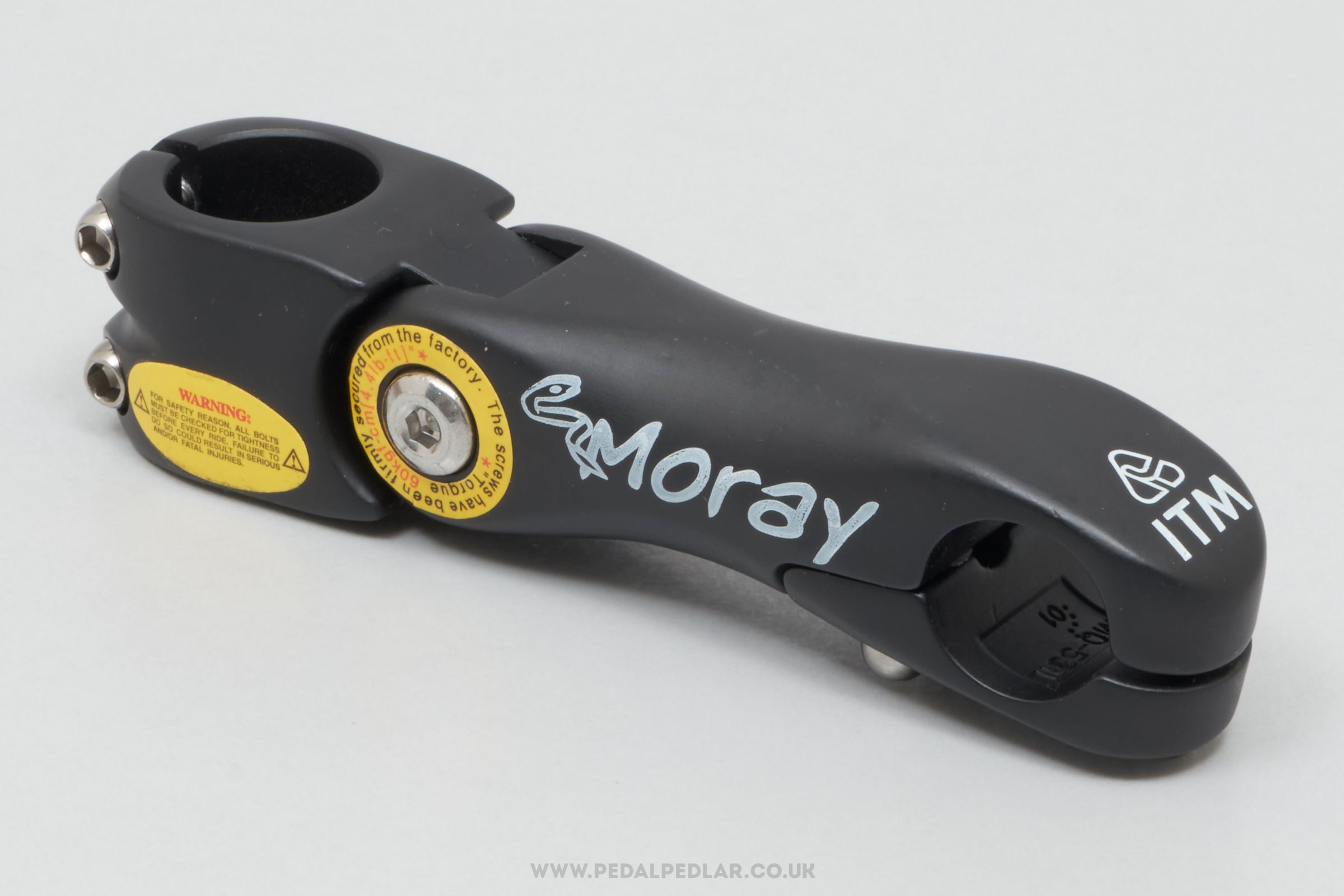


ITM Moray Adjustable NOS Classic 130 mm 1 1/8" A-Head Stem
£41.25 £55.00
✓ Original part - produced in the 1990s
✓ New old stock! Still unused after all these years
✓ Worldwide shipping
ITM Moray ahead handlebar stem, hailing from Italy and in production during the 1990s (yet still new & unused after all this time!). Made from aluminium and weighing in at 431 grams. A fine choice for keeping your classic bike authentic, but also great for any other compatible bike.
OVERVIEW
Production Era - 1990s
Country - Italian
Material - Aluminium
Weight - 431 g
Stock Code - D-STA20C
*New old stock items may have marks from storage over the years, and as we often have multiples they can vary from piece to piece, but they are always genuine new & unused items.
TECHNICAL INFO
Extension Length (ctc)* - 130 mm
Steerer Size (OD) - 1 1/8" (28.6 mm)
Bar Clamp Size - 25.4 mm
Stack Height - 40 mm
Angle - Adjustable
*See help section.
-
▼SHIPPING, TAXES & RETURNS
-
We've been safely sending orders around the world since 2010. Orders are carefully packed, sent with tracking & insurance, and normally collected around midday on Tuesdays and Fridays. Larger items may occasionally require an extra day or two to prepare.
We accept returns, please notify us within 14 days and ensure the item arrives back with us no later than 30 days after the order was received.
EU orders under €150 (excluding shipping) - import VAT and the new €3 customs duty are paid as part of your order, so there's nothing further to pay on delivery.
EU orders over €150 (excluding shipping) - import fees are payable to the carrier before delivery, with nothing collected at checkout.
USA orders - import fees are collected at checkout for all orders to the USA, so there won’t be any surprise charges when your order arrives.
Other international orders - local import fees may apply and are not collected by us. Please check your country's import rules before purchasing.
-
▼HELP SECTION
-
Extension Length (ctc)* - measured from the centre of the handlebar clamp to the centre of the steerer clamp, to the nearest 5 mm. This measurement is taken through the middle of the extension, not along the top or bottom.
Steerer Size (OD) - OD means outside diameter, this is the most important measurement when checking the stem fits your bike. This should match the measurement of the outside of your fork's steerer column, where the stem will be clamped.
Bar Clamp Size - this should match the outside diameter of your handlebars and should be as close as possible to ensure a good and safe fit.
Stack Height - the height of the part that clamps to the forks. This is the minimum amount of space you will need on the fork's steerer column for the stem to fit (minus a few mm as the top of the steerer tube needs to sit just below the top of the stem).
Angle - the angle of the stem's extension in relation to the the fork steerer. Bear in mind the steerer sits at the same angle as the head tube, so a 90 degree stem would not be parallel to the ground. Some manufacturers refer to this as rise or drop, in which case an 80 degree stem would drop 10 degrees from a right angle. Most a-head stems can be flipped although it does depend on the design.
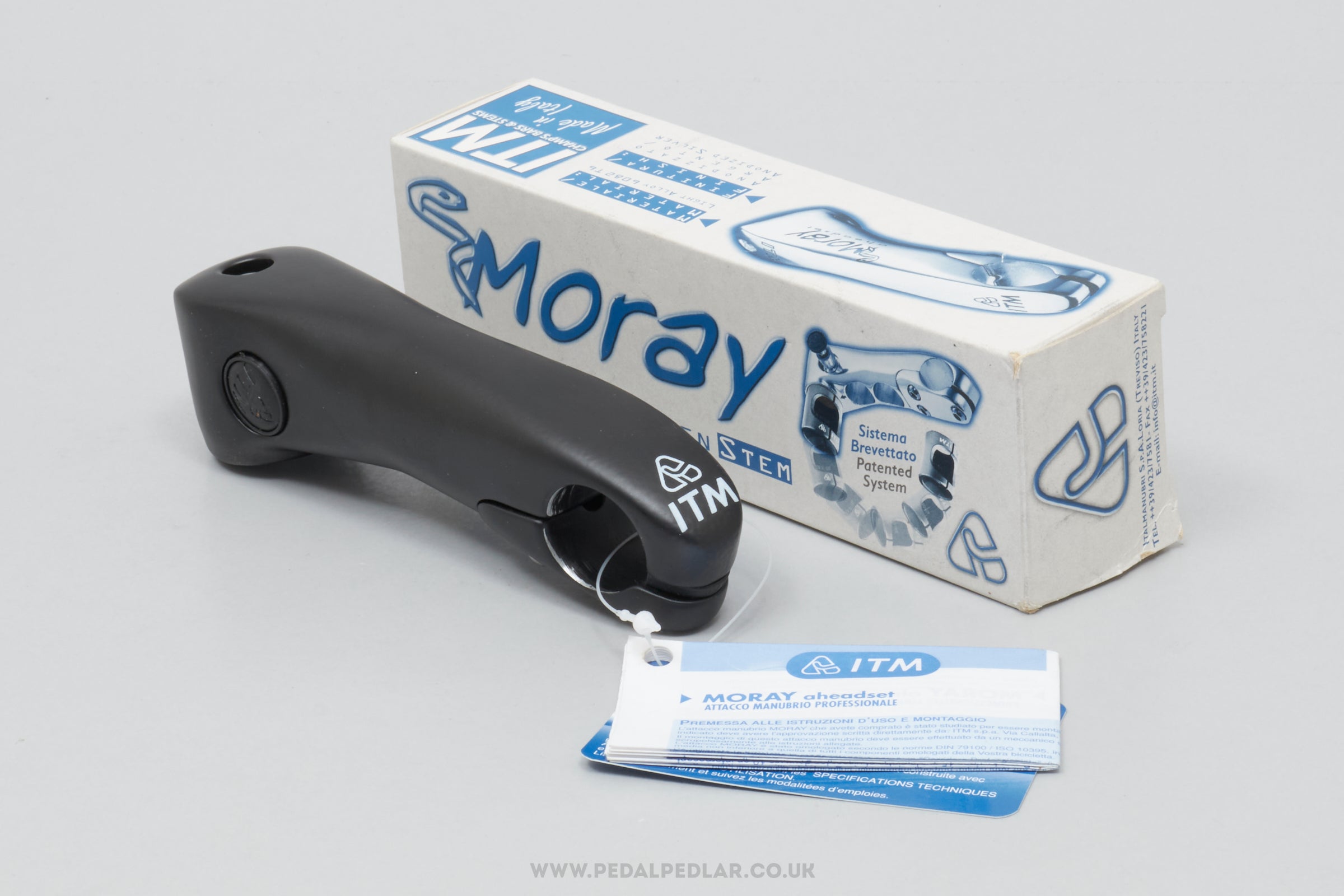


ITM Moray Black NOS/NIB Classic 120 mm 1" A-Head Stem
£30.00 £40.00
✓ Original part - produced in the 1990s
✓ New old stock & still in the original packaging!
✓ Worldwide shipping
ITM Moray ahead handlebar stem, hailing from Italy and in production during the 1990s (yet still new & unused after all this time!). Made from aluminium and weighing in at 310 grams. A fine choice for keeping your classic bike authentic, but also great for any other compatible bike.
OVERVIEW
Production Era - 1990s
Country - Italian
Material - Aluminium
Weight - 310 g
Stock Code - D-STA4C
*New old stock items may have marks from storage over the years, and as we often have multiples they can vary from piece to piece, but they are always genuine new & unused items.
TECHNICAL INFO
Extension Length (ctc)* - 120 mm
Steerer Size (OD) - 1" (25.4 mm)
Bar Clamp Size - 25.8 mm
Stack Height - 44 mm
Angle - 75 Degrees / 80 Degrees (Adjustable)
*See help section.
-
▼SHIPPING, TAXES & RETURNS
-
We've been safely sending orders around the world since 2010. Orders are carefully packed, sent with tracking & insurance, and normally collected around midday on Tuesdays and Fridays. Larger items may occasionally require an extra day or two to prepare.
We accept returns, please notify us within 14 days and ensure the item arrives back with us no later than 30 days after the order was received.
EU orders under €150 (excluding shipping) - import VAT and the new €3 customs duty are paid as part of your order, so there's nothing further to pay on delivery.
EU orders over €150 (excluding shipping) - import fees are payable to the carrier before delivery, with nothing collected at checkout.
USA orders - import fees are collected at checkout for all orders to the USA, so there won’t be any surprise charges when your order arrives.
Other international orders - local import fees may apply and are not collected by us. Please check your country's import rules before purchasing.
-
▼HELP SECTION
-
Extension Length (ctc)* - measured from the centre of the handlebar clamp to the centre of the steerer clamp, to the nearest 5 mm. This measurement is taken through the middle of the extension, not along the top or bottom.
Steerer Size (OD) - OD means outside diameter, this is the most important measurement when checking the stem fits your bike. This should match the measurement of the outside of your fork's steerer column, where the stem will be clamped.
Bar Clamp Size - this should match the outside diameter of your handlebars and should be as close as possible to ensure a good and safe fit.
Stack Height - the height of the part that clamps to the forks. This is the minimum amount of space you will need on the fork's steerer column for the stem to fit (minus a few mm as the top of the steerer tube needs to sit just below the top of the stem).
Angle - the angle of the stem's extension in relation to the the fork steerer. Bear in mind the steerer sits at the same angle as the head tube, so a 90 degree stem would not be parallel to the ground. Some manufacturers refer to this as rise or drop, in which case an 80 degree stem would drop 10 degrees from a right angle. Most a-head stems can be flipped although it does depend on the design.


ITM NOS Vintage 90 mm 1" Quill Stem
£41.25 £55.00
✓ Original part - produced in the 1980s
✓ New old stock! Still unused after all these years
✓ Suitable for historic cycling events such as L'Eroica
✓ Worldwide shipping
ITM stem, hailing from Italy and in production during the 1980s (yet still new & unused after all this time!). Made from aluminium and weighing in at 342 grams. A fine choice for keeping your vintage bike authentic, but also great for any other compatible bike too.
If you're taking part in L'Eroica or a similar vintage event, this is fully compliant - so rest assured, the pre-1987 police won't lock you up for having the wrong stem!
OVERVIEW
Condition Notes - Storage marks & rusty expander as pictured
Production Era - 1980s
Country - Italian
Material - Aluminium
Weight - 342 g
Stock Code - D-ST19V
*New old stock items may have marks from storage over the years, and as we often have multiples they can vary from piece to piece, but they are always genuine new & unused items.
TECHNICAL INFO
Extension Length - 90 mm
Quill Size - 1"
Steerer Size (ID) - 22.2 mm (Standard)
Shaft Height - 175 mm
Clamp Size - 25.4 mm
-
▼SHIPPING, TAXES & RETURNS
-
We've been safely sending orders around the world since 2010. Orders are carefully packed, sent with tracking & insurance, and normally collected around midday on Tuesdays and Fridays. Larger items may occasionally require an extra day or two to prepare.
We accept returns, please notify us within 14 days and ensure the item arrives back with us no later than 30 days after the order was received.
EU orders under €150 (excluding shipping) - import VAT and the new €3 customs duty are paid as part of your order, so there's nothing further to pay on delivery.
EU orders over €150 (excluding shipping) - import fees are payable to the carrier before delivery, with nothing collected at checkout.
USA orders - import fees are collected at checkout for all orders to the USA, so there won’t be any surprise charges when your order arrives.
Other international orders - local import fees may apply and are not collected by us. Please check your country's import rules before purchasing.


ITM NOS Vintage 90 mm 1" Quill Stem
£41.25 £55.00
✓ Original part - produced in the 1980s
✓ New old stock! Still unused after all these years
✓ Suitable for historic cycling events such as L'Eroica
✓ Worldwide shipping
ITM stem, hailing from Italy and in production during the 1980s (yet still new & unused after all this time!). Made from aluminium and weighing in at 342 grams. A fine choice for keeping your vintage bike authentic, but also great for any other compatible bike too.
If you're taking part in L'Eroica or a similar vintage event, this is fully compliant - so rest assured, the pre-1987 police won't lock you up for having the wrong stem!
OVERVIEW
Condition Notes - Storage marks & a little rust on expander as pictured
Production Era - 1980s
Country - Italian
Material - Aluminium
Weight - 342 g
Stock Code - D-ST20V
*New old stock items may have marks from storage over the years, and as we often have multiples they can vary from piece to piece, but they are always genuine new & unused items.
TECHNICAL INFO
Extension Length - 90 mm
Quill Size - 1"
Steerer Size (ID) - 22.2 mm (Standard)
Shaft Height - 175 mm
Clamp Size - 25.4 mm
-
▼SHIPPING, TAXES & RETURNS
-
We've been safely sending orders around the world since 2010. Orders are carefully packed, sent with tracking & insurance, and normally collected around midday on Tuesdays and Fridays. Larger items may occasionally require an extra day or two to prepare.
We accept returns, please notify us within 14 days and ensure the item arrives back with us no later than 30 days after the order was received.
EU orders under €150 (excluding shipping) - import VAT and the new €3 customs duty are paid as part of your order, so there's nothing further to pay on delivery.
EU orders over €150 (excluding shipping) - import fees are payable to the carrier before delivery, with nothing collected at checkout.
USA orders - import fees are collected at checkout for all orders to the USA, so there won’t be any surprise charges when your order arrives.
Other international orders - local import fees may apply and are not collected by us. Please check your country's import rules before purchasing.


ITM NOS Vintage 95 mm 1" Quill Stem
£38.25 £45.00
✓ Original part - in production from the 1970s to the 1980s
✓ New old stock! Still unused after all these years
✓ Worldwide shipping
ITM handlebar stem, hailing from Italy and in production from the 1970s to the 1980s (yet still new & unused after all this time). Made from aluminium and weighing in at 329 grams. A fine choice for keeping your vintage bike authentic, but also great for any other compatible bike.
OVERVIEW
Production Era - 1970s & 1980s
Country - Italian
Material - Aluminium
Weight - 329 g
Stock Code - D-ST220V
NB - Marked as '90' extension but we measure 95 mm.
*New old stock items may have marks from storage over the years, and as we often have multiples they can vary from piece to piece, but they are always genuine new & unused items.
TECHNICAL INFO
Extension Length (ctc)* - 95 mm
Quill Size - 1"
Steerer Size (ID) - 22.2 mm (Standard)
Total Shaft Height - 150 mm
Clamp Size - 25.4 mm
*See help section.
-
▼SHIPPING, TAXES & RETURNS
-
We've been safely sending orders around the world since 2010. Orders are carefully packed, sent with tracking & insurance, and normally collected around midday on Tuesdays and Fridays. Larger items may occasionally require an extra day or two to prepare.
We accept returns, please notify us within 14 days and ensure the item arrives back with us no later than 30 days after the order was received.
EU orders under €150 (excluding shipping) - import VAT and the new €3 customs duty are paid as part of your order, so there's nothing further to pay on delivery.
EU orders over €150 (excluding shipping) - import fees are payable to the carrier before delivery, with nothing collected at checkout.
USA orders - import fees are collected at checkout for all orders to the USA, so there won’t be any surprise charges when your order arrives.
Other international orders - local import fees may apply and are not collected by us. Please check your country's import rules before purchasing.
-
▼HELP SECTION
-
Extension Length (ctc)* - we measure from the centre of the handlebar clamp to the centre of the shaft, to the point where the stem bolt passes through, to the nearest 5 mm. We always take this measurement in a straight line through middle of the extension, not along the top. In some cases the stem may be stamped with a different extension length as some manufacturers measured differently, but we always use our own measurement for consitency.
Quill Size - the most common size for classic and vintage road bikes is 1", this should be the same as the outside diameter of your fork's steerer column. Oversized steerers found on mountain bikes and later road bikes will be either 1 1/8" or 1 1/4".
Steerer Size (ID) - this is the most important measurement when checking the stem fits your bike. This should match the measurement of the inside of your fork's steerer column, where the stem will be inserted. The standard size for road quill stems was 22.2 mm, or 22.0 mm in France until the 1980s.
Total Shaft Height - measured from the top where the expander bolt head sits, to the bottom of the stem's shaft. To give you an idea of how high the stem can be set, there should be an absolute minimum of 50 mm inserted into the fork steerer, although most stems come with a 'minimum insertion line' to help with this.
Clamp Size - this should match the outside diameter of your handlebars and should be as close as possible to ensure a good and safe fit.


Jae Chen Custom Road Champion NOS Vintage 45 cm Drop Handlebars
£41.25 £55.00
✓ Original bars - in production from the 1970s to the 1980s
✓ New old stock! Still unused after all these years
✓ Suitable for historic cycling events such as L'Eroica
✓ Worldwide shipping
Jae Chen Custom Road Champion drop handlebars, hailing from Taiwan and in production from the 1970s to the 1980s (yet still new & unused after all this time!). Made from aluminium and weighing in at 342 grams. A fine choice for keeping your vintage bike authentic, but also great for any other compatible bike.
If you're taking part in L'Eroica or a similar vintage event, these are fully compliant - so rest assured, the pre-1987 police won't lock you up for having the wrong bars!
OVERVIEW
Production Era - 1970s & 1980s
Country - Taiwanese
Material - Aluminium
Weight - 342 g
Stock Code - D-HB133V
*New old stock items may have marks from storage over the years, and as we often have multiples they can vary from piece to piece, but they are always genuine new & unused items.
TECHNICAL INFO
Width (ctc) - 45 cm
Shape - Classic
Clamp Size - 25.4 mm
Drop (ctc) - 146 mm
Reach (ctc) - 115 mm
Cable Groove - None
-
▼SHIPPING, TAXES & RETURNS
-
We've been safely sending orders around the world since 2010. Orders are carefully packed, sent with tracking & insurance, and normally collected around midday on Tuesdays and Fridays. Larger items may occasionally require an extra day or two to prepare.
We accept returns, please notify us within 14 days and ensure the item arrives back with us no later than 30 days after the order was received.
EU orders under €150 (excluding shipping) - import VAT and the new €3 customs duty are paid as part of your order, so there's nothing further to pay on delivery.
EU orders over €150 (excluding shipping) - import fees are payable to the carrier before delivery, with nothing collected at checkout.
USA orders - import fees are collected at checkout for all orders to the USA, so there won’t be any surprise charges when your order arrives.
Other international orders - local import fees may apply and are not collected by us. Please check your country's import rules before purchasing.
-
▼HELP SECTION
-
Width (ctc)* - measured at the ends of the drops, from the centre of one side to the other (ctc), to the nearest cm. In some cases the bars may display a different width as some brands measure outside to outside rather than ctc, but we always use this measurement for consistency.
Shape - Classic' drops have a smooth curve, 'anatomic' have multiple angles for different hand positions, 'compact' are short reach with a shallow drop and randonneur bars are usually classic in shape but flare out at the drops.
Clamp Size - this should match the internal diameter of your handlebar stem clamp, and should be as close as possible to ensure a good and safe fit.
Drop (ctc) - from the top flat section to the bottom of the drops, measured from the centre of one to the other with the flat part at the end of the drops parrallel to the ground.
Reach (ctc) - measured from the centre of the top section to the centre of the 'curve' at its furthest point, giving you the maximum reach. We measure this with the flat part at the end of of the drops parrallel to the ground.
Cable Groove - these allow you to run your cables neatly underneath the handlebar tape, if your setup requires this.


JPR (Jean Paul Routens) Extra Light Fluted NOS Vintage 26.2 mm Seatpost
£41.25 £55.00
✓ Original part - in production from the 1980s to the 1990s
✓ New old stock! Still unused after all these years
✓ Lightweight for the era - just 257 grams
✓ Suitable for historic cycling events such as L'Eroica
✓ Worldwide shipping
JPR (Jean Paul Routens) Extra Light seatpost, in production from the 1980s to the 1990s (yet still new & unused after all this time!). Made from aluminium and weighing in at 257 grams - pretty lightweight for seatposts at that time. A fine choice for keeping your vintage bike authentic, but also great for any other compatible bike.
If you're taking part in L'Eroica or a similar vintage event, this is fully compliant - so rest assured, the pre-1987 police won't lock you up for having the wrong seatpost!
Please note: Once inserted into a frame this cannot be returned, so please make sure to double check the diameter is correct before installing.OVERVIEW
Production Era - 1980s & 1990s
Material - Aluminium
Weight - 257 g
Stock Code - D-SP177V
*New old stock items may have marks from storage over the years, and as we often have multiples they can vary from piece to piece, but they are always genuine new & unused items.
TECHNICAL INFO
Seatpost Diameter - 26.2 mm
Length (Centre of Rails to Base) - 180 mm
-
▼SHIPPING, TAXES & RETURNS
-
We've been safely sending orders around the world since 2010. Orders are carefully packed, sent with tracking & insurance, and normally collected around midday on Tuesdays and Fridays. Larger items may occasionally require an extra day or two to prepare.
We accept returns, please notify us within 14 days and ensure the item arrives back with us no later than 30 days after the order was received.
EU orders under €150 (excluding shipping) - import VAT and the new €3 customs duty are paid as part of your order, so there's nothing further to pay on delivery.
EU orders over €150 (excluding shipping) - import fees are payable to the carrier before delivery, with nothing collected at checkout.
USA orders - import fees are collected at checkout for all orders to the USA, so there won’t be any surprise charges when your order arrives.
Other international orders - local import fees may apply and are not collected by us. Please check your country's import rules before purchasing.
-
▼HELP SECTION
-
Seatpost Diameter - this needs to match the internal diameter of your frame’s seat tube closely, it should be possible to insert the seatpost without force but the fit should be tight enough so it doesn’t just drop in, with no play once inserted. If you have a post that fits the measurement should be stamped somewhere near the bottom, if not you’ll need to measure with a caliper or seatpost sizing tool as the sizes go up in 0.2 mm increments.
Length (Centre of Rails to Base) - measured from where the centre of the saddle rails will sit once installed, all the way to the bottom of the seatpost. Normally there’s a mark to tell you how much of the seatpost needs to be inserted in the frame, however this isn’t always the case so we’d recommend allowing a minimum of 6 cm.


JPR (Jean Paul Routens) Extra Light Fluted NOS Vintage 26.6 mm Seatpost
£41.25 £55.00
✓ Original part - in production from the 1980s to the 1990s
✓ New old stock! Still unused after all these years
✓ Lightweight for the era - just 258 grams
✓ Suitable for historic cycling events such as L'Eroica
✓ Worldwide shipping
JPR (Jean Paul Routens) Extra Light seatpost, in production from the 1980s to the 1990s (yet still new & unused after all this time!). Made from aluminium and weighing in at 258 grams - pretty lightweight for seatposts at that time. A fine choice for keeping your vintage bike authentic, but also great for any other compatible bike.
If you're taking part in L'Eroica or a similar vintage event, this is fully compliant - so rest assured, the pre-1987 police won't lock you up for having the wrong seatpost!
Please note: Once inserted into a frame this cannot be returned, so please make sure to double check the diameter is correct before installing.OVERVIEW
Production Era - 1980s & 1990s
Material - Aluminium
Weight - 258 g
Stock Code - D-SP176V
*New old stock items may have marks from storage over the years, and as we often have multiples they can vary from piece to piece, but they are always genuine new & unused items.
TECHNICAL INFO
Seatpost Diameter - 26.6 mm
Length (Centre of Rails to Base) - 180 mm
-
▼SHIPPING, TAXES & RETURNS
-
We've been safely sending orders around the world since 2010. Orders are carefully packed, sent with tracking & insurance, and normally collected around midday on Tuesdays and Fridays. Larger items may occasionally require an extra day or two to prepare.
We accept returns, please notify us within 14 days and ensure the item arrives back with us no later than 30 days after the order was received.
EU orders under €150 (excluding shipping) - import VAT and the new €3 customs duty are paid as part of your order, so there's nothing further to pay on delivery.
EU orders over €150 (excluding shipping) - import fees are payable to the carrier before delivery, with nothing collected at checkout.
USA orders - import fees are collected at checkout for all orders to the USA, so there won’t be any surprise charges when your order arrives.
Other international orders - local import fees may apply and are not collected by us. Please check your country's import rules before purchasing.
-
▼HELP SECTION
-
Seatpost Diameter - this needs to match the internal diameter of your frame’s seat tube closely, it should be possible to insert the seatpost without force but the fit should be tight enough so it doesn’t just drop in, with no play once inserted. If you have a post that fits the measurement should be stamped somewhere near the bottom, if not you’ll need to measure with a caliper or seatpost sizing tool as the sizes go up in 0.2 mm increments.
Length (Centre of Rails to Base) - measured from where the centre of the saddle rails will sit once installed, all the way to the bottom of the seatpost. Normally there’s a mark to tell you how much of the seatpost needs to be inserted in the frame, however this isn’t always the case so we’d recommend allowing a minimum of 6 cm.


K2 'Wild To Be Free' Large Classic Cycling Jersey
£26.25 £35.00
✓ Original classic jersey - 1990s style!
✓ Suitable for historic cycling events such as L'Eroica
✓ Thoroughly checked & honestly graded
✓ Great alternative to buying new
✓ Worldwide shipping
K2 short sleeved cycling jersey, hailing from Italy and likely made in the 1990s given the style. An excellent choice for wearing on your vintage bike, and also a responsible alternative to buying brand new cycling kit!
If you're taking part in L'Eroica or a similar vintage event, this is compliant - so rest assured, the pre-1987 police won't lock you up for having the wrong jersey!
The jersey’s been thoroughly checked over and graded as good condition. If there are any issues worth noting we’ll do so in the overview section below, but please take a good look at the photos so you can see the condition yourself before you buy.OVERVIEW
Condition - Good
Condition Notes - Missing zip pull replaced with paper clip
Material - Synthetic
Stock Code - U-JS126C
**This is just an estimate so please check the actual measurements before buying, the best way to get the right fit is to compare them with those of a garment that fits well.
DETAIL & SIZING
Sleeve Type - Short Sleeved
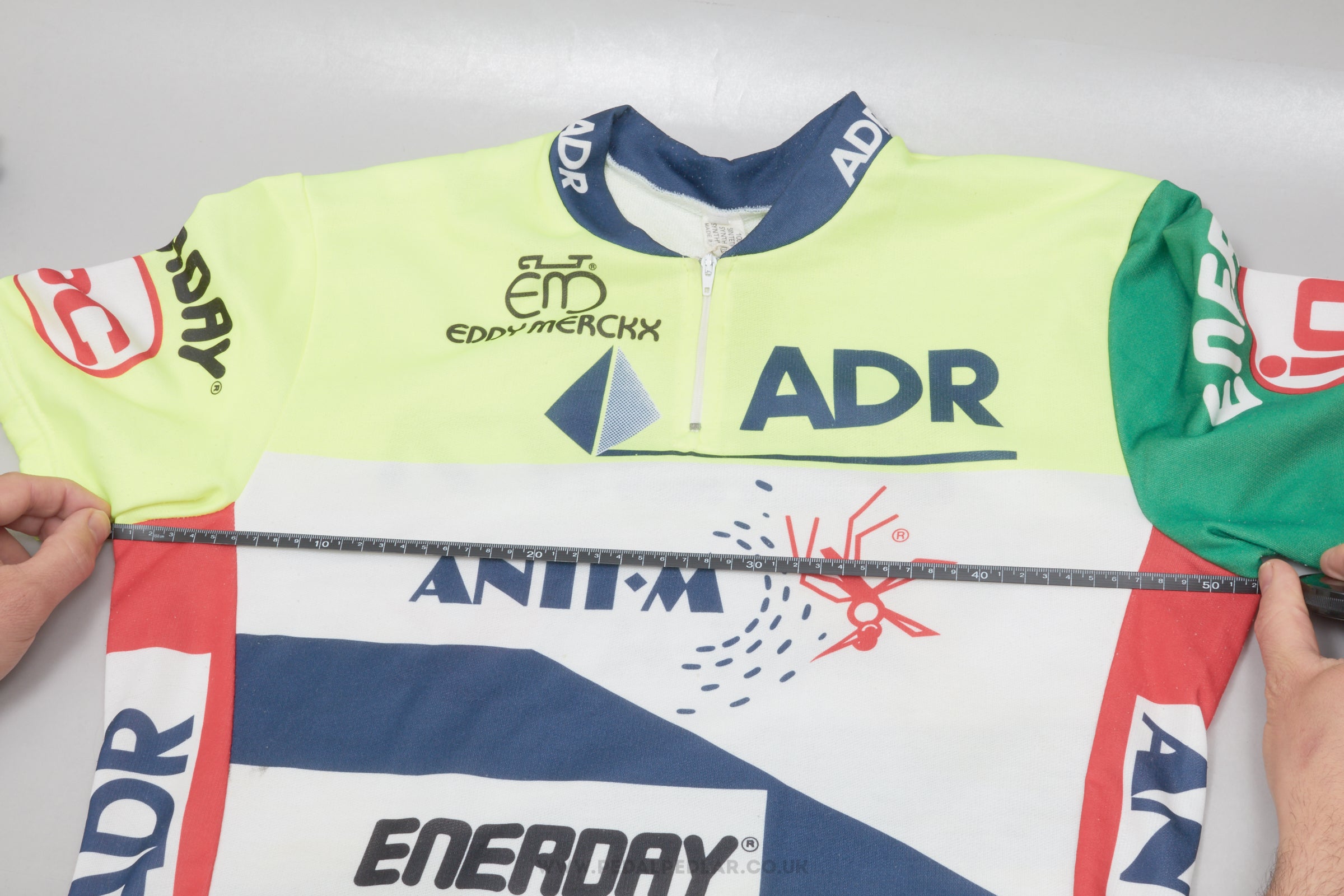
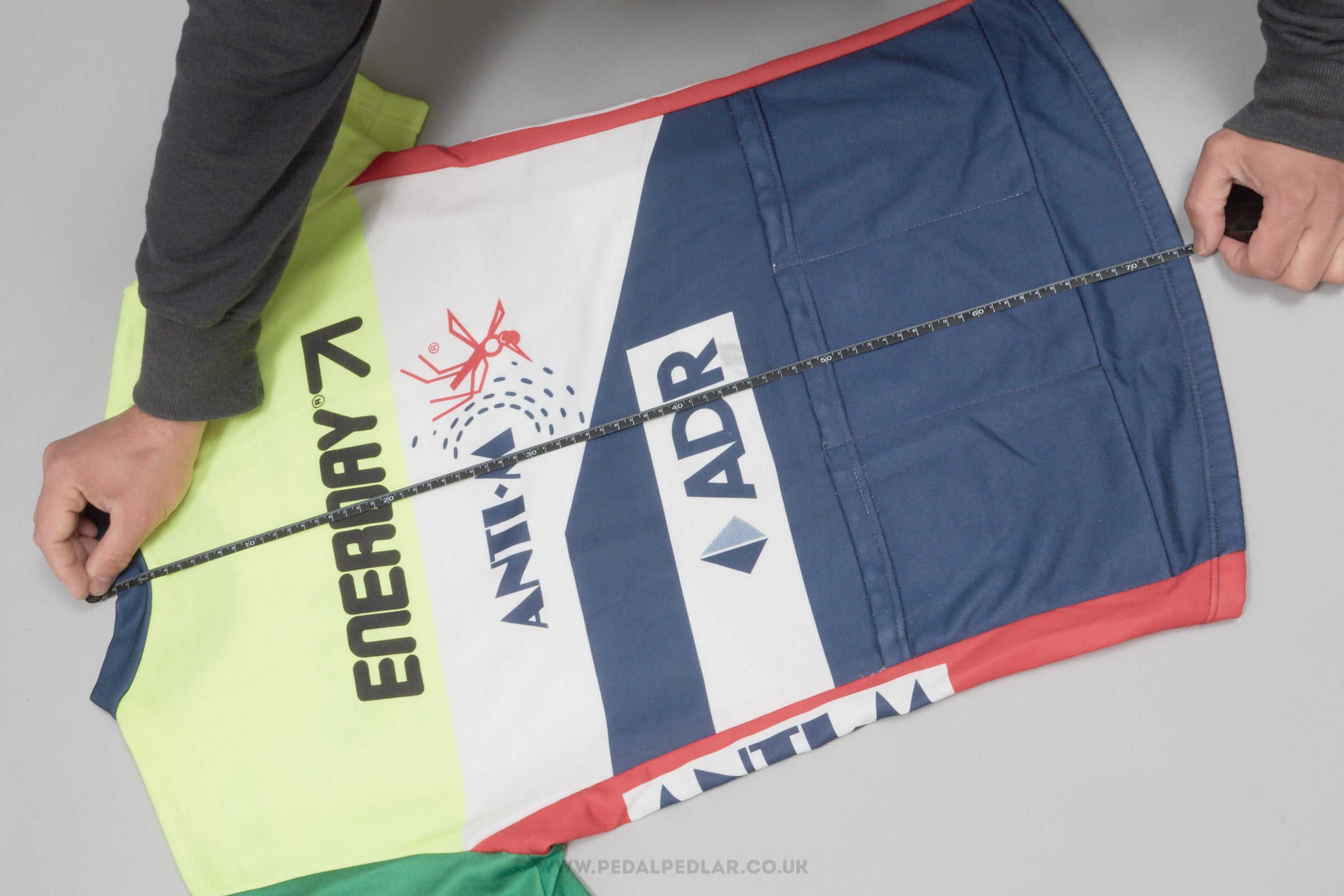
Pit to Pit (Laid Flat) - 56 cm
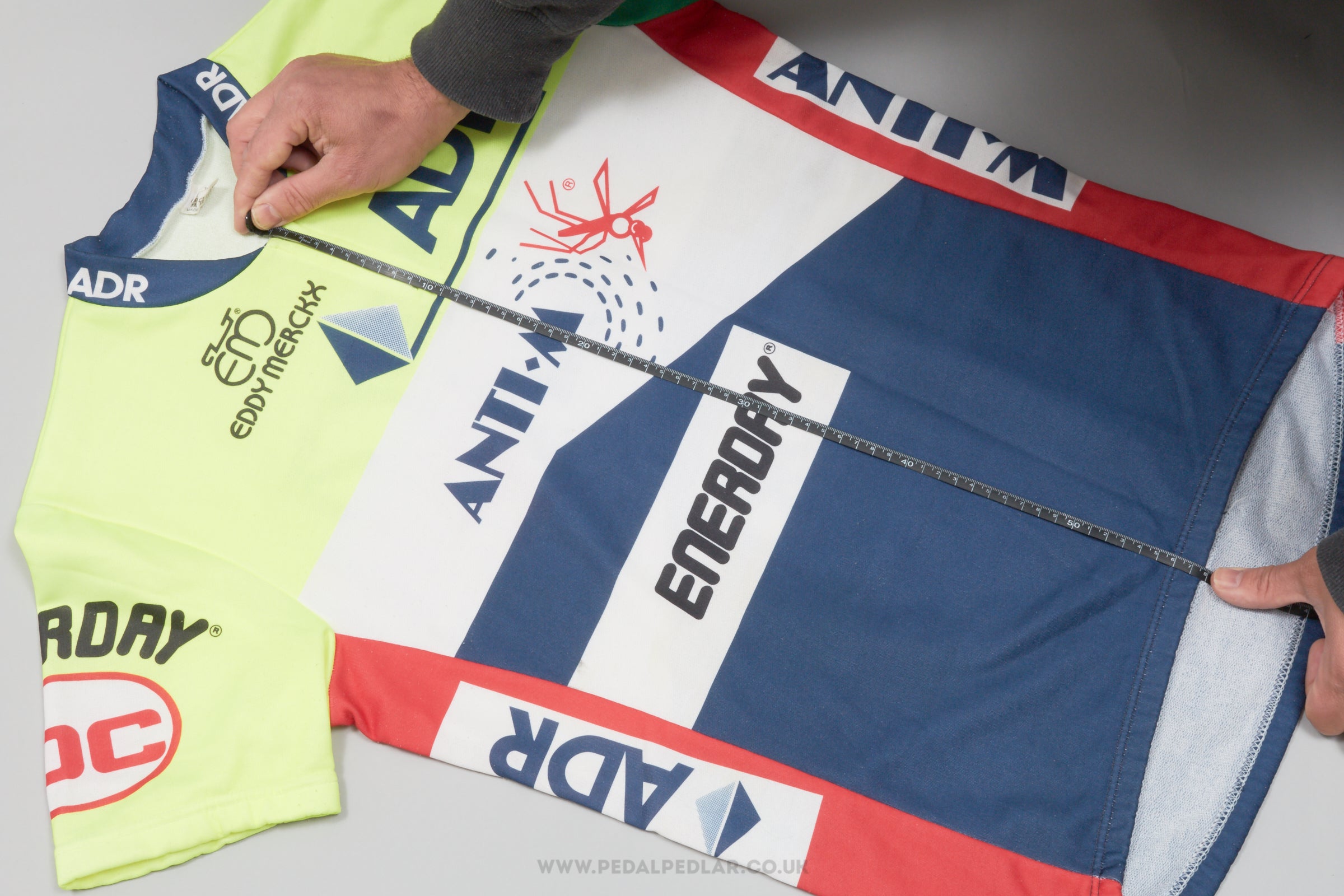
Top to Bottom (Front) - 62 cm
Top to Bottom (Back) - 73 cm
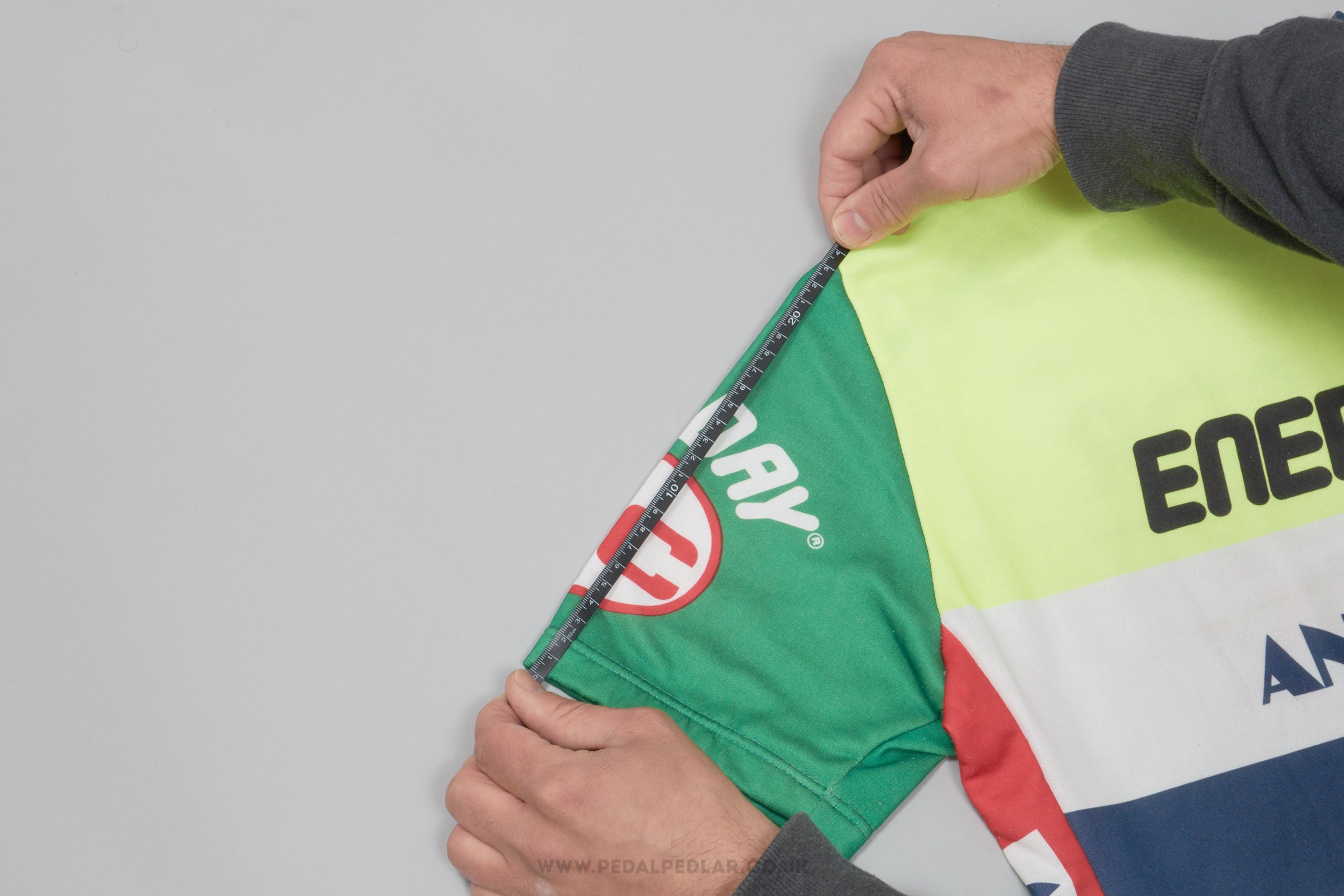
Shoulder Seam to Sleeve End (Oustide) - 25 cm
Across Neck (Laid Flat) - 20 cm
Across Sleeve End (Laid Flat) - 11 cm
NB: Check the help section to see how we take these measurements to get a good comparison.
-
▼SHIPPING, TAXES & RETURNS
-
We've been safely sending orders around the world since 2010. Orders are carefully packed, sent with tracking & insurance, and normally collected around midday on Tuesdays and Fridays. Larger items may occasionally require an extra day or two to prepare.
We accept returns, please notify us within 14 days and ensure the item arrives back with us no later than 30 days after the order was received.
EU orders under €150 (excluding shipping) - import VAT and the new €3 customs duty are paid as part of your order, so there's nothing further to pay on delivery.
EU orders over €150 (excluding shipping) - import fees are payable to the carrier before delivery, with nothing collected at checkout.
USA orders - import fees are collected at checkout for all orders to the USA, so there won’t be any surprise charges when your order arrives.
Other international orders - local import fees may apply and are not collected by us. Please check your country's import rules before purchasing.
-
▼HELP SECTION
- We've also provided photographs below to illustrate how we take our measurements.
Pit to Pit - this measurement is taken from the centre of one armpit to the other, across the chest with the jersey laid flat.
Top to Bottom - this will always be from the very top of the collar to the very bottom hem, we provide measurements for both the front and back, always taken with the jersey laid flat.
Shoulder Seam to Sleeve End - this measurement is taken from the shoulder seam down to the very end of the sleeve on the outside.
Across Neck - for consistency on all neck shapes we gather the front and back together and lay them flat, then measure across the stitching (as shown in the supporting photos).
Across Sleeve End - measured across the sleeve end, laid flat.


Kalloy AL-001 ATB System NOS Classic 560 mm Flat/Straight Handlebars
£30.00
✓ Original bars - produced in the 1990s
✓ New old stock! Still unused after all these years
✓ Worldwide shipping
Kalloy AL-001 handlebars, hailing from Taiwan and in production during the 1990s (yet still new & unused after all this time!). Made from aluminium and weighing in at 240 grams. A fine choice for keeping your classic bike authentic, but also great for any other compatible bike.
OVERVIEW
Model ID - AL-001
Production Era - 1990s
Country - Taiwanese
Material - Aluminium
Weight - 240 g
Stock Code - D-HBF43C
*New old stock items may have marks from storage over the years, and as we often have multiples they can vary from piece to piece, but they are always genuine new & unused items.
TECHNICAL INFO
Width (outside to outside) - 560 mm
Bar Type - Flat/Straight
Clamp Size - 25.4 mm
Grip Diameter - 22.2 mm
-
▼SHIPPING, TAXES & RETURNS
-
We've been safely sending orders around the world since 2010. Orders are carefully packed, sent with tracking & insurance, and normally collected around midday on Tuesdays and Fridays. Larger items may occasionally require an extra day or two to prepare.
We accept returns, please notify us within 14 days and ensure the item arrives back with us no later than 30 days after the order was received.
EU orders under €150 (excluding shipping) - import VAT and the new €3 customs duty are paid as part of your order, so there's nothing further to pay on delivery.
EU orders over €150 (excluding shipping) - import fees are payable to the carrier before delivery, with nothing collected at checkout.
USA orders - import fees are collected at checkout for all orders to the USA, so there won’t be any surprise charges when your order arrives.
Other international orders - local import fees may apply and are not collected by us. Please check your country's import rules before purchasing.
-
▼HELP SECTION
-
Width - the total width at its widest point, from end to end, rounded to the nearest cm.
Clamp Size - this should match the internal diameter of your handlebar stem clamp, and should be as close as possible to ensure a good and safe fit.
Grip Diameter - the outside diameter of the area where handlebar grips are fitted, this determines not only what grips will fit but brake levers too so it's important to check if you have a specific setup in mind.
Rise/Drop - we measure this at the end of the bars, from the centre point of the clamp area to the centre of the end. This measurent can change when the bar is rotated so there is a bit of tolerance here, please use this as an approximate measurement only.


Kalloy AL-219 Black NOS Classic 60 mm 1" Quill Stem
£25.00
✓ Original part - produced in the 1990s
✓ New old stock! Still unused after all these years
✓ Worldwide shipping
Kalloy AL-219 handlebar stem (or gooseneck if you prefer), hailing from Taiwan and in production during the 1990s (yet still new & unused after all this time). Made from aluminium and weighing in at 330 grams. A fine choice for keeping your classic bike authentic, but also great for any other compatible bike.
OVERVIEW
Production Era - 1990s
Country - Taiwanese
Material - Aluminium
Weight - 330 g
Stock Code - D-G1-ST258C
*New old stock items may have marks from storage over the years, and as we often have multiples they can vary from piece to piece, but they are always genuine new & unused items.
TECHNICAL INFO
Extension Length (ctc)* - 60 mm
Quill Size - 1"
Steerer Size (ID) - 22.2 mm (Standard)
Total Shaft Height - 210 mm
Clamp Size - 25.4 mm
Rise - 45 Degrees
*See help section.
-
▼SHIPPING, TAXES & RETURNS
-
We've been safely sending orders around the world since 2010. Orders are carefully packed, sent with tracking & insurance, and normally collected around midday on Tuesdays and Fridays. Larger items may occasionally require an extra day or two to prepare.
We accept returns, please notify us within 14 days and ensure the item arrives back with us no later than 30 days after the order was received.
EU orders under €150 (excluding shipping) - import VAT and the new €3 customs duty are paid as part of your order, so there's nothing further to pay on delivery.
EU orders over €150 (excluding shipping) - import fees are payable to the carrier before delivery, with nothing collected at checkout.
USA orders - import fees are collected at checkout for all orders to the USA, so there won’t be any surprise charges when your order arrives.
Other international orders - local import fees may apply and are not collected by us. Please check your country's import rules before purchasing.
-
▼SAFETY & COMPLIANCE
- This product complies with the EU General Product Safety Regulation (GPSR). Professional installation and regular inspections are strongly recommended. Due to the product's age, extra care should be taken during use.
Product Manufacturer - Kalloy Uno, No.186, Dazhou Rd., Shengang Dist., Taichung City 429, Taiwan
EU Authorised Representative - Global Trade Department NI Ltd, Office 834, Unit 6, 100 Lisburn Road, Belfast BT9 6AG, Northern Ireland
-
▼HELP SECTION
-
Extension Length (ctc)* - we measure from the centre of the handlebar clamp to the centre of the shaft, to the point where the stem bolt passes through, to the nearest 5 mm. We always take this measurement in a straight line through the middle of the extension, not along the top. In some cases the stem may be stamped with a different extension length as some manufacturers measured differently, but we always use our own measurement for consitency.
Quill Size - the most common size for classic and vintage road bikes is 1", this should be the same as the outside diameter of your fork's steerer column. Oversized steerers found on mountain bikes and later road bikes will be either 1 1/8" or 1 1/4".
Steerer Size (ID) - this is the most important measurement when checking the stem fits your bike. This should match the measurement of the inside of your fork's steerer column, where the stem will be inserted. The standard size for road quill stems was 22.2 mm, or 22.0 mm in France until the 1980s.
Total Shaft Height - measured from the top where the expander bolt head sits, to the bottom of the stem's shaft. To give you an idea of how high the stem can be set, there should be an absolute minimum of 50 mm inserted into the fork steerer, although most stems come with a 'minimum insertion line' to help with this.
Clamp Size - this should match the outside diameter of your handlebars and should be as close as possible to ensure a good and safe fit.


Kalloy AL-219 Silver NOS Classic 60 mm 1" Quill Stem
£25.00
✓ Original part - produced in the 1990s
✓ New old stock! Still unused after all these years
✓ Worldwide shipping
Kalloy AL-219 handlebar stem (or gooseneck if you prefer), hailing from Taiwan and in production during the 1990s (yet still new & unused after all this time). Made from aluminium and weighing in at 340 grams. A fine choice for keeping your classic bike authentic, but also great for any other compatible bike.
OVERVIEW
Production Era - 1990s
Country - Taiwanese
Material - Aluminium
Weight - 340 g
Stock Code - D-G1-ST257C
*New old stock items may have marks from storage over the years, and as we often have multiples they can vary from piece to piece, but they are always genuine new & unused items.
TECHNICAL INFO
Extension Length (ctc)* - 60 mm
Quill Size - 1"
Steerer Size (ID) - 22.2 mm (Standard)
Total Shaft Height - 210 mm
Clamp Size - 25.4 mm
Rise - 45 Degrees
*See help section.
-
▼SHIPPING, TAXES & RETURNS
-
We've been safely sending orders around the world since 2010. Orders are carefully packed, sent with tracking & insurance, and normally collected around midday on Tuesdays and Fridays. Larger items may occasionally require an extra day or two to prepare.
We accept returns, please notify us within 14 days and ensure the item arrives back with us no later than 30 days after the order was received.
EU orders under €150 (excluding shipping) - import VAT and the new €3 customs duty are paid as part of your order, so there's nothing further to pay on delivery.
EU orders over €150 (excluding shipping) - import fees are payable to the carrier before delivery, with nothing collected at checkout.
USA orders - import fees are collected at checkout for all orders to the USA, so there won’t be any surprise charges when your order arrives.
Other international orders - local import fees may apply and are not collected by us. Please check your country's import rules before purchasing.
-
▼SAFETY & COMPLIANCE
- This product complies with the EU General Product Safety Regulation (GPSR). Professional installation and regular inspections are strongly recommended. Due to the product's age, extra care should be taken during use.
Product Manufacturer - Kalloy Uno, No.186, Dazhou Rd., Shengang Dist., Taichung City 429, Taiwan
EU Authorised Representative - Global Trade Department NI Ltd, Office 834, Unit 6, 100 Lisburn Road, Belfast BT9 6AG, Northern Ireland
-
▼HELP SECTION
-
Extension Length (ctc)* - we measure from the centre of the handlebar clamp to the centre of the shaft, to the point where the stem bolt passes through, to the nearest 5 mm. We always take this measurement in a straight line through the middle of the extension, not along the top. In some cases the stem may be stamped with a different extension length as some manufacturers measured differently, but we always use our own measurement for consitency.
Quill Size - the most common size for classic and vintage road bikes is 1", this should be the same as the outside diameter of your fork's steerer column. Oversized steerers found on mountain bikes and later road bikes will be either 1 1/8" or 1 1/4".
Steerer Size (ID) - this is the most important measurement when checking the stem fits your bike. This should match the measurement of the inside of your fork's steerer column, where the stem will be inserted. The standard size for road quill stems was 22.2 mm, or 22.0 mm in France until the 1980s.
Total Shaft Height - measured from the top where the expander bolt head sits, to the bottom of the stem's shaft. To give you an idea of how high the stem can be set, there should be an absolute minimum of 50 mm inserted into the fork steerer, although most stems come with a 'minimum insertion line' to help with this.
Clamp Size - this should match the outside diameter of your handlebars and should be as close as possible to ensure a good and safe fit.


Kalloy AL-231 Silver NOS Classic 80 mm 1" Quill Stem
£25.00
✓ Original part - produced in the 1990s
✓ New old stock! Still unused after all these years
✓ Worldwide shipping
Kalloy AL-231 handlebar stem (or gooseneck if you prefer), hailing from Taiwan and in production during the 1990s (yet still new & unused after all this time). Made from aluminium and weighing in at 345 grams. A fine choice for keeping your classic bike authentic, but also great for any other compatible bike.
OVERVIEW
Production Era - 1990s
Country - Taiwanese
Material - Aluminium
Weight - 345 g
Stock Code - D-G1-ST256C
*New old stock items may have marks from storage over the years, and as we often have multiples they can vary from piece to piece, but they are always genuine new & unused items.
TECHNICAL INFO
Extension Length (ctc)* - 80 mm
Quill Size - 1"
Steerer Size (ID) - 22.2 mm (Standard)
Total Shaft Height - 180 mm
Clamp Size - 25.4 mm
Rise - 30 Degrees
*See help section.
-
▼SHIPPING, TAXES & RETURNS
-
We've been safely sending orders around the world since 2010. Orders are carefully packed, sent with tracking & insurance, and normally collected around midday on Tuesdays and Fridays. Larger items may occasionally require an extra day or two to prepare.
We accept returns, please notify us within 14 days and ensure the item arrives back with us no later than 30 days after the order was received.
EU orders under €150 (excluding shipping) - import VAT and the new €3 customs duty are paid as part of your order, so there's nothing further to pay on delivery.
EU orders over €150 (excluding shipping) - import fees are payable to the carrier before delivery, with nothing collected at checkout.
USA orders - import fees are collected at checkout for all orders to the USA, so there won’t be any surprise charges when your order arrives.
Other international orders - local import fees may apply and are not collected by us. Please check your country's import rules before purchasing.
-
▼SAFETY & COMPLIANCE
- This product complies with the EU General Product Safety Regulation (GPSR). Professional installation and regular inspections are strongly recommended. Due to the product's age, extra care should be taken during use.
Product Manufacturer - Kalloy Uno, No.186, Dazhou Rd., Shengang Dist., Taichung City 429, Taiwan
EU Authorised Representative - Global Trade Department NI Ltd, Office 834, Unit 6, 100 Lisburn Road, Belfast BT9 6AG, Northern Ireland
-
▼HELP SECTION
-
Extension Length (ctc)* - we measure from the centre of the handlebar clamp to the centre of the shaft, to the point where the stem bolt passes through, to the nearest 5 mm. We always take this measurement in a straight line through the middle of the extension, not along the top. In some cases the stem may be stamped with a different extension length as some manufacturers measured differently, but we always use our own measurement for consitency.
Quill Size - the most common size for classic and vintage road bikes is 1", this should be the same as the outside diameter of your fork's steerer column. Oversized steerers found on mountain bikes and later road bikes will be either 1 1/8" or 1 1/4".
Steerer Size (ID) - this is the most important measurement when checking the stem fits your bike. This should match the measurement of the inside of your fork's steerer column, where the stem will be inserted. The standard size for road quill stems was 22.2 mm, or 22.0 mm in France until the 1980s.
Total Shaft Height - measured from the top where the expander bolt head sits, to the bottom of the stem's shaft. To give you an idea of how high the stem can be set, there should be an absolute minimum of 50 mm inserted into the fork steerer, although most stems come with a 'minimum insertion line' to help with this.
Clamp Size - this should match the outside diameter of your handlebars and should be as close as possible to ensure a good and safe fit.


Kalloy AL222 Silver NOS Classic 80 mm 1" Quill Stem
£25.00
✓ Original part - produced in the 1990s
✓ New old stock! Still unused after all these years
✓ Worldwide shipping
Kalloy AL222 stem, hailing from Taiwan and in production during the 1990s (yet still new & unused after all this time!). Made from aluminium and weighing in at 385 grams. A fine choice for keeping your classic bike authentic, but also great for any other compatible bike.
OVERVIEW
Model ID - AL222
Production Era - 1990s
Country - Taiwanese
Material - Aluminium
Weight - 385 g
Stock Code - D-ST204C
*New old stock items may have marks from storage over the years, and as we often have multiples they can vary from piece to piece, but they are always genuine new & unused items.
TECHNICAL INFO
Extension Length (ctc)* - 80 mm
Quill Size - 1"
Steerer Size (ID) - 22.2 mm (Standard)
Total Shaft Height - 170 mm
Clamp Size - 25.4 mm
*See help section.
-
▼SHIPPING, TAXES & RETURNS
-
We've been safely sending orders around the world since 2010. Orders are carefully packed, sent with tracking & insurance, and normally collected around midday on Tuesdays and Fridays. Larger items may occasionally require an extra day or two to prepare.
We accept returns, please notify us within 14 days and ensure the item arrives back with us no later than 30 days after the order was received.
EU orders under €150 (excluding shipping) - import VAT and the new €3 customs duty are paid as part of your order, so there's nothing further to pay on delivery.
EU orders over €150 (excluding shipping) - import fees are payable to the carrier before delivery, with nothing collected at checkout.
USA orders - import fees are collected at checkout for all orders to the USA, so there won’t be any surprise charges when your order arrives.
Other international orders - local import fees may apply and are not collected by us. Please check your country's import rules before purchasing.
-
▼HELP SECTION
-
Extension Length (ctc)* - we measure from the centre of the handlebar clamp to the centre of the shaft, to the point where the stem bolt passes through, to the nearest 5 mm. We always take this measurement in a straight line through middle of the extension, not along the top. In some cases the stem may be stamped with a different extension length as some manufacturers measured differently, but we always use our own measurement for consitency.
Quill Size - the most common size for classic and vintage road bikes is 1", this should be the same as the outside diameter of your fork's steerer column. Oversized steerers found on mountain bikes and later road bikes will be either 1 1/8" or 1 1/4".
Steerer Size (ID) - this is the most important measurement when checking the stem fits your bike. This should match the measurement of the inside of your fork's steerer column, where the stem will be inserted. The standard size for road quill stems was 22.2 mm, or 22.0 mm in France until the 1980s.
Total Shaft Height - measured from the top where the expander bolt head sits, to the bottom of the stem's shaft. To give you an idea of how high the stem can be set, there should be an absolute minimum of 50 mm inserted into the fork steerer, although most stems come with a 'minimum insertion line' to help with this.
Clamp Size - this should match the outside diameter of your handlebars and should be as close as possible to ensure a good and safe fit.


Kalloy Carbon Wrap Classic 27.2 mm Seatpost
£30.00
✓ Original part - produced in the 1990s
✓ Professionally checked & cleaned
✓ Worldwide shipping
Kalloy seatpost (or seat pin if you prefer), hailing from Taiwan and in production during the 1990s. Made from aluminium/carbon fibre and weighing in at 292 grams - pretty lightweight for seatposts at that time. A fine choice for keeping your classic bike authentic, but also great for any other compatible bike.
The seat post has been carefully cleaned, thoroughly checked by one of our mechanics and graded as good condition, but do take a good look at the detailed photos so you can see the cosmetic condition before you buy.OVERVIEW
Production Era - 1990s
Country - Taiwanese
Material - Aluminium / Carbon fibre
Weight - 292 g
Stock Code - U-G3-SP226C
TECHNICAL INFO
Seatpost Diameter - 27.2 mm
Length (Centre of Rails to Base) - 235 mm
-
▼SHIPPING, TAXES & RETURNS
-
We've been safely sending orders around the world since 2010. Orders are carefully packed, sent with tracking & insurance, and normally collected around midday on Tuesdays and Fridays. Larger items may occasionally require an extra day or two to prepare.
We accept returns, please notify us within 14 days and ensure the item arrives back with us no later than 30 days after the order was received.
EU orders under €150 (excluding shipping) - import VAT and the new €3 customs duty are paid as part of your order, so there's nothing further to pay on delivery.
EU orders over €150 (excluding shipping) - import fees are payable to the carrier before delivery, with nothing collected at checkout.
USA orders - import fees are collected at checkout for all orders to the USA, so there won’t be any surprise charges when your order arrives.
Other international orders - local import fees may apply and are not collected by us. Please check your country's import rules before purchasing.
-
▼SAFETY & COMPLIANCE
- This product complies with the EU General Product Safety Regulation (GPSR). Professional installation and regular inspections are recommended. Due to the product's age, extra care should be taken during use.
Product Manufacturer - Kalloy Uno, No.186, Dazhou Rd., Shengang Dist., Taichung City 429, Taiwan
EU Authorised Representative - Global Trade Department NI Ltd, Office 834, Unit 6, 100 Lisburn Road, Belfast BT9 6AG, Northern Ireland
-
▼HELP SECTION
-
Seatpost Diameter - this needs to match the internal diameter of your frame’s seat tube closely, it should be possible to insert the seatpost without force but the fit should be tight enough so it doesn’t just drop in, with no play once inserted. If you have a post that fits the measurement should be stamped somewhere near the bottom, if not you’ll need to measure with a caliper or seatpost sizing tool as the sizes go up in 0.2 mm increments.
Length (Centre of Rails to Base) - measured from where the centre of the saddle rails will sit once installed, all the way to the bottom of the seatpost. Normally there’s a mark to tell you how much of the seatpost needs to be inserted in the frame, however this isn’t always the case so we’d recommend allowing a minimum of 6 cm.


Kalloy Fluted Black NOS Vintage 26.6 mm Seatpost
£27.50
✓ Original part - produced in the 1980s
✓ New old stock! Still unused after all these years
✓ Suitable for historic cycling events such as L'Eroica
✓ Worldwide shipping
Kalloy seatpost, hailing from Taiwan and in production during the 1980s (yet still new & unused after all this time!). Made from aluminium and weighing in at 312 grams. A fine choice for keeping your vintage bike authentic, but also great for any other compatible bike.
If you're taking part in L'Eroica or a similar vintage event, this is fully compliant - so rest assured, the pre-1987 police won't lock you up for having the wrong seatpost!
Please note: Once inserted into a frame this cannot be returned, so please make sure to double check the diameter is correct before installing.OVERVIEW
Production Era - 1980s
Country - Taiwanese
Material - Aluminium
Weight - 312 g
Stock Code - D-SP182V
*New old stock items may have marks from storage over the years, and as we often have multiples they can vary from piece to piece, but they are always genuine new & unused items.
TECHNICAL INFO
Seatpost Diameter - 26.6 mm
Length (Centre of Rails to Base) - 200 mm
-
▼SHIPPING, TAXES & RETURNS
-
We've been safely sending orders around the world since 2010. Orders are carefully packed, sent with tracking & insurance, and normally collected around midday on Tuesdays and Fridays. Larger items may occasionally require an extra day or two to prepare.
We accept returns, please notify us within 14 days and ensure the item arrives back with us no later than 30 days after the order was received.
EU orders under €150 (excluding shipping) - import VAT and the new €3 customs duty are paid as part of your order, so there's nothing further to pay on delivery.
EU orders over €150 (excluding shipping) - import fees are payable to the carrier before delivery, with nothing collected at checkout.
USA orders - import fees are collected at checkout for all orders to the USA, so there won’t be any surprise charges when your order arrives.
Other international orders - local import fees may apply and are not collected by us. Please check your country's import rules before purchasing.
-
▼HELP SECTION
-
Seatpost Diameter - this needs to match the internal diameter of your frame’s seat tube closely, it should be possible to insert the seatpost without force but the fit should be tight enough so it doesn’t just drop in, with no play once inserted. If you have a post that fits the measurement should be stamped somewhere near the bottom, if not you’ll need to measure with a caliper or seatpost sizing tool as the sizes go up in 0.2 mm increments.
Length (Centre of Rails to Base) - measured from where the centre of the saddle rails will sit once installed, all the way to the bottom of the seatpost. Normally there’s a mark to tell you how much of the seatpost needs to be inserted in the frame, however this isn’t always the case so we’d recommend allowing a minimum of 6 cm.


Kalloy Fluted NOS Vintage 26.2 mm Seatpost
£26.25 £35.00
✓ Original part - produced in the 1980s
✓ New old stock! Still unused after all these years
✓ Suitable for historic cycling events such as L'Eroica
✓ Worldwide shipping
Kalloy seatpost, hailing from Taiwan and in production during the 1980s (yet still new & unused after all this time!). Made from aluminium/steel and weighing in at 345 grams. A fine choice for keeping your vintage bike authentic, but also great for any other compatible bike.
If you're taking part in L'Eroica or a similar vintage event, this is fully compliant - so rest assured, the pre-1987 police won't lock you up for having the wrong seatpost!
Please note: Once inserted into a frame this cannot be returned, so please make sure to double check the diameter is correct before installing.OVERVIEW
Production Era - 1980s
Country - Taiwanese
Material - Aluminium / Steel
Weight - 345 g
Stock Code - D-SP180V
*New old stock items may have marks from storage over the years, and as we often have multiples they can vary from piece to piece, but they are always genuine new & unused items.
TECHNICAL INFO
Seatpost Diameter - 26.2 mm
Length (Centre of Rails to Base) - 235 mm
-
▼SHIPPING, TAXES & RETURNS
-
We've been safely sending orders around the world since 2010. Orders are carefully packed, sent with tracking & insurance, and normally collected around midday on Tuesdays and Fridays. Larger items may occasionally require an extra day or two to prepare.
We accept returns, please notify us within 14 days and ensure the item arrives back with us no later than 30 days after the order was received.
EU orders under €150 (excluding shipping) - import VAT and the new €3 customs duty are paid as part of your order, so there's nothing further to pay on delivery.
EU orders over €150 (excluding shipping) - import fees are payable to the carrier before delivery, with nothing collected at checkout.
USA orders - import fees are collected at checkout for all orders to the USA, so there won’t be any surprise charges when your order arrives.
Other international orders - local import fees may apply and are not collected by us. Please check your country's import rules before purchasing.
-
▼HELP SECTION
-
Seatpost Diameter - this needs to match the internal diameter of your frame’s seat tube closely, it should be possible to insert the seatpost without force but the fit should be tight enough so it doesn’t just drop in, with no play once inserted. If you have a post that fits the measurement should be stamped somewhere near the bottom, if not you’ll need to measure with a caliper or seatpost sizing tool as the sizes go up in 0.2 mm increments.
Length (Centre of Rails to Base) - measured from where the centre of the saddle rails will sit once installed, all the way to the bottom of the seatpost. Normally there’s a mark to tell you how much of the seatpost needs to be inserted in the frame, however this isn’t always the case so we’d recommend allowing a minimum of 6 cm.


Kalloy KL100 Black NOS Classic 100 mm 1" Quill Stem
£25.00
✓ Original part - in production from the 1990s to the 2000s
✓ New old stock! Still unused after all these years
✓ Worldwide shipping
Kalloy KL100 handlebar stem (or gooseneck if you prefer), hailing from Taiwan and in production from the 1990s to the 2000s (yet still new & unused after all this time). Made from steel and weighing in at 281 grams - pretty lightweight for a stem at that time. A fine choice for keeping your classic bike authentic, but also great for any other compatible bike.
OVERVIEW
Production Era - 1990s & 2000s
Country - Taiwanese
Material - Steel
Weight - 281 g
Stock Code - D-G1-ST233C
*New old stock items may have marks from storage over the years, and as we often have multiples they can vary from piece to piece, but they are always genuine new & unused items.
TECHNICAL INFO
Extension Length (ctc)* - 100 mm
Quill Size - 1"
Steerer Size (ID) - 22.2 mm (Standard)
Total Shaft Height - 150 mm
Clamp Size - 25.4 mm
*See help section.
-
▼SHIPPING, TAXES & RETURNS
-
We've been safely sending orders around the world since 2010. Orders are carefully packed, sent with tracking & insurance, and normally collected around midday on Tuesdays and Fridays. Larger items may occasionally require an extra day or two to prepare.
We accept returns, please notify us within 14 days and ensure the item arrives back with us no later than 30 days after the order was received.
EU orders under €150 (excluding shipping) - import VAT and the new €3 customs duty are paid as part of your order, so there's nothing further to pay on delivery.
EU orders over €150 (excluding shipping) - import fees are payable to the carrier before delivery, with nothing collected at checkout.
USA orders - import fees are collected at checkout for all orders to the USA, so there won’t be any surprise charges when your order arrives.
Other international orders - local import fees may apply and are not collected by us. Please check your country's import rules before purchasing.
-
▼SAFETY & COMPLIANCE
- This product complies with the EU General Product Safety Regulation (GPSR). Professional installation and regular inspections are strongly recommended. Due to the product's age, extra care should be taken during use.
Product Manufacturer - Kalloy Uno, No.186, Dazhou Rd., Shengang Dist., Taichung City 429, Taiwan
EU Authorised Representative - Global Trade Department NI Ltd, Office 834, Unit 6, 100 Lisburn Road, Belfast BT9 6AG, Northern Ireland
-
▼HELP SECTION
-
Extension Length (ctc)* - we measure from the centre of the handlebar clamp to the centre of the shaft, to the point where the stem bolt passes through, to the nearest 5 mm. We always take this measurement in a straight line through middle of the extension, not along the top. In some cases the stem may be stamped with a different extension length as some manufacturers measured differently, but we always use our own measurement for consitency.
Quill Size - the most common size for classic and vintage road bikes is 1", this should be the same as the outside diameter of your fork's steerer column. Oversized steerers found on mountain bikes and later road bikes will be either 1 1/8" or 1 1/4".
Steerer Size (ID) - this is the most important measurement when checking the stem fits your bike. This should match the measurement of the inside of your fork's steerer column, where the stem will be inserted. The standard size for road quill stems was 22.2 mm, or 22.0 mm in France until the 1980s.
Total Shaft Height - measured from the top where the expander bolt head sits, to the bottom of the stem's shaft. To give you an idea of how high the stem can be set, there should be an absolute minimum of 50 mm inserted into the fork steerer, although most stems come with a 'minimum insertion line' to help with this.
Clamp Size - this should match the outside diameter of your handlebars and should be as close as possible to ensure a good and safe fit.


Kalloy KL60 Black NOS Classic 60 mm 1" Quill Stem
£25.00
✓ Original part - in production from the 1990s to the 2000s
✓ New old stock! Still unused after all these years
✓ Worldwide shipping
Kalloy KL60 handlebar stem (or gooseneck if you prefer), hailing from Taiwan and in production from the 1990s to the 2000s (yet still new & unused after all this time). Made from steel and weighing in at 281 grams - pretty lightweight for a stem at that time. A fine choice for keeping your classic bike authentic, but also great for any other compatible bike.
OVERVIEW
Production Era - 1990s & 2000s
Country - Taiwanese
Material - Steel
Weight - 281 g
Stock Code - D-G1-ST232C
*New old stock items may have marks from storage over the years, and as we often have multiples they can vary from piece to piece, but they are always genuine new & unused items.
TECHNICAL INFO
Extension Length (ctc)* - 60 mm
Quill Size - 1"
Steerer Size (ID) - 22.2 mm (Standard)
Total Shaft Height - 150 mm
Clamp Size - 25.4 mm
*See help section.
-
▼SHIPPING, TAXES & RETURNS
-
We've been safely sending orders around the world since 2010. Orders are carefully packed, sent with tracking & insurance, and normally collected around midday on Tuesdays and Fridays. Larger items may occasionally require an extra day or two to prepare.
We accept returns, please notify us within 14 days and ensure the item arrives back with us no later than 30 days after the order was received.
EU orders under €150 (excluding shipping) - import VAT and the new €3 customs duty are paid as part of your order, so there's nothing further to pay on delivery.
EU orders over €150 (excluding shipping) - import fees are payable to the carrier before delivery, with nothing collected at checkout.
USA orders - import fees are collected at checkout for all orders to the USA, so there won’t be any surprise charges when your order arrives.
Other international orders - local import fees may apply and are not collected by us. Please check your country's import rules before purchasing.
-
▼SAFETY & COMPLIANCE
- This product complies with the EU General Product Safety Regulation (GPSR). Professional installation and regular inspections are strongly recommended. Due to the product's age, extra care should be taken during use.
Product Manufacturer - Kalloy Uno, No.186, Dazhou Rd., Shengang Dist., Taichung City 429, Taiwan
EU Authorised Representative - Global Trade Department NI Ltd, Office 834, Unit 6, 100 Lisburn Road, Belfast BT9 6AG, Northern Ireland
-
▼HELP SECTION
-
Extension Length (ctc)* - we measure from the centre of the handlebar clamp to the centre of the shaft, to the point where the stem bolt passes through, to the nearest 5 mm. We always take this measurement in a straight line through middle of the extension, not along the top. In some cases the stem may be stamped with a different extension length as some manufacturers measured differently, but we always use our own measurement for consitency.
Quill Size - the most common size for classic and vintage road bikes is 1", this should be the same as the outside diameter of your fork's steerer column. Oversized steerers found on mountain bikes and later road bikes will be either 1 1/8" or 1 1/4".
Steerer Size (ID) - this is the most important measurement when checking the stem fits your bike. This should match the measurement of the inside of your fork's steerer column, where the stem will be inserted. The standard size for road quill stems was 22.2 mm, or 22.0 mm in France until the 1980s.
Total Shaft Height - measured from the top where the expander bolt head sits, to the bottom of the stem's shaft. To give you an idea of how high the stem can be set, there should be an absolute minimum of 50 mm inserted into the fork steerer, although most stems come with a 'minimum insertion line' to help with this.
Clamp Size - this should match the outside diameter of your handlebars and should be as close as possible to ensure a good and safe fit.


Kalloy KL60 Silver NOS Classic 60 mm 1" Quill Stem
£25.00
✓ Original part - produced in the 1990s
✓ New old stock! Still unused after all these years
✓ Lightweight for the era - just 287 grams
✓ Worldwide shipping
Kalloy KL60 stem, hailing from Taiwan and in production during the 1990s (yet still new & unused after all this time!). Made from aluminium and weighing in at 287 grams - pretty lightweight for a stem at that time. A fine choice for keeping your classic bike authentic, but also great for any other compatible bike.
OVERVIEW
Model ID - KL60
Production Era - 1990s
Country - Taiwanese
Material - Aluminium
Weight - 287 g
Stock Code - D-ST202C
*New old stock items may have marks from storage over the years, and as we often have multiples they can vary from piece to piece, but they are always genuine new & unused items.
TECHNICAL INFO
Extension Length (ctc)* - 60 mm
Quill Size - 1"
Steerer Size (ID) - 22.2 mm (Standard)
Total Shaft Height - 150 mm
Clamp Size - 25.4 mm
*See help section.
-
▼SHIPPING, TAXES & RETURNS
-
We've been safely sending orders around the world since 2010. Orders are carefully packed, sent with tracking & insurance, and normally collected around midday on Tuesdays and Fridays. Larger items may occasionally require an extra day or two to prepare.
We accept returns, please notify us within 14 days and ensure the item arrives back with us no later than 30 days after the order was received.
EU orders under €150 (excluding shipping) - import VAT and the new €3 customs duty are paid as part of your order, so there's nothing further to pay on delivery.
EU orders over €150 (excluding shipping) - import fees are payable to the carrier before delivery, with nothing collected at checkout.
USA orders - import fees are collected at checkout for all orders to the USA, so there won’t be any surprise charges when your order arrives.
Other international orders - local import fees may apply and are not collected by us. Please check your country's import rules before purchasing.
-
▼HELP SECTION
-
Extension Length (ctc)* - we measure from the centre of the handlebar clamp to the centre of the shaft, to the point where the stem bolt passes through, to the nearest 5 mm. We always take this measurement in a straight line through middle of the extension, not along the top. In some cases the stem may be stamped with a different extension length as some manufacturers measured differently, but we always use our own measurement for consitency.
Quill Size - the most common size for classic and vintage road bikes is 1", this should be the same as the outside diameter of your fork's steerer column. Oversized steerers found on mountain bikes and later road bikes will be either 1 1/8" or 1 1/4".
Steerer Size (ID) - this is the most important measurement when checking the stem fits your bike. This should match the measurement of the inside of your fork's steerer column, where the stem will be inserted. The standard size for road quill stems was 22.2 mm, or 22.0 mm in France until the 1980s.
Total Shaft Height - measured from the top where the expander bolt head sits, to the bottom of the stem's shaft. To give you an idea of how high the stem can be set, there should be an absolute minimum of 50 mm inserted into the fork steerer, although most stems come with a 'minimum insertion line' to help with this.
Clamp Size - this should match the outside diameter of your handlebars and should be as close as possible to ensure a good and safe fit.


Kalloy KL80 Black NOS Classic 80 mm 1" Quill Stem
£25.00
✓ Original part - produced in the 1990s
✓ New old stock! Still unused after all these years
✓ Worldwide shipping
Kalloy KL80 stem, hailing from Taiwan and in production during the 1990s (yet still new & unused after all this time!). Made from aluminium and weighing in at 307 grams. A fine choice for keeping your classic bike authentic, but also great for any other compatible bike.
OVERVIEW
Model ID - KL80
Production Era - 1990s
Country - Taiwanese
Material - Aluminium
Weight - 307 g
Stock Code - D-ST203C
*New old stock items may have marks from storage over the years, and as we often have multiples they can vary from piece to piece, but they are always genuine new & unused items.
TECHNICAL INFO
Extension Length (ctc)* - 80 mm
Quill Size - 1"
Steerer Size (ID) - 22.2 mm (Standard)
Total Shaft Height - 150 mm
Clamp Size - 25.4 mm
*See help section.
-
▼SHIPPING, TAXES & RETURNS
-
We've been safely sending orders around the world since 2010. Orders are carefully packed, sent with tracking & insurance, and normally collected around midday on Tuesdays and Fridays. Larger items may occasionally require an extra day or two to prepare.
We accept returns, please notify us within 14 days and ensure the item arrives back with us no later than 30 days after the order was received.
EU orders under €150 (excluding shipping) - import VAT and the new €3 customs duty are paid as part of your order, so there's nothing further to pay on delivery.
EU orders over €150 (excluding shipping) - import fees are payable to the carrier before delivery, with nothing collected at checkout.
USA orders - import fees are collected at checkout for all orders to the USA, so there won’t be any surprise charges when your order arrives.
Other international orders - local import fees may apply and are not collected by us. Please check your country's import rules before purchasing.
-
▼HELP SECTION
-
Extension Length (ctc)* - we measure from the centre of the handlebar clamp to the centre of the shaft, to the point where the stem bolt passes through, to the nearest 5 mm. We always take this measurement in a straight line through middle of the extension, not along the top. In some cases the stem may be stamped with a different extension length as some manufacturers measured differently, but we always use our own measurement for consitency.
Quill Size - the most common size for classic and vintage road bikes is 1", this should be the same as the outside diameter of your fork's steerer column. Oversized steerers found on mountain bikes and later road bikes will be either 1 1/8" or 1 1/4".
Steerer Size (ID) - this is the most important measurement when checking the stem fits your bike. This should match the measurement of the inside of your fork's steerer column, where the stem will be inserted. The standard size for road quill stems was 22.2 mm, or 22.0 mm in France until the 1980s.
Total Shaft Height - measured from the top where the expander bolt head sits, to the bottom of the stem's shaft. To give you an idea of how high the stem can be set, there should be an absolute minimum of 50 mm inserted into the fork steerer, although most stems come with a 'minimum insertion line' to help with this.
Clamp Size - this should match the outside diameter of your handlebars and should be as close as possible to ensure a good and safe fit.


Kalloy Uno 7000 NOS Classic 130 mm 1" A-Head Stem
£26.25 £35.00
✓ Original part - produced in the 1990s
✓ New old stock! Still unused after all these years
✓ Worldwide shipping
Kalloy Uno ahead handlebar stem, hailing from Taiwan and in production during the 1990s (yet still new & unused after all this time!). Made from aluminium and weighing in at 209 grams. A fine choice for keeping your classic bike authentic, but also great for any other compatible bike.
OVERVIEW
Production Era - 1990s
Country - Taiwanese
Material - Aluminium
Weight - 209 g
Stock Code - D-STA28C
*New old stock items may have marks from storage over the years, and as we often have multiples they can vary from piece to piece, but they are always genuine new & unused items.
TECHNICAL INFO
Extension Length (ctc)* - 130 mm
Steerer Size (OD) - 1" (25.4 mm)
Bar Clamp Size - 25.4 mm
Stack Height - 40 mm
Angle - 95 Degrees
*See help section.
-
▼SHIPPING, TAXES & RETURNS
-
We've been safely sending orders around the world since 2010. Orders are carefully packed, sent with tracking & insurance, and normally collected around midday on Tuesdays and Fridays. Larger items may occasionally require an extra day or two to prepare.
We accept returns, please notify us within 14 days and ensure the item arrives back with us no later than 30 days after the order was received.
EU orders under €150 (excluding shipping) - import VAT and the new €3 customs duty are paid as part of your order, so there's nothing further to pay on delivery.
EU orders over €150 (excluding shipping) - import fees are payable to the carrier before delivery, with nothing collected at checkout.
USA orders - import fees are collected at checkout for all orders to the USA, so there won’t be any surprise charges when your order arrives.
Other international orders - local import fees may apply and are not collected by us. Please check your country's import rules before purchasing.
-
▼HELP SECTION
-
Extension Length (ctc)* - measured from the centre of the handlebar clamp to the centre of the steerer clamp, to the nearest 5 mm. This measurement is taken through the middle of the extension, not along the top or bottom.
Steerer Size (OD) - OD means outside diameter, this is the most important measurement when checking the stem fits your bike. This should match the measurement of the outside of your fork's steerer column, where the stem will be clamped.
Bar Clamp Size - this should match the outside diameter of your handlebars and should be as close as possible to ensure a good and safe fit.
Stack Height - the height of the part that clamps to the forks. This is the minimum amount of space you will need on the fork's steerer column for the stem to fit (minus a few mm as the top of the steerer tube needs to sit just below the top of the stem).
Angle - the angle of the stem's extension in relation to the the fork steerer. Bear in mind the steerer sits at the same angle as the head tube, so a 90 degree stem would not be parallel to the ground. Some manufacturers refer to this as rise or drop, in which case an 80 degree stem would drop 10 degrees from a right angle. Most a-head stems can be flipped although it does depend on the design.


Kalloy Uno Black NOS Classic 130 mm 1 1/8" Quill Stem
£30.00
✓ Original part - produced in the 1990s
✓ New old stock! Still unused after all these years
✓ Super lightweight for the era - only 235 grams!
✓ Worldwide shipping
Kalloy Uno stem, hailing from Taiwan and in production during the 1990s (yet still new & unused after all this time!). Made from aluminium and weighing in at 235 grams - incredibly lightweight for a stem at that time. A fine choice for keeping your classic bike authentic, but also great for any other compatible bike.
OVERVIEW
Production Era - 1990s
Country - Taiwanese
Material - Aluminium
Weight - 235 g
Stock Code - D-ST209C
*New old stock items may have marks from storage over the years, and as we often have multiples they can vary from piece to piece, but they are always genuine new & unused items.
TECHNICAL INFO
Extension Length (ctc)* - 130 mm
Quill Size - 1 1/8"
Steerer Size (ID) - 25.4 mm (Standard 1 1/8")
Total Shaft Height - 130 mm
Clamp Size - 25.4 mm
Rise - 110 Degrees
*See help section.
-
▼SHIPPING, TAXES & RETURNS
-
We've been safely sending orders around the world since 2010. Orders are carefully packed, sent with tracking & insurance, and normally collected around midday on Tuesdays and Fridays. Larger items may occasionally require an extra day or two to prepare.
We accept returns, please notify us within 14 days and ensure the item arrives back with us no later than 30 days after the order was received.
EU orders under €150 (excluding shipping) - import VAT and the new €3 customs duty are paid as part of your order, so there's nothing further to pay on delivery.
EU orders over €150 (excluding shipping) - import fees are payable to the carrier before delivery, with nothing collected at checkout.
USA orders - import fees are collected at checkout for all orders to the USA, so there won’t be any surprise charges when your order arrives.
Other international orders - local import fees may apply and are not collected by us. Please check your country's import rules before purchasing.
-
▼HELP SECTION
-
Extension Length (ctc)* - we measure from the centre of the handlebar clamp to the centre of the shaft, to the point where the stem bolt passes through, to the nearest 5 mm. We always take this measurement in a straight line through middle of the extension, not along the top. In some cases the stem may be stamped with a different extension length as some manufacturers measured differently, but we always use our own measurement for consitency.
Quill Size - the most common size for classic and vintage road bikes is 1", this should be the same as the outside diameter of your fork's steerer column. Oversized steerers found on mountain bikes and later road bikes will be either 1 1/8" or 1 1/4".
Steerer Size (ID) - this is the most important measurement when checking the stem fits your bike. This should match the measurement of the inside of your fork's steerer column, where the stem will be inserted. The standard size for road quill stems was 22.2 mm, or 22.0 mm in France until the 1980s.
Total Shaft Height - measured from the top where the expander bolt head sits, to the bottom of the stem's shaft. To give you an idea of how high the stem can be set, there should be an absolute minimum of 50 mm inserted into the fork steerer, although most stems come with a 'minimum insertion line' to help with this.
Clamp Size - this should match the outside diameter of your handlebars and should be as close as possible to ensure a good and safe fit.


Kalloy Uno Silver NOS Classic 110 mm 1 1/8" Quill Stem
£25.00
✓ Original part - produced in the 1990s
✓ New old stock! Still unused after all these years
✓ Super lightweight for the era - only 224 grams!
✓ Worldwide shipping
Kalloy Uno stem, hailing from Taiwan and in production during the 1990s (yet still new & unused after all this time!). Made from auminium and weighing in at 224 grams - incredibly lightweight for a stem at that time. A fine choice for keeping your classic bike authentic, but also great for any other compatible bike.
OVERVIEW
Production Era - 1990s
Country - Taiwanese
Material - Auminium
Weight - 227 g
Stock Code - D-ST213C
*New old stock items may have marks from storage over the years, and as we often have multiples they can vary from piece to piece, but they are always genuine new & unused items.
TECHNICAL INFO
Extension Length (ctc)* - 110 mm
Quill Size - 1 1/8"
Steerer Size (ID) - 25.4 mm (Standard 1 1/8")
Total Shaft Height - 130 mm
Clamp Size - 25.4 mm
Rise - 110 Degrees
*See help section.
-
▼SHIPPING, TAXES & RETURNS
-
We've been safely sending orders around the world since 2010. Orders are carefully packed, sent with tracking & insurance, and normally collected around midday on Tuesdays and Fridays. Larger items may occasionally require an extra day or two to prepare.
We accept returns, please notify us within 14 days and ensure the item arrives back with us no later than 30 days after the order was received.
EU orders under €150 (excluding shipping) - import VAT and the new €3 customs duty are paid as part of your order, so there's nothing further to pay on delivery.
EU orders over €150 (excluding shipping) - import fees are payable to the carrier before delivery, with nothing collected at checkout.
USA orders - import fees are collected at checkout for all orders to the USA, so there won’t be any surprise charges when your order arrives.
Other international orders - local import fees may apply and are not collected by us. Please check your country's import rules before purchasing.
-
▼HELP SECTION
-
Extension Length (ctc)* - we measure from the centre of the handlebar clamp to the centre of the shaft, to the point where the stem bolt passes through, to the nearest 5 mm. We always take this measurement in a straight line through middle of the extension, not along the top. In some cases the stem may be stamped with a different extension length as some manufacturers measured differently, but we always use our own measurement for consitency.
Quill Size - the most common size for classic and vintage road bikes is 1", this should be the same as the outside diameter of your fork's steerer column. Oversized steerers found on mountain bikes and later road bikes will be either 1 1/8" or 1 1/4".
Steerer Size (ID) - this is the most important measurement when checking the stem fits your bike. This should match the measurement of the inside of your fork's steerer column, where the stem will be inserted. The standard size for road quill stems was 22.2 mm, or 22.0 mm in France until the 1980s.
Total Shaft Height - measured from the top where the expander bolt head sits, to the bottom of the stem's shaft. To give you an idea of how high the stem can be set, there should be an absolute minimum of 50 mm inserted into the fork steerer, although most stems come with a 'minimum insertion line' to help with this.
Clamp Size - this should match the outside diameter of your handlebars and should be as close as possible to ensure a good and safe fit.


Kalloy Uno Silver NOS Classic 110 mm 1" Quill Stem
£27.50
✓ Original part - produced in the 1990s
✓ New old stock! Still unused after all these years
✓ Super lightweight for the era - only 219 grams!
✓ Worldwide shipping
Kalloy Uno stem, hailing from Taiwan and in production during the 1990s (yet still new & unused after all this time!). Made from aluminium and weighing in at 219 grams - incredibly lightweight for a stem at that time. A fine choice for keeping your classic bike authentic, but also great for any other compatible bike.
OVERVIEW
Production Era - 1990s
Country - Taiwanese
Material - Aluminium
Weight - 219 g
Stock Code - D-ST207C
*New old stock items may have marks from storage over the years, and as we often have multiples they can vary from piece to piece, but they are always genuine new & unused items.
TECHNICAL INFO
Extension Length (ctc)* - 110 mm
Quill Size - 1"
Steerer Size (ID) - 22.2 mm (Standard)
Total Shaft Height - 130 mm
Clamp Size - 25.4 mm
Rise - 110 Degrees
*See help section.
-
▼SHIPPING, TAXES & RETURNS
-
We've been safely sending orders around the world since 2010. Orders are carefully packed, sent with tracking & insurance, and normally collected around midday on Tuesdays and Fridays. Larger items may occasionally require an extra day or two to prepare.
We accept returns, please notify us within 14 days and ensure the item arrives back with us no later than 30 days after the order was received.
EU orders under €150 (excluding shipping) - import VAT and the new €3 customs duty are paid as part of your order, so there's nothing further to pay on delivery.
EU orders over €150 (excluding shipping) - import fees are payable to the carrier before delivery, with nothing collected at checkout.
USA orders - import fees are collected at checkout for all orders to the USA, so there won’t be any surprise charges when your order arrives.
Other international orders - local import fees may apply and are not collected by us. Please check your country's import rules before purchasing.
-
▼HELP SECTION
-
Extension Length (ctc)* - we measure from the centre of the handlebar clamp to the centre of the shaft, to the point where the stem bolt passes through, to the nearest 5 mm. We always take this measurement in a straight line through middle of the extension, not along the top. In some cases the stem may be stamped with a different extension length as some manufacturers measured differently, but we always use our own measurement for consitency.
Quill Size - the most common size for classic and vintage road bikes is 1", this should be the same as the outside diameter of your fork's steerer column. Oversized steerers found on mountain bikes and later road bikes will be either 1 1/8" or 1 1/4".
Steerer Size (ID) - this is the most important measurement when checking the stem fits your bike. This should match the measurement of the inside of your fork's steerer column, where the stem will be inserted. The standard size for road quill stems was 22.2 mm, or 22.0 mm in France until the 1980s.
Total Shaft Height - measured from the top where the expander bolt head sits, to the bottom of the stem's shaft. To give you an idea of how high the stem can be set, there should be an absolute minimum of 50 mm inserted into the fork steerer, although most stems come with a 'minimum insertion line' to help with this.
Clamp Size - this should match the outside diameter of your handlebars and should be as close as possible to ensure a good and safe fit.


Kalloy Uno Silver NOS Classic 130 mm 1 1/8" Quill Stem
£25.00
✓ Original part - produced in the 1990s
✓ New old stock! Still unused after all these years
✓ Super lightweight for the era - only 237 grams!
✓ Worldwide shipping
Kalloy Uno stem, hailing from Taiwan and in production during the 1990s (yet still new & unused after all this time!). Made from aluminium and weighing in at 237 grams - incredibly lightweight for a stem at that time. A fine choice for keeping your classic bike authentic, but also great for any other compatible bike.
OVERVIEW
Production Era - 1990s
Country - Taiwanese
Material - Aluminium
Weight - 237 g
Stock Code - D-ST212C
*New old stock items may have marks from storage over the years, and as we often have multiples they can vary from piece to piece, but they are always genuine new & unused items.
TECHNICAL INFO
Extension Length (ctc)* - 130 mm
Quill Size - 1 1/8"
Steerer Size (ID) - 25.4 mm (Standard 1 1/8")
Total Shaft Height - 130 mm
Clamp Size - 25.4 mm
Rise - 90 Degrees
*See help section.
-
▼SHIPPING, TAXES & RETURNS
-
We've been safely sending orders around the world since 2010. Orders are carefully packed, sent with tracking & insurance, and normally collected around midday on Tuesdays and Fridays. Larger items may occasionally require an extra day or two to prepare.
We accept returns, please notify us within 14 days and ensure the item arrives back with us no later than 30 days after the order was received.
EU orders under €150 (excluding shipping) - import VAT and the new €3 customs duty are paid as part of your order, so there's nothing further to pay on delivery.
EU orders over €150 (excluding shipping) - import fees are payable to the carrier before delivery, with nothing collected at checkout.
USA orders - import fees are collected at checkout for all orders to the USA, so there won’t be any surprise charges when your order arrives.
Other international orders - local import fees may apply and are not collected by us. Please check your country's import rules before purchasing.
-
▼HELP SECTION
-
Extension Length (ctc)* - we measure from the centre of the handlebar clamp to the centre of the shaft, to the point where the stem bolt passes through, to the nearest 5 mm. We always take this measurement in a straight line through middle of the extension, not along the top. In some cases the stem may be stamped with a different extension length as some manufacturers measured differently, but we always use our own measurement for consitency.
Quill Size - the most common size for classic and vintage road bikes is 1", this should be the same as the outside diameter of your fork's steerer column. Oversized steerers found on mountain bikes and later road bikes will be either 1 1/8" or 1 1/4".
Steerer Size (ID) - this is the most important measurement when checking the stem fits your bike. This should match the measurement of the inside of your fork's steerer column, where the stem will be inserted. The standard size for road quill stems was 22.2 mm, or 22.0 mm in France until the 1980s.
Total Shaft Height - measured from the top where the expander bolt head sits, to the bottom of the stem's shaft. To give you an idea of how high the stem can be set, there should be an absolute minimum of 50 mm inserted into the fork steerer, although most stems come with a 'minimum insertion line' to help with this.
Clamp Size - this should match the outside diameter of your handlebars and should be as close as possible to ensure a good and safe fit.


Kalloy Uno Silver NOS Classic 130 mm 1 1/8" Quill Stem
£25.00
✓ Original part - produced in the 1990s
✓ New old stock! Still unused after all these years
✓ Super lightweight for the era - only 236 grams!
✓ Worldwide shipping
Kalloy Uno stem, hailing from Taiwan and in production during the 1990s (yet still new & unused after all this time!). Made from aluminium and weighing in at 236 grams - incredibly lightweight for a stem at that time. A fine choice for keeping your classic bike authentic, but also great for any other compatible bike.
OVERVIEW
Production Era - 1990s
Country - Taiwanese
Material - Aluminium
Weight - 236 g
Stock Code - D-ST214C
*New old stock items may have marks from storage over the years, and as we often have multiples they can vary from piece to piece, but they are always genuine new & unused items.
TECHNICAL INFO
Extension Length (ctc)* - 130 mm
Quill Size - 1 1/8"
Steerer Size (ID) - 25.4 mm (Standard 1 1/8")
Total Shaft Height - 130 mm
Clamp Size - 25.4 mm
Rise - 110 Degrees
*See help section.
-
▼SHIPPING, TAXES & RETURNS
-
We've been safely sending orders around the world since 2010. Orders are carefully packed, sent with tracking & insurance, and normally collected around midday on Tuesdays and Fridays. Larger items may occasionally require an extra day or two to prepare.
We accept returns, please notify us within 14 days and ensure the item arrives back with us no later than 30 days after the order was received.
EU orders under €150 (excluding shipping) - import VAT and the new €3 customs duty are paid as part of your order, so there's nothing further to pay on delivery.
EU orders over €150 (excluding shipping) - import fees are payable to the carrier before delivery, with nothing collected at checkout.
USA orders - import fees are collected at checkout for all orders to the USA, so there won’t be any surprise charges when your order arrives.
Other international orders - local import fees may apply and are not collected by us. Please check your country's import rules before purchasing.
-
▼HELP SECTION
-
Extension Length (ctc)* - we measure from the centre of the handlebar clamp to the centre of the shaft, to the point where the stem bolt passes through, to the nearest 5 mm. We always take this measurement in a straight line through middle of the extension, not along the top. In some cases the stem may be stamped with a different extension length as some manufacturers measured differently, but we always use our own measurement for consitency.
Quill Size - the most common size for classic and vintage road bikes is 1", this should be the same as the outside diameter of your fork's steerer column. Oversized steerers found on mountain bikes and later road bikes will be either 1 1/8" or 1 1/4".
Steerer Size (ID) - this is the most important measurement when checking the stem fits your bike. This should match the measurement of the inside of your fork's steerer column, where the stem will be inserted. The standard size for road quill stems was 22.2 mm, or 22.0 mm in France until the 1980s.
Total Shaft Height - measured from the top where the expander bolt head sits, to the bottom of the stem's shaft. To give you an idea of how high the stem can be set, there should be an absolute minimum of 50 mm inserted into the fork steerer, although most stems come with a 'minimum insertion line' to help with this.
Clamp Size - this should match the outside diameter of your handlebars and should be as close as possible to ensure a good and safe fit.


Kalloy Uno Silver NOS Classic 90 mm 1 1/8" Quill Stem
£30.00
✓ Original part - produced in the 1990s
✓ New old stock! Still unused after all these years
✓ Super lightweight for the era - only 216 grams!
✓ Worldwide shipping
Kalloy Uno stem, hailing from Taiwan and in production during the 1990s (yet still new & unused after all this time!). Made from aluminium and weighing in at 216 grams - incredibly lightweight for a stem at that time. A fine choice for keeping your classic bike authentic, but also great for any other compatible bike.
OVERVIEW
Condition - New Old Stock*
Production Era - 1990s
Country - Taiwanese
Material - Aluminium
Weight - 216 g
Stock Code - D-ST210C
*New old stock items may have marks from storage over the years, and as we often have multiples they can vary from piece to piece, but they are always genuine new & unused items.
TECHNICAL INFO
Extension Length (ctc)* - 90 mm
Quill Size - 1 1/8"
Steerer Size (ID) - 25.4 mm (Standard 1 1/8")
Total Shaft Height - 130 mm
Clamp Size - 25.4 mm
Rise - 90 Degrees
*See help section.
-
▼SHIPPING, TAXES & RETURNS
-
We've been safely sending orders around the world since 2010. Orders are carefully packed, sent with tracking & insurance, and normally collected around midday on Tuesdays and Fridays. Larger items may occasionally require an extra day or two to prepare.
We accept returns, please notify us within 14 days and ensure the item arrives back with us no later than 30 days after the order was received.
EU orders under €150 (excluding shipping) - import VAT and the new €3 customs duty are paid as part of your order, so there's nothing further to pay on delivery.
EU orders over €150 (excluding shipping) - import fees are payable to the carrier before delivery, with nothing collected at checkout.
USA orders - import fees are collected at checkout for all orders to the USA, so there won’t be any surprise charges when your order arrives.
Other international orders - local import fees may apply and are not collected by us. Please check your country's import rules before purchasing.
-
▼HELP SECTION
-
Extension Length (ctc)* - we measure from the centre of the handlebar clamp to the centre of the shaft, to the point where the stem bolt passes through, to the nearest 5 mm. We always take this measurement in a straight line through middle of the extension, not along the top. In some cases the stem may be stamped with a different extension length as some manufacturers measured differently, but we always use our own measurement for consitency.
Quill Size - the most common size for classic and vintage road bikes is 1", this should be the same as the outside diameter of your fork's steerer column. Oversized steerers found on mountain bikes and later road bikes will be either 1 1/8" or 1 1/4".
Steerer Size (ID) - this is the most important measurement when checking the stem fits your bike. This should match the measurement of the inside of your fork's steerer column, where the stem will be inserted. The standard size for road quill stems was 22.2 mm, or 22.0 mm in France until the 1980s.
Total Shaft Height - measured from the top where the expander bolt head sits, to the bottom of the stem's shaft. To give you an idea of how high the stem can be set, there should be an absolute minimum of 50 mm inserted into the fork steerer, although most stems come with a 'minimum insertion line' to help with this.
Clamp Size - this should match the outside diameter of your handlebars and should be as close as possible to ensure a good and safe fit.


Kenda K6302 Black/Gum Vintage 700 x 20c Tyres
£33.25 £35.00
✓ Original pair of tyres - produced in the 1980s
✓ Suitable for historic cycling events such as L'Eroica
✓ Thoroughly checked over
✓ Worldwide shipping
Kenda K6302 tyres, hailing from Taiwan and in production during the 1980s. Made from rubber and weighing in at 665 grams (the weight and price displayed are for a pair of tyres). A fine choice for keeping your vintage bike authentic, but also great for any other compatible bike.
If you're taking part in L'Eroica, Anjou Velo, Velo Retro or another similar vintage cycling event, this is fully compliant - so rest assured, the pre-1987 police won't lock you up for having the wrong tyres!
The tyres have been thoroughly checked and graded as very good condition, but do take a good look at the detailed photos so you can see the cosmetic condition before you buy.OVERVIEW
Production Era - 1980s
Country - Taiwanese
Material - Rubber
Weight - 665 g
Stock Code - U-G4-TYP-R76V
TECHNICAL INFO
Size - 700 x 20c
Bike Type - Road
ISO Diameter - 622 mm (700c/28")
-
▼SHIPPING, TAXES & RETURNS
-
We've been safely sending orders around the world since 2010. Orders are carefully packed, sent with tracking & insurance, and normally collected around midday on Tuesdays and Fridays. Larger items may occasionally require an extra day or two to prepare.
We accept returns, please notify us within 14 days and ensure the item arrives back with us no later than 30 days after the order was received.
EU orders under €150 (excluding shipping) - import VAT and the new €3 customs duty are paid as part of your order, so there's nothing further to pay on delivery.
EU orders over €150 (excluding shipping) - import fees are payable to the carrier before delivery, with nothing collected at checkout.
USA orders - import fees are collected at checkout for all orders to the USA, so there won’t be any surprise charges when your order arrives.
Other international orders - local import fees may apply and are not collected by us. Please check your country's import rules before purchasing.
-
▼SAFETY & COMPLIANCE
- This product complies with the EU General Product Safety Regulation (GPSR). Professional installation and regular inspections are recommended. Due to the product's age, extra care should be taken during use.
Product Manufacturer - Kenda, 146, Section 1, Zhongshan Road, Yuanlin Township, Changhua County 510, Taiwan
EU Authorised Representative - Global Trade Department NI Ltd, Office 834, Unit 6, 100 Lisburn Road, Belfast BT9 6AG, Northern Ireland
-
▼HELP SECTION
-
Size - this is the manufacturer’s sizing and must match the size or your wheels. This can be confusing as tyres have had different sizing systems over the years, and there are many (sometimes conflicting) sizes available. For this reason it’s important to check the ISO diameter too for clarification, especially for 26” wheels.
Bike Type - the type of bike the tyres were designed to be used on. Road tyres will generally be narrow with minimal tread, touring tyres wider with a bit more grip in the tread, and cyclocross & MTB tyres wider still (especially the latter), with a much more pronounced tread pattern.
ISO Diameter - this relates to the diameter of the wheel rims at the point where the tyres are seated (bead seat diameter). This is a universal measurement, often displayed on tyres as 28-622 or similar, 28 referring to the tyre width and 622 being the ISO diameter in millimetres.
TPI - stands for threads per inch and refers to the thread count of the tyre casings. A high thread count usually means more supple and lighter tyres, this can be anything as high as 320 tpi. We can’t always provide this information however, as it’s not always possible to know for sure.


Kendaroy Large Vintage Cycling Leggings/Tights
£48.75 £65.00
✓ Original vintage leggings - 1970s/80s style!
✓ Suitable for historic cycling events such as L'Eroica
✓ Thoroughly checked & honestly graded
✓ Great alternative to buying new
✓ Worldwide shipping
Kendaroy leggings, likely made in the 1970s/1980s given the style. An excellent choice for wearing on your vintage bike (or any occasion you fancy of course), and also a responsible alternative to buying brand new cycling kit!
If you're taking part in L'Eroica or a similar vintage event, these are fully compliant - so rest assured, the pre-1987 police won't lock you up for having the wrong leggings!
The leggings have been thoroughly checked over and graded as very good condition. If there are any issues worth noting we’ll do so in the overview section below, but please take a good look at the photos so you can see the condition yourself before you buy.OVERVIEW
Condition - Very Good
Material - Synthetic
Stock Code - U-LG15V
**This is just an estimate based on the waist measurement alone so please check the actual measurements before buying, the best way to get the right fit is to compare them with those of a garment that fits well, and please use all the measurements provided as some vintage leggings can have irregular sizing.
DETAIL & SIZING
Legging Type - Full Length
Seat Pad - No Padding
Across Waist Band - 37 cm
Across Hips - 44 cm
Full Length (Outside Leg) - 114 cm
Inside Leg - 80 cm
Across Quads - 22 cm
Across Bottom Hem - 10 cm
NB: Check the help section to see how we take these measurements, so you can get a good comparison to your own.
-
▼SHIPPING, TAXES & RETURNS
-
We've been safely sending orders around the world since 2010. Orders are carefully packed, sent with tracking & insurance, and normally collected around midday on Tuesdays and Fridays. Larger items may occasionally require an extra day or two to prepare.
We accept returns, please notify us within 14 days and ensure the item arrives back with us no later than 30 days after the order was received.
EU orders under €150 (excluding shipping) - import VAT and the new €3 customs duty are paid as part of your order, so there's nothing further to pay on delivery.
EU orders over €150 (excluding shipping) - import fees are payable to the carrier before delivery, with nothing collected at checkout.
USA orders - import fees are collected at checkout for all orders to the USA, so there won’t be any surprise charges when your order arrives.
Other international orders - local import fees may apply and are not collected by us. Please check your country's import rules before purchasing.
-
▼HELP SECTION
- We've also provided photographs below to illustrate how we take our measurements.
Across Waist Band - this measurement is taken across the waist band at the top of the leggings whilst laid flat, without stretching the elastic. To work out the waist circumference this measurement needs to be doubled.
Across Hips - some waist bands are quite high so we also measure around the hip area. This is taken across the leggings whilst laid flat without stretching the elastic, where we assume the hips to be. This is an approximate measurement provided as a guide only.
Full Length (Outside Leg) - measured from the top of the wasit band to the bottom of the hem, measured along the outside of the leg.
Inside Leg - measured from the centre of the crotch to the bottom of the hem, along the inside of the leg.
Across Quads - some leggings can have particularly tight or loose legs, so we also measure around the quad area to help with this. This is taken across the leggings whilst laid flat without stretching the elastic, where we assume the quads to be. This is an approximate measurement provided as a guide only.
Across Bottom Hem - taken across the bottom of one hem whilst laid flat, without stretching the elastic. To work out the hem circumference this measurement needs to be doubled.


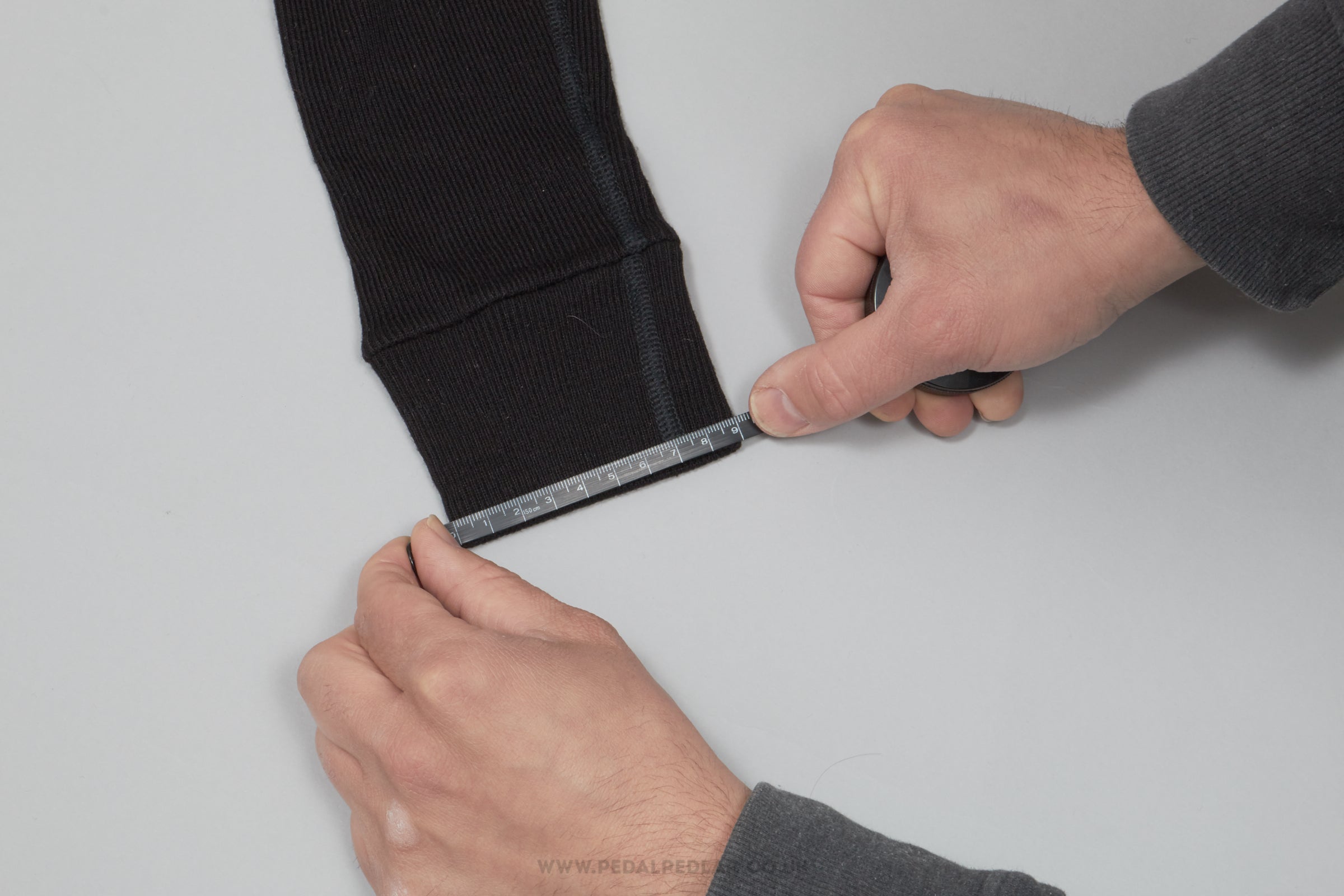


Key West - Easy Walk Ocean Club Medium Vintage Cycling Jersey
£35.00
✓ Original vintage jersey - 1980s/90s style!
✓ Thoroughly checked & honestly graded
✓ Great alternative to buying new
✓ Worldwide shipping
Key West - Easy Walk Ocean Club cycling jersey, likely made in the 1980s/1990s given the style. An excellent choice for wearing on your vintage bike (or any occasion you fancy of course), and also a great alternative to buying brand new cycling kit!
The jersey’s been thoroughly checked over and graded as good condition. If there are any issues worth noting we’ll do so in the overview section below, but please take a good look at the photos so you can see the condition yourself before you buy.OVERVIEW
Condition - Good
Material - Synthetic
Stock Code - U-G6-JS165V
**This is just an estimate based on the chest measurement alone so please check the actual measurements before buying, the best way to get the right fit is to compare them with those of a garment that fits well. Please use all the measurements provided as some vintage jerseys can have irregular sizing, and we find that some of the orignal size labels can be very different to the actual size.
DETAIL & MEASUREMENTS
Pit to Pit (Laid Flat) - 53 cm
Top to Bottom (Front) - 64 cm
Top to Bottom (Back) - 76 cm
Shoulder Seam to Sleeve End (Oustide) - 24 cm
Across Neck (Laid Flat) - 20 cm
Across Sleeve End (Laid Flat) - 17 cm
NB: Check the help section to see how we take these measurements, so you can get a good comparison to your own.
-
▼SHIPPING, TAXES & RETURNS
-
We've been safely sending orders around the world since 2010. Orders are carefully packed, sent with tracking & insurance, and normally collected around midday on Tuesdays and Fridays. Larger items may occasionally require an extra day or two to prepare.
We accept returns, please notify us within 14 days and ensure the item arrives back with us no later than 30 days after the order was received.
EU orders under €150 (excluding shipping) - import VAT and the new €3 customs duty are paid as part of your order, so there's nothing further to pay on delivery.
EU orders over €150 (excluding shipping) - import fees are payable to the carrier before delivery, with nothing collected at checkout.
USA orders - import fees are collected at checkout for all orders to the USA, so there won’t be any surprise charges when your order arrives.
Other international orders - local import fees may apply and are not collected by us. Please check your country's import rules before purchasing.
-
▼SAFETY & COMPLIANCE
- This product complies with the EU General Product Safety Regulation (GPSR).
EU Authorised Representative - Global Trade Department NI Ltd, Office 834, Unit 6, 100 Lisburn Road, Belfast BT9 6AG, Northern Ireland
-
▼HELP SECTION
- We've provided reference below to illustrate how we take the measurements.
Pit to Pit - this measurement is taken from the centre of one armpit to the other, across the chest with the jersey laid flat.
Top to Bottom - this will always be from the very top of the collar to the very bottom hem, we provide measurements for both the front and back, always taken with the jersey laid flat.
Shoulder Seam to Sleeve End - this measurement is taken from the shoulder seam down to the very end of the sleeve on the outside.
Across Neck - for consistency on all neck shapes we gather the front and back together and lay them flat, then measure across the stitching (as shown in the supporting photos).
Across Sleeve End - measured across the sleeve end, laid flat.


Kinex Art. 99 NOS Classic English 107 mm ISO Bottom Bracket
£40.00
✓ Original part - produced in the 1990s
✓ New old stock! Still unused after all these years
✓ Worldwide shipping
Kinex Art. 99 bottom bracket (or BB for short), hailing from Slovakia and in production during the 1990s (yet still new & unused after all this time). Made from aluminium/steel and weighing in at 264 grams - pretty lightweight for a BB at that time. A fine choice for keeping your classic bike authentic, but also great for any other compatible bike.
OVERVIEW
Model ID - Art. 99
Production Era - 1990s
Country - Slovakia
Material - Aluminium / Steel
Weight - 264 g
Stock Code - D-G3-BB190C
*New old stock items may have marks from storage over the years, and as we often have multiples they can vary from piece to piece, but they are always genuine new & unused items.
TECHNICAL INFO
Thread Type - English Thread (British/ISO 1.37" x 24 TPI)
Axle Length - 107 mm
Axle Type - Square Taper ISO
-
▼SHIPPING, TAXES & RETURNS
-
We've been safely sending orders around the world since 2010. Orders are carefully packed, sent with tracking & insurance, and normally collected around midday on Tuesdays and Fridays. Larger items may occasionally require an extra day or two to prepare.
We accept returns, please notify us within 14 days and ensure the item arrives back with us no later than 30 days after the order was received.
EU orders under €150 (excluding shipping) - import VAT and the new €3 customs duty are paid as part of your order, so there's nothing further to pay on delivery.
EU orders over €150 (excluding shipping) - import fees are payable to the carrier before delivery, with nothing collected at checkout.
USA orders - import fees are collected at checkout for all orders to the USA, so there won’t be any surprise charges when your order arrives.
Other international orders - local import fees may apply and are not collected by us. Please check your country's import rules before purchasing.
-
▼SAFETY & COMPLIANCE
- This product complies with the EU General Product Safety Regulation (GPSR). Professional installation and regular inspections are recommended. Due to the product's age, extra care should be taken during use.
EU Authorised Representative - Global Trade Department NI Ltd, Office 834, Unit 6, 100 Lisburn Road, Belfast BT9 6AG, Northern Ireland
-
▼HELP SECTION
-
Thread Type - this must match the bottom bracket thread on your frame. The 3 common thread types on classic and vintage bikes are English (also known as British or ISO), Italian & French, and are usually (not always!) found on frames built in their respective countries. If you're replacing a bottom bracket the cups should have the thread type stamped on one of them, if not there are a couple of things to look at; bottom bracket shell width (English & French = 68 mm, Italian = 70 mm) & drive side cup thread direction (English = left, Italian & French = right). The only curveball to watch out for here, although pretty uncommon, are Swiss threads (also found on some French frames, Motobecanes being one) which will have the same shell width & thread direction as an English thread frame but the actual thread pitch will be different. If none of the above matches what you have, there are a few lesser known varieties that will require some further research.
Axle Length - your crankset dictates the axle length you need and the recommendation should be used to avoid issues with chainline. If you're replacing a bottom bracket that works perfectly then this can be matched, otherwise you'll need to check the manufacturers spec, a good resource for older bikes is Velobase.
Axle Type - you can tell which type of axle you need by looking at the shape of the bottom bracket hole in your crankset. For square tapers, the ISO introduced a standard for European makers in the early 90s, JIS then did the same in Asia. Before then it was not so simple, and although there is a degree of interchangeability, the best way to make sure you have the right axle is to stick to the same brand from the same era, ideally the proprietary model.


Kinex Kompact NOS/NIB Classic Italian 107 mm JIS Bottom Bracket
£26.25 £35.00
✓ Original part - produced in the 2000s
✓ New old stock & still in the original packaging!
✓ Lightweight for the era - just 290 grams
✓ Worldwide shipping
Kinex Kompact bottom bracket, hailing from Slovakia and in production during the 2000s. Made from steel/plastic and weighing in at 290 grams - pretty lightweight for a bottom bracket at that time. A fine choice for keeping your classic bike authentic, but also great for any other compatible bike.
OVERVIEW
Production Era - 2000s
Country - Slovakia
Material - Steel / Plastic
Weight - 290 g
Stock Code - D-BB147C
*New old stock items may have marks from storage over the years, and as we often have multiples they can vary from piece to piece, but they are always genuine new & unused items.
TECHNICAL INFO
Thread Type - Italian Thread (ITA 36 mm x 24 TPI)
Axle Length - 107 mm
Axle Type - Square Taper JIS
-
▼SHIPPING, TAXES & RETURNS
-
We've been safely sending orders around the world since 2010. Orders are carefully packed, sent with tracking & insurance, and normally collected around midday on Tuesdays and Fridays. Larger items may occasionally require an extra day or two to prepare.
We accept returns, please notify us within 14 days and ensure the item arrives back with us no later than 30 days after the order was received.
EU orders under €150 (excluding shipping) - import VAT and the new €3 customs duty are paid as part of your order, so there's nothing further to pay on delivery.
EU orders over €150 (excluding shipping) - import fees are payable to the carrier before delivery, with nothing collected at checkout.
USA orders - import fees are collected at checkout for all orders to the USA, so there won’t be any surprise charges when your order arrives.
Other international orders - local import fees may apply and are not collected by us. Please check your country's import rules before purchasing.
-
▼HELP SECTION
-
Thread Type - this must match the bottom bracket thread on your frame. The 3 common thread types on classic and vintage bikes are English (also known as British or ISO), Italian & French, and are usually (not always!) found on frames built in their respective countries. If you're replacing a bottom bracket the cups should have the thread type stamped on one of them, if not there are a couple of things to look at; bottom bracket shell width (English & French = 68 mm, Italian = 70 mm) & drive side cup thread direction (English = left, Italian & French = right). The only curveball to watch out for here, although pretty uncommon, are Swiss threads (also found on some French frames, Motobecanes being one) which will have the same shell width & thread direction as an English thread frame but the actual thread pitch will be different. If none of the above matches what you have, there are a few lesser known varieties that will require some further research.
Axle Length - your crankset dictates the axle length you need and the recommendation should be used to avoid issues with chainline. If you're replacing a bottom bracket that works perfectly then this can be matched, otherwise you'll need to check the manufacturers spec, a good resource for older bikes is Velobase.
Axle Type - you can tell which type of axle you need by looking at the shape of the bottom bracket hole in your crankset. For square tapers, the ISO introduced a standard for European makers in the early 90s, JIS then did the same in Asia. Before then it was not so simple, and although there is a degree of interchangeability, the best way to make sure you have the right axle is to stick to the same brand from the same era, ideally the proprietary model.


Kinex Kompact NOS/NIB Classic Italian 110 mm JIS Bottom Bracket
£35.00
✓ Original part - produced in the 2000s
✓ New old stock & still in the original packaging!
✓ Lightweight for the era - just 292 grams
✓ Worldwide shipping
Kinex Kompact bottom bracket, hailing from Slovakia and in production during the 2000s. Made from steel/plastic and weighing in at 292 grams - pretty lightweight for a bottom bracket at that time. A fine choice for keeping your classic bike authentic, but also great for any other compatible bike.
OVERVIEW
Production Era - 2000s
Country - Slovakia
Material - Steel / Plastic
Weight - 292 g
Stock Code - D-BB146C
NB - Packaging and stamping vary on some of these, but they are all the same spec Kinex BBs.
*New old stock items may have marks from storage over the years, and as we often have multiples they can vary from piece to piece, but they are always genuine new & unused items.
TECHNICAL INFO
Thread Type - Italian Thread (ITA 36 mm x 24 TPI)
Axle Length - 110 mm
Axle Type - Square Taper JIS
-
▼SHIPPING, TAXES & RETURNS
-
We've been safely sending orders around the world since 2010. Orders are carefully packed, sent with tracking & insurance, and normally collected around midday on Tuesdays and Fridays. Larger items may occasionally require an extra day or two to prepare.
We accept returns, please notify us within 14 days and ensure the item arrives back with us no later than 30 days after the order was received.
EU orders under €150 (excluding shipping) - import VAT and the new €3 customs duty are paid as part of your order, so there's nothing further to pay on delivery.
EU orders over €150 (excluding shipping) - import fees are payable to the carrier before delivery, with nothing collected at checkout.
USA orders - import fees are collected at checkout for all orders to the USA, so there won’t be any surprise charges when your order arrives.
Other international orders - local import fees may apply and are not collected by us. Please check your country's import rules before purchasing.
-
▼HELP SECTION
-
Thread Type - this must match the bottom bracket thread on your frame. The 3 common thread types on classic and vintage bikes are English (also known as British or ISO), Italian & French, and are usually (not always!) found on frames built in their respective countries. If you're replacing a bottom bracket the cups should have the thread type stamped on one of them, if not there are a couple of things to look at; bottom bracket shell width (English & French = 68 mm, Italian = 70 mm) & drive side cup thread direction (English = left, Italian & French = right). The only curveball to watch out for here, although pretty uncommon, are Swiss threads (also found on some French frames, Motobecanes being one) which will have the same shell width & thread direction as an English thread frame but the actual thread pitch will be different. If none of the above matches what you have, there are a few lesser known varieties that will require some further research.
Axle Length - your crankset dictates the axle length you need and the recommendation should be used to avoid issues with chainline. If you're replacing a bottom bracket that works perfectly then this can be matched, otherwise you'll need to check the manufacturers spec, a good resource for older bikes is Velobase.
Axle Type - you can tell which type of axle you need by looking at the shape of the bottom bracket hole in your crankset. For square tapers, the ISO introduced a standard for European makers in the early 90s, JIS then did the same in Asia. Before then it was not so simple, and although there is a degree of interchangeability, the best way to make sure you have the right axle is to stick to the same brand from the same era, ideally the proprietary model.


Kinex Kompact NOS/NIB Classic Italian 115.5 mm JIS Bottom Bracket
£26.25 £35.00
✓ Original part - produced in the 2000s
✓ New old stock & still in the original packaging!
✓ Worldwide shipping
Kinex Kompact bottom bracket, hailing from Slovakia and in production during the 2000s. Made from steel/plastic and weighing in at 303 grams. A fine choice for keeping your classic bike authentic, but also great for any other compatible bike.
OVERVIEW
Production Era - 2000s
Country - Slovakia
Material - Steel / Plastic
Weight - 303 g
Stock Code - D-BB145C
*New old stock items may have marks from storage over the years, and as we often have multiples they can vary from piece to piece, but they are always genuine new & unused items.
TECHNICAL INFO
Thread Type - Italian Thread (ITA 36 mm x 24 TPI)
Axle Length - 115.5 mm
Axle Type - Square Taper JIS
-
▼SHIPPING, TAXES & RETURNS
-
We've been safely sending orders around the world since 2010. Orders are carefully packed, sent with tracking & insurance, and normally collected around midday on Tuesdays and Fridays. Larger items may occasionally require an extra day or two to prepare.
We accept returns, please notify us within 14 days and ensure the item arrives back with us no later than 30 days after the order was received.
EU orders under €150 (excluding shipping) - import VAT and the new €3 customs duty are paid as part of your order, so there's nothing further to pay on delivery.
EU orders over €150 (excluding shipping) - import fees are payable to the carrier before delivery, with nothing collected at checkout.
USA orders - import fees are collected at checkout for all orders to the USA, so there won’t be any surprise charges when your order arrives.
Other international orders - local import fees may apply and are not collected by us. Please check your country's import rules before purchasing.
-
▼HELP SECTION
-
Thread Type - this must match the bottom bracket thread on your frame. The 3 common thread types on classic and vintage bikes are English (also known as British or ISO), Italian & French, and are usually (not always!) found on frames built in their respective countries. If you're replacing a bottom bracket the cups should have the thread type stamped on one of them, if not there are a couple of things to look at; bottom bracket shell width (English & French = 68 mm, Italian = 70 mm) & drive side cup thread direction (English = left, Italian & French = right). The only curveball to watch out for here, although pretty uncommon, are Swiss threads (also found on some French frames, Motobecanes being one) which will have the same shell width & thread direction as an English thread frame but the actual thread pitch will be different. If none of the above matches what you have, there are a few lesser known varieties that will require some further research.
Axle Length - your crankset dictates the axle length you need and the recommendation should be used to avoid issues with chainline. If you're replacing a bottom bracket that works perfectly then this can be matched, otherwise you'll need to check the manufacturers spec, a good resource for older bikes is Velobase.
Axle Type - you can tell which type of axle you need by looking at the shape of the bottom bracket hole in your crankset. For square tapers, the ISO introduced a standard for European makers in the early 90s, JIS then did the same in Asia. Before then it was not so simple, and although there is a degree of interchangeability, the best way to make sure you have the right axle is to stick to the same brand from the same era, ideally the proprietary model.


KKT/Kyokuto Pro Ace (KKT-PA) Steel Vintage Quill Road Pedals
£40.50 £45.00
✓ Original pedals - in production from the 1970s to the 1980s
✓ Suitable for historic cycling events such as L'Eroica
✓ Professionally checked & cleaned
✓ Worldwide shipping
KKT/Kyokuto Pro Ace pedals (or peddles if you prefer), hailing from Japan and in production from the 1970s to the 1980s. Made from steel and weighing in at 430 grams. A fine choice for keeping your vintage bike authentic, but also great for any other compatible bike.
If you're taking part in L'Eroica, Anjou Velo, Velo Retro or another similar vintage cycling event, this is fully compliant - so rest assured, the pre-1987 police won't lock you up for having the wrong pedals!
The pedals have been carefully cleaned, thoroughly checked by one of our mechanics and graded as OK condition, but do take a good look at the detailed photos so you can see the cosmetic condition before you buy.OVERVIEW
Bearing/Race Condition - Very Good
Model ID - KKT-PA
Production Era - 1970s & 1980s
Country - Japanese
Material - Steel
Weight - 430 g
Stock Code - U-PD102V
TECHNICAL INFO
Pedal Type - Quill Road
Pedal Threads - Standard (9/16" x 20 TPI)
-
▼SHIPPING, TAXES & RETURNS
-
We've been safely sending orders around the world since 2010. Orders are carefully packed, sent with tracking & insurance, and normally collected around midday on Tuesdays and Fridays. Larger items may occasionally require an extra day or two to prepare.
We accept returns, please notify us within 14 days and ensure the item arrives back with us no later than 30 days after the order was received.
EU orders under €150 (excluding shipping) - import VAT and the new €3 customs duty are paid as part of your order, so there's nothing further to pay on delivery.
EU orders over €150 (excluding shipping) - import fees are payable to the carrier before delivery, with nothing collected at checkout.
USA orders - import fees are collected at checkout for all orders to the USA, so there won’t be any surprise charges when your order arrives.
Other international orders - local import fees may apply and are not collected by us. Please check your country's import rules before purchasing.
-
▼HELP SECTION
-
Pedal Type - this is just a guide to give you an idea of the pedal type, but any pedal can technically be used for any purpose. Track pedals are designed without the pointed 'quill' for safety though, so it's best to only use track pedals for this purpose. Most track pedals, along with quill & aero road pedals are designed to be used with toe clips & straps for best performance.
Pedal Threads - this must match the thread on your cranks. Sometimes it's stamped on the end of the crank arm, but most bikes use a standard thread of 9/16” x 20 tpi. The exceptions being older French bikes, bikes with cheaper one-piece type chainsets and Shimano’s Dyna Drive system (easily identifiable as the pedal holes are about an inch wide!).


Kleim Small Vintage Cycling Leggings/Tights
£45.00 £60.00
✓ Original vintage leggings - 1970s/80s style!
✓ Suitable for historic cycling events such as L'Eroica
✓ Thoroughly checked & honestly graded
✓ Great alternative to buying new
✓ Worldwide shipping
Kleim leggings, likely made in the 1970s/1980s given the style. An excellent choice for wearing on your vintage bike (or any occasion you fancy of course), and also a responsible alternative to buying brand new cycling kit!
If you're taking part in L'Eroica or a similar vintage event, these are fully compliant - so rest assured, the pre-1987 police won't lock you up for having the wrong leggings!
The leggings have been thoroughly checked over and graded as very good condition. If there are any issues worth noting we’ll do so in the overview section below, but please take a good look at the photos so you can see the condition yourself before you buy.OVERVIEW
Condition - Very Good
Condition Notes - Small hole on the waistband
Material - Polyester / Acrylic (65% / 35%)
Stock Code - U-LG23V
**This is just an estimate based on the waist measurement alone so please check the actual measurements before buying, the best way to get the right fit is to compare them with those of a garment that fits well, and please use all the measurements provided as some vintage leggings can have irregular sizing.
DETAIL & SIZING
Legging Type - Full Length
Seat Pad - No Padding
Across Waist Band - 24 cm
Across Hips - 41 cm
Full Length (Outside Leg) - 96 cm
Inside Leg - 74 cm
Across Quads - 23 cm
Across Bottom Hem - 14 cm
NB: Check the help section to see how we take these measurements, so you can get a good comparison to your own.
-
▼SHIPPING, TAXES & RETURNS
-
We've been safely sending orders around the world since 2010. Orders are carefully packed, sent with tracking & insurance, and normally collected around midday on Tuesdays and Fridays. Larger items may occasionally require an extra day or two to prepare.
We accept returns, please notify us within 14 days and ensure the item arrives back with us no later than 30 days after the order was received.
EU orders under €150 (excluding shipping) - import VAT and the new €3 customs duty are paid as part of your order, so there's nothing further to pay on delivery.
EU orders over €150 (excluding shipping) - import fees are payable to the carrier before delivery, with nothing collected at checkout.
USA orders - import fees are collected at checkout for all orders to the USA, so there won’t be any surprise charges when your order arrives.
Other international orders - local import fees may apply and are not collected by us. Please check your country's import rules before purchasing.
-
▼HELP SECTION
- We've also provided photographs below to illustrate how we take our measurements.
Across Waist Band - this measurement is taken across the waist band at the top of the leggings whilst laid flat, without stretching the elastic. To work out the waist circumference this measurement needs to be doubled.
Across Hips - some waist bands are quite high so we also measure around the hip area. This is taken across the leggings whilst laid flat without stretching the elastic, where we assume the hips to be. This is an approximate measurement provided as a guide only.
Full Length (Outside Leg) - measured from the top of the wasit band to the bottom of the hem, measured along the outside of the leg.
Inside Leg - measured from the centre of the crotch to the bottom of the hem, along the inside of the leg.
Across Quads - some leggings can have particularly tight or loose legs, so we also measure around the quad area to help with this. This is taken across the leggings whilst laid flat without stretching the elastic, where we assume the quads to be. This is an approximate measurement provided as a guide only.
Across Bottom Hem - taken across the bottom of one hem whilst laid flat, without stretching the elastic. To work out the hem circumference this measurement needs to be doubled.


Kore Forged NOS Classic 27.2 mm Seatpost
£37.50 £50.00
✓ Original part - produced in the 2000s
✓ New old stock! Still unused after all these years
✓ Worldwide shipping
Kore seatpost, hailing from Taiwan and in production during the 2000s. Made from aluminium and weighing in at 320 grams. A fine choice for keeping your classic bike authentic, but also great for any other compatible bike.
Please note: Once inserted into a frame this cannot be returned, so please make sure to double check the diameter is correct before installing.OVERVIEW
Production Era - 2000s
Country - Taiwanese
Material - Aluminium
Weight - 320 g
Stock Code - D-SP187C
*New old stock items may have marks from storage over the years, and as we often have multiples they can vary from piece to piece, but they are always genuine new & unused items.
TECHNICAL INFO
Seatpost Diameter - 27.2 mm
Length (Centre of Rails to Base) - 385 mm
-
▼SHIPPING, TAXES & RETURNS
-
We've been safely sending orders around the world since 2010. Orders are carefully packed, sent with tracking & insurance, and normally collected around midday on Tuesdays and Fridays. Larger items may occasionally require an extra day or two to prepare.
We accept returns, please notify us within 14 days and ensure the item arrives back with us no later than 30 days after the order was received.
EU orders under €150 (excluding shipping) - import VAT and the new €3 customs duty are paid as part of your order, so there's nothing further to pay on delivery.
EU orders over €150 (excluding shipping) - import fees are payable to the carrier before delivery, with nothing collected at checkout.
USA orders - import fees are collected at checkout for all orders to the USA, so there won’t be any surprise charges when your order arrives.
Other international orders - local import fees may apply and are not collected by us. Please check your country's import rules before purchasing.
-
▼HELP SECTION
-
Seatpost Diameter - this needs to match the internal diameter of your frame’s seat tube closely, it should be possible to insert the seatpost without force but the fit should be tight enough so it doesn’t just drop in, with no play once inserted. If you have a post that fits the measurement should be stamped somewhere near the bottom, if not you’ll need to measure with a caliper or seatpost sizing tool as the sizes go up in 0.2 mm increments.
Length (Centre of Rails to Base) - measured from where the centre of the saddle rails will sit once installed, all the way to the bottom of the seatpost. Normally there’s a mark to tell you how much of the seatpost needs to be inserted in the frame, however this isn’t always the case so we’d recommend allowing a minimum of 6 cm.
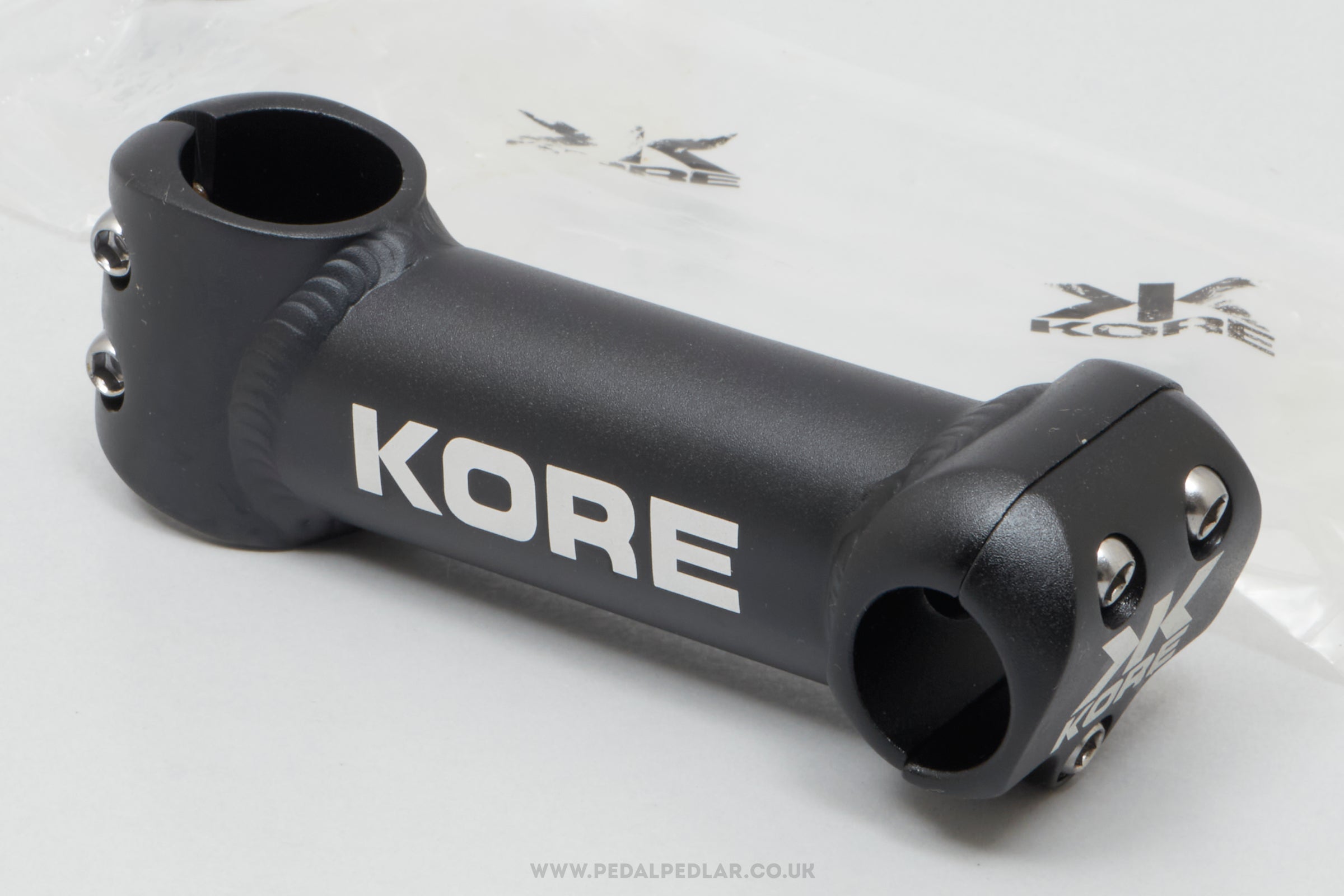


Kore Lite 3 Black NOS Classic 125 mm 1 1/8" A-Head Stem
£42.50 £50.00
✓ Original part - produced in the 1990s
✓ New old stock! Still unused after all these years
✓ Worldwide shipping
Kore Lite 3 ahead handlebar stem, hailing from Taiwan and in production during the 1990s (yet still new & unused after all this time!). Made from aluminium and weighing in at 224 grams. A fine choice for keeping your classic bike authentic, but also great for any other compatible bike.
OVERVIEW
Production Era - 1990s
Country - Taiwanese
Material - Aluminium
Weight - 224 g
Stock Code - D-STA26C
*New old stock items may have marks from storage over the years, and as we often have multiples they can vary from piece to piece, but they are always genuine new & unused items.
TECHNICAL INFO
Extension Length (ctc)* - 125 mm
Steerer Size (OD) - 1 1/8" (28.6 mm)
Bar Clamp Size - 25.4 mm
Stack Height - 50 mm
Angle - 100 Degrees
*See help section.
-
▼SHIPPING, TAXES & RETURNS
-
We've been safely sending orders around the world since 2010. Orders are carefully packed, sent with tracking & insurance, and normally collected around midday on Tuesdays and Fridays. Larger items may occasionally require an extra day or two to prepare.
We accept returns, please notify us within 14 days and ensure the item arrives back with us no later than 30 days after the order was received.
EU orders under €150 (excluding shipping) - import VAT and the new €3 customs duty are paid as part of your order, so there's nothing further to pay on delivery.
EU orders over €150 (excluding shipping) - import fees are payable to the carrier before delivery, with nothing collected at checkout.
USA orders - import fees are collected at checkout for all orders to the USA, so there won’t be any surprise charges when your order arrives.
Other international orders - local import fees may apply and are not collected by us. Please check your country's import rules before purchasing.
-
▼HELP SECTION
-
Extension Length (ctc)* - measured from the centre of the handlebar clamp to the centre of the steerer clamp, to the nearest 5 mm. This measurement is taken through the middle of the extension, not along the top or bottom.
Steerer Size (OD) - OD means outside diameter, this is the most important measurement when checking the stem fits your bike. This should match the measurement of the outside of your fork's steerer column, where the stem will be clamped.
Bar Clamp Size - this should match the outside diameter of your handlebars and should be as close as possible to ensure a good and safe fit.
Stack Height - the height of the part that clamps to the forks. This is the minimum amount of space you will need on the fork's steerer column for the stem to fit (minus a few mm as the top of the steerer tube needs to sit just below the top of the stem).
Angle - the angle of the stem's extension in relation to the the fork steerer. Bear in mind the steerer sits at the same angle as the head tube, so a 90 degree stem would not be parallel to the ground. Some manufacturers refer to this as rise or drop, in which case an 80 degree stem would drop 10 degrees from a right angle. Most a-head stems can be flipped although it does depend on the design.
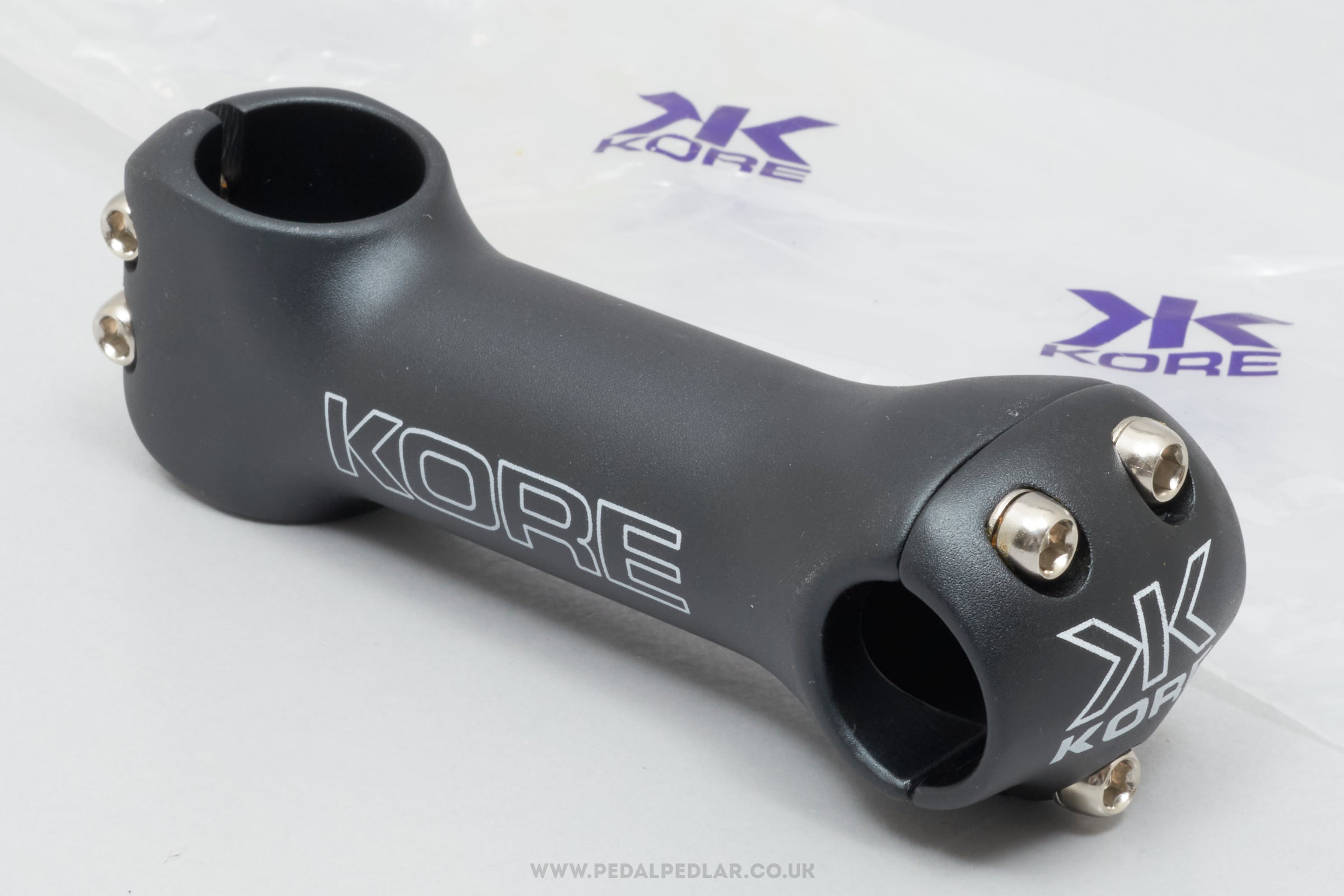


Kore Lite Stem 3D Black NOS Classic 120 mm 1 1/8" A-Head Stem
£30.00 £40.00
✓ Original part - produced in the 1990s
✓ New old stock! Still unused after all these years
✓ Worldwide shipping
Kore Lite Stem 3D ahead handlebar stem, hailing from Taiwan and in production during the 1990s (yet still new & unused after all this time!). Made from aluminium and weighing in at 239 grams. A fine choice for keeping your classic bike authentic, but also great for any other compatible bike.
OVERVIEW
Production Era - 1990s
Country - Taiwanese
Material - Aluminium
Weight - 239 g
Stock Code - D-STA10C
*New old stock items may have marks from storage over the years, and as we often have multiples they can vary from piece to piece, but they are always genuine new & unused items.
TECHNICAL INFO
Extension Length (ctc)* - 120 mm
Steerer Size (OD) - 1 1/8" (28.6 mm)
Bar Clamp Size - 25.4 mm
Stack Height - 45 mm
Angle - 101 Degrees
*See help section.
-
▼SHIPPING, TAXES & RETURNS
-
We've been safely sending orders around the world since 2010. Orders are carefully packed, sent with tracking & insurance, and normally collected around midday on Tuesdays and Fridays. Larger items may occasionally require an extra day or two to prepare.
We accept returns, please notify us within 14 days and ensure the item arrives back with us no later than 30 days after the order was received.
EU orders under €150 (excluding shipping) - import VAT and the new €3 customs duty are paid as part of your order, so there's nothing further to pay on delivery.
EU orders over €150 (excluding shipping) - import fees are payable to the carrier before delivery, with nothing collected at checkout.
USA orders - import fees are collected at checkout for all orders to the USA, so there won’t be any surprise charges when your order arrives.
Other international orders - local import fees may apply and are not collected by us. Please check your country's import rules before purchasing.
-
▼HELP SECTION
-
Extension Length (ctc)* - measured from the centre of the handlebar clamp to the centre of the steerer clamp, to the nearest 5 mm. This measurement is taken through the middle of the extension, not along the top or bottom.
Steerer Size (OD) - OD means outside diameter, this is the most important measurement when checking the stem fits your bike. This should match the measurement of the outside of your fork's steerer column, where the stem will be clamped.
Bar Clamp Size - this should match the outside diameter of your handlebars and should be as close as possible to ensure a good and safe fit.
Stack Height - the height of the part that clamps to the forks. This is the minimum amount of space you will need on the fork's steerer column for the stem to fit (minus a few mm as the top of the steerer tube needs to sit just below the top of the stem).
Angle - the angle of the stem's extension in relation to the the fork steerer. Bear in mind the steerer sits at the same angle as the head tube, so a 90 degree stem would not be parallel to the ground. Some manufacturers refer to this as rise or drop, in which case an 80 degree stem would drop 10 degrees from a right angle. Most a-head stems can be flipped although it does depend on the design.


Kore Lite Stem 3D Silver NOS Classic 120 mm 1 1/8" A-Head Stem
£40.00
✓ Original part - produced in the 1990s
✓ New old stock! Still unused after all these years
✓ Worldwide shipping
Kore Lite Stem 3D ahead handlebar stem, hailing from Taiwan and in production during the 1990s (yet still new & unused after all this time!). Made from aluminium and weighing in at 284 grams. A fine choice for keeping your classic bike authentic, but also great for any other compatible bike.
OVERVIEW
Production Era - 1990s
Country - Taiwanese
Material - Aluminium
Weight - 284 g
Stock Code - D-STA3C
*New old stock items may have marks from storage over the years, and as we often have multiples they can vary from piece to piece, but they are always genuine new & unused items.
TECHNICAL INFO
Extension Length (ctc)* - 120 mm
Steerer Size (OD) - 1 1/8" (28.6 mm)
Bar Clamp Size - 25.4 mm
Stack Height - 49 mm
*See help section.
-
▼SHIPPING, TAXES & RETURNS
-
We've been safely sending orders around the world since 2010. Orders are carefully packed, sent with tracking & insurance, and normally collected around midday on Tuesdays and Fridays. Larger items may occasionally require an extra day or two to prepare.
We accept returns, please notify us within 14 days and ensure the item arrives back with us no later than 30 days after the order was received.
EU orders under €150 (excluding shipping) - import VAT and the new €3 customs duty are paid as part of your order, so there's nothing further to pay on delivery.
EU orders over €150 (excluding shipping) - import fees are payable to the carrier before delivery, with nothing collected at checkout.
USA orders - import fees are collected at checkout for all orders to the USA, so there won’t be any surprise charges when your order arrives.
Other international orders - local import fees may apply and are not collected by us. Please check your country's import rules before purchasing.
-
▼HELP SECTION
-
Extension Length (ctc)* - measured from the centre of the handlebar clamp to the centre of the steerer clamp, to the nearest 5 mm. This measurement is taken through the middle of the extension, not along the top or bottom.
Steerer Size (OD) - OD means outside diameter, this is the most important measurement when checking the stem fits your bike. This should match the measurement of the outside of your fork's steerer column, where the stem will be clamped.
Bar Clamp Size - this should match the outside diameter of your handlebars and should be as close as possible to ensure a good and safe fit.
Stack Height - the height of the part that clamps to the forks. This is the minimum amount of space you will need on the fork's steerer column for the stem to fit (minus a few mm as the top of the steerer tube needs to sit just below the top of the stem).
Angle - the angle of the stem's extension in relation to the the fork steerer. Bear in mind the steerer sits at the same angle as the head tube, so a 90 degree stem would not be parallel to the ground. Some manufacturers refer to this as rise or drop, in which case an 80 degree stem would drop 10 degrees from a right angle. Most a-head stems can be flipped although it does depend on the design.
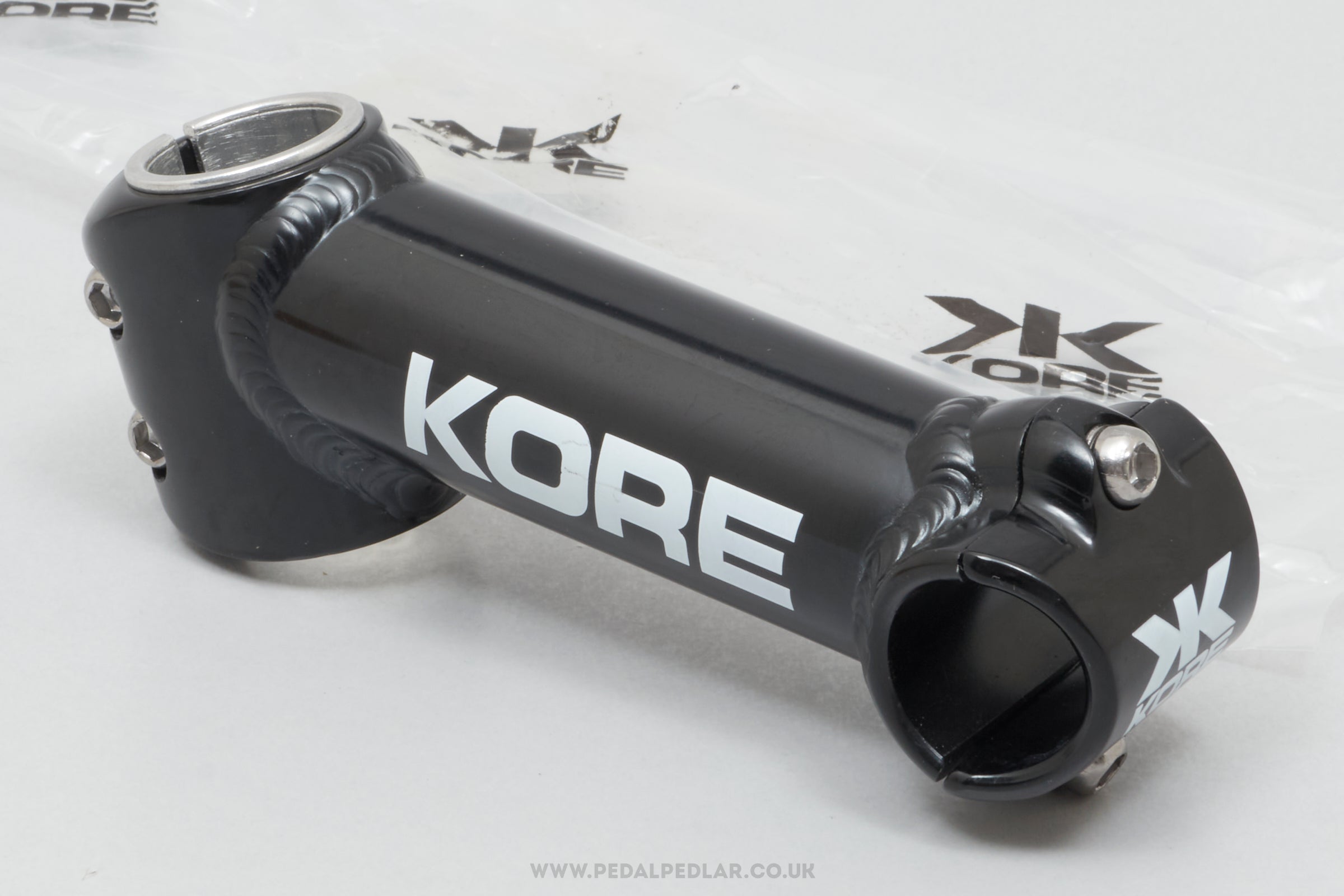


Kore Road NOS Classic 120 mm 1" or 1 1/8" A-Head Stem
£33.75 £45.00
✓ Original part - produced in the 1990s
✓ New old stock! Still unused after all these years
✓ Worldwide shipping
Kore ahead handlebar stem, hailing from Taiwan and in production during the 1990s (yet still new & unused after all this time!). Made from aluminium and weighing in at 206 grams. A fine choice for keeping your classic bike authentic, but also great for any other compatible bike.
OVERVIEW
Production Era - 1990s
Country - Taiwanese
Material - Aluminium
Weight - 206 g
Stock Code - D-STA21C
NB - Includes shim reducer to fit 1" steerer
*New old stock items may have marks from storage over the years, and as we often have multiples they can vary from piece to piece, but they are always genuine new & unused items.
TECHNICAL INFO
Extension Length (ctc)* - 120 mm
Steerer Size (OD) - 1" or 1 1/8" (25.4mm / 28.6 mm)
Bar Clamp Size - 26.0 mm
Stack Height - 50 mm
Angle - 73 Degrees
*See help section.
-
▼SHIPPING, TAXES & RETURNS
-
We've been safely sending orders around the world since 2010. Orders are carefully packed, sent with tracking & insurance, and normally collected around midday on Tuesdays and Fridays. Larger items may occasionally require an extra day or two to prepare.
We accept returns, please notify us within 14 days and ensure the item arrives back with us no later than 30 days after the order was received.
EU orders under €150 (excluding shipping) - import VAT and the new €3 customs duty are paid as part of your order, so there's nothing further to pay on delivery.
EU orders over €150 (excluding shipping) - import fees are payable to the carrier before delivery, with nothing collected at checkout.
USA orders - import fees are collected at checkout for all orders to the USA, so there won’t be any surprise charges when your order arrives.
Other international orders - local import fees may apply and are not collected by us. Please check your country's import rules before purchasing.
-
▼HELP SECTION
-
Extension Length (ctc)* - measured from the centre of the handlebar clamp to the centre of the steerer clamp, to the nearest 5 mm. This measurement is taken through the middle of the extension, not along the top or bottom.
Steerer Size (OD) - OD means outside diameter, this is the most important measurement when checking the stem fits your bike. This should match the measurement of the outside of your fork's steerer column, where the stem will be clamped.
Bar Clamp Size - this should match the outside diameter of your handlebars and should be as close as possible to ensure a good and safe fit.
Stack Height - the height of the part that clamps to the forks. This is the minimum amount of space you will need on the fork's steerer column for the stem to fit (minus a few mm as the top of the steerer tube needs to sit just below the top of the stem).
Angle - the angle of the stem's extension in relation to the the fork steerer. Bear in mind the steerer sits at the same angle as the head tube, so a 90 degree stem would not be parallel to the ground. Some manufacturers refer to this as rise or drop, in which case an 80 degree stem would drop 10 degrees from a right angle. Most a-head stems can be flipped although it does depend on the design.