
All


LOOK ARC 226 Classic Clipless Pedals
£30.00 £40.00
✓ Original pedals - produced in the 1990s
✓ Professionally checked & cleaned
✓ Worldwide shipping
LOOK ARC 226 pedals, hailing from France and in production during the 1990s. Made from aluminium/steel and weighing in at 432 grams. A fine choice for keeping your classic bike authentic, but also great for any other compatible bike too.
The pedals have been carefully cleaned, thoroughly checked by one of our mechanics and graded as good condition, but do take a good look at the detailed photos so you can see the cosmetic condition before you buy.OVERVIEW
Bearing/Race Condition - Very Good
Production Era - 1990s
Country - French
Material - Aluminium / Steel
Weight - 432 g
Stock Code - U-PD-C26C
TECHNICAL INFO
Compatible Cleats - Look Delta
Pedal Threads - Standard (9/16" x 20 TPI)
-
▼SHIPPING, TAXES & RETURNS
-
We've been safely sending orders around the world since 2010. Orders are carefully packed, sent with tracking & insurance, and normally collected around midday on Tuesdays and Fridays. Larger items may occasionally require an extra day or two to prepare.
We accept returns, please notify us within 14 days and ensure the item arrives back with us no later than 30 days after the order was received.
EU orders under €150 (excluding shipping) - import VAT and the new €3 customs duty are paid as part of your order, so there's nothing further to pay on delivery.
EU orders over €150 (excluding shipping) - import fees are payable to the carrier before delivery, with nothing collected at checkout.
USA orders - import fees are collected at checkout for all orders to the USA, so there won’t be any surprise charges when your order arrives.
Other international orders - local import fees may apply and are not collected by us. Please check your country's import rules before purchasing.
-
▼HELP SECTION
-
Cleat System - the cleat the pedals were designed to fit. The brand of cleats doesn't have to match, as long as they were designed for the same system.
Pedal Threads - this must match the thread on your cranks. Sometimes it's stamped on the end of the crank arm, but most bikes use a standard thread of 9/16” x 20 tpi. The exceptions being older French bikes, bikes with cheaper one-piece type chainsets and Shimano’s Dyna Drive system (easily identifiable as the pedal holes are about an inch wide!).


LOOK Classic Quick Release Rear Skewer
£14.88 £18.00
✓ Original skewer - produced in the 1990s
✓ Checked & cleaned
✓ Worldwide shipping
LOOK rear skewer, hailing from France and in production during the 1990s. Made from steel/aluminium and weighing in at 80 grams. A fine choice for keeping your classic bike authentic, but also great for any other compatible bike too.
The skewer's been cleaned, checked by one of our mechanics and graded as good condition, but do take a good look at the detailed photos so you can see the cosmetic condition before you buy.OVERVIEW
Production Era - 1990s
Country - French
Material - Steel/Aluminium
Weight - 80 g
Stock Code - U-SKW-R7C
TECHNICAL INFO
Skewer Type - Quick Release
Spacing* - 140 mm
Threaded Section - 29 mm / 23 mm
End Nut Length - 14 mm
*See help section.
-
▼SHIPPING, TAXES & RETURNS
-
We've been safely sending orders around the world since 2010. Orders are carefully packed, sent with tracking & insurance, and normally collected around midday on Tuesdays and Fridays. Larger items may occasionally require an extra day or two to prepare.
We accept returns, please notify us within 14 days and ensure the item arrives back with us no later than 30 days after the order was received.
EU orders under €150 (excluding shipping) - import VAT and the new €3 customs duty are paid as part of your order, so there's nothing further to pay on delivery.
EU orders over €150 (excluding shipping) - import fees are payable to the carrier before delivery, with nothing collected at checkout.
USA orders - import fees are collected at checkout for all orders to the USA, so there won’t be any surprise charges when your order arrives.
Other international orders - local import fees may apply and are not collected by us. Please check your country's import rules before purchasing.
-
▼HELP SECTION
-
Skewer type - quick release skewers allow you to remove the wheel without any tools, whereas allen key and security skewers require a tool to allow the wheel to be removed.
*Spacing - this should be within a few milimetres of your frame's outer dropout spacing (measured from the outside where the skewers clamp down). The measurement provided was taken with the exiting hole of the end nut flush with the end of the skewer. There will be some wiggle room to allow a narrower or wider dropout spacing to fit, we've provided the threaded section and end nut measurements to give you an indication of how much.
Threaded section - the amount of thread on the skewers for the end nut to be threaded onto.
End nut length - the total length of the nut from end to end.


LOOK PP236 Classic Clipless Pedals
£26.25 £35.00
✓ Original pedals - produced in the 1990s
✓ Professionally checked & cleaned
✓ Worldwide shipping
LOOK PP236 pedals, hailing from France and in production during the 1990s. Made from aluminium/steel and weighing in at 416 grams. A fine choice for keeping your classic bike authentic, but also great for any other compatible bike too.
The pedals have been carefully cleaned, thoroughly checked by one of our mechanics and graded as good condition, but do take a good look at the detailed photos so you can see the cosmetic condition before you buy.OVERVIEW
Bearing/Race Condition - Very Good
Production Era - 1990s
Country - French
Material - Aluminium/Steel
Weight - 416 g
Stock Code - U-PD-C14C
TECHNICAL INFO
Compatible Cleats - Look Delta
Pedal Threads - Standard (9/16" x 20 TPI)
-
▼SHIPPING, TAXES & RETURNS
-
We've been safely sending orders around the world since 2010. Orders are carefully packed, sent with tracking & insurance, and normally collected around midday on Tuesdays and Fridays. Larger items may occasionally require an extra day or two to prepare.
We accept returns, please notify us within 14 days and ensure the item arrives back with us no later than 30 days after the order was received.
EU orders under €150 (excluding shipping) - import VAT and the new €3 customs duty are paid as part of your order, so there's nothing further to pay on delivery.
EU orders over €150 (excluding shipping) - import fees are payable to the carrier before delivery, with nothing collected at checkout.
USA orders - import fees are collected at checkout for all orders to the USA, so there won’t be any surprise charges when your order arrives.
Other international orders - local import fees may apply and are not collected by us. Please check your country's import rules before purchasing.
-
▼HELP SECTION
-
Compatible Cleats - the cleat the pedals were designed to fit. The brand of cleats doesn't have to match, as long as they were designed for the same system.
Pedal Threads - this must match the thread on your cranks. Sometimes it's stamped on the end of the crank arm, but most bikes use a standard thread of 9/16” x 20 tpi. The exceptions being older French bikes, bikes with cheaper one-piece type chainsets and Shimano’s Dyna Drive system (easily identifiable as the pedal holes are about an inch wide!).


LOOK PP76 Carbon Vintage Clipless Pedals
£22.50 £30.00
✓ Original pedals - in production from the 1980s to the 1990s
✓ Professionally checked & cleaned
✓ Worldwide shipping
LOOK PP76 Carbon pedals, hailing from France and in production from the 1980s to the 1990s. Made from aluminium/steel and weighing in at 449 grams. A fine choice for keeping your vintage bike authentic, but also great for any other compatible bike too.
The pedals have been carefully cleaned, thoroughly checked by one of our mechanics and graded as good condition, but do take a good look at the detailed photos so you can see the cosmetic condition before you buy.OVERVIEW
Bearing/Race Condition - Very Good
Condition Notes - Small amount of play in left hand pedal
Production Era - 1980s & 1990s
Country - French
Material - Aluminium/Steel
Weight - 449 g
Stock Code - U-PD-C4V
TECHNICAL INFO
Compatible Cleats - Look Delta
Pedal Threads - Standard (9/16" x 20 TPI)
-
▼SHIPPING, TAXES & RETURNS
-
We've been safely sending orders around the world since 2010. Orders are carefully packed, sent with tracking & insurance, and normally collected around midday on Tuesdays and Fridays. Larger items may occasionally require an extra day or two to prepare.
We accept returns, please notify us within 14 days and ensure the item arrives back with us no later than 30 days after the order was received.
EU orders under €150 (excluding shipping) - import VAT and the new €3 customs duty are paid as part of your order, so there's nothing further to pay on delivery.
EU orders over €150 (excluding shipping) - import fees are payable to the carrier before delivery, with nothing collected at checkout.
USA orders - import fees are collected at checkout for all orders to the USA, so there won’t be any surprise charges when your order arrives.
Other international orders - local import fees may apply and are not collected by us. Please check your country's import rules before purchasing.


Lotto - Mobistar NOS Classic Cotton Cycling Cap
£17.00 £20.00
✓ Original classic cap - 1990s style!
✓ New old stock! Still unused after all these years
✓ Great alternative to buying new
✓ Worldwide shipping
Classic Lotto - Mobistar cycling cap, likely made in the 1990s given the style (yet still new & unused after all this time!). An excellent choice for wearing on your classic bike (or any occasion you fancy of course), and also a great alternative to buying brand new cycling kit!
OVERVIEW
Condition - New Old Stock*
Production Era - 1990s
Stock Code - D-CAP59C
*New old stock items may have marks from storage over the years, and as we often have multiples they can vary from piece to piece, but they are always genuine new & unused items.
**Most cycling caps come in ‘one size’ as standard and will fit most head sizes. Some can be on the small side however, so we list these as a ‘smaller fit’ and wouldn’t recommend them for a head circumference above 58 cm.
DETAIL
Cap Type - Summer/Under Helmet
Construction - 4 Panel
Colour* - Black / Red / Green
*The colour description is just a guide, please check the photos to get a good idea of the colour too, as we make sure these are as close to the true colour as possible.
-
▼SHIPPING, TAXES & RETURNS
-
We've been safely sending orders around the world since 2010. Orders are carefully packed, sent with tracking & insurance, and normally collected around midday on Tuesdays and Fridays. Larger items may occasionally require an extra day or two to prepare.
We accept returns, please notify us within 14 days and ensure the item arrives back with us no later than 30 days after the order was received.
EU orders under €150 (excluding shipping) - import VAT and the new €3 customs duty are paid as part of your order, so there's nothing further to pay on delivery.
EU orders over €150 (excluding shipping) - import fees are payable to the carrier before delivery, with nothing collected at checkout.
USA orders - import fees are collected at checkout for all orders to the USA, so there won’t be any surprise charges when your order arrives.
Other international orders - local import fees may apply and are not collected by us. Please check your country's import rules before purchasing.
-
▼HELP SECTION
-
Cap Type - we refer to the classic cycling cap type as summer/under helmet, although they can of course be used all year round. When worn under a helmet they provide comfort, sun protection and are sweat-wicking too. Winter hats will usually cover the ears and are referred to as 'Belgian' caps. Baseball caps were often worn by support teams or sold as branded merchandise.
Construction - the number of panels the cap body is made up of, not including the peak.


Lotto - Predictor NOS Classic Cotton Cycling Cap
£17.00 £20.00
✓ Original classic cap - 2000s style!
✓ New old stock! Still unused after all these years
✓ Great alternative to buying new
✓ Worldwide shipping
Classic Lotto - Predictor cycling cap, likely made in the 2000s given the style. An excellent choice for wearing on your classic bike (or any occasion you fancy of course), and also a great alternative to buying brand new cycling kit!
OVERVIEW
Condition - New Old Stock*
Production Era - 2000s
Stock Code - D-CAP53C
*New old stock items may have marks from storage over the years, and as we often have multiples they can vary from piece to piece, but they are always genuine new & unused items.
**Most cycling caps come in ‘one size’ as standard and will fit most head sizes. Some can be on the small side however, so we list these as a ‘smaller fit’ and wouldn’t recommend them for a head circumference above 58 cm.
DETAIL
Cap Type - Summer/Under Helmet
Construction - 4 Panel
Colour* - Pink / Grey
*The colour description is just a guide, please check the photos to get a good idea of the colour too, as we make sure these are as close to the true colour as possible.
-
▼SHIPPING, TAXES & RETURNS
-
We've been safely sending orders around the world since 2010. Orders are carefully packed, sent with tracking & insurance, and normally collected around midday on Tuesdays and Fridays. Larger items may occasionally require an extra day or two to prepare.
We accept returns, please notify us within 14 days and ensure the item arrives back with us no later than 30 days after the order was received.
EU orders under €150 (excluding shipping) - import VAT and the new €3 customs duty are paid as part of your order, so there's nothing further to pay on delivery.
EU orders over €150 (excluding shipping) - import fees are payable to the carrier before delivery, with nothing collected at checkout.
USA orders - import fees are collected at checkout for all orders to the USA, so there won’t be any surprise charges when your order arrives.
Other international orders - local import fees may apply and are not collected by us. Please check your country's import rules before purchasing.
-
▼HELP SECTION
-
Cap Type - we refer to the classic cycling cap type as summer/under helmet, although they can of course be used all year round. When worn under a helmet they provide comfort, sun protection and are sweat-wicking too. Winter hats will usually cover the ears and are referred to as 'Belgian' caps. Baseball caps were often worn by support teams or sold as branded merchandise.
Construction - the number of panels the cap body is made up of, not including the peak.
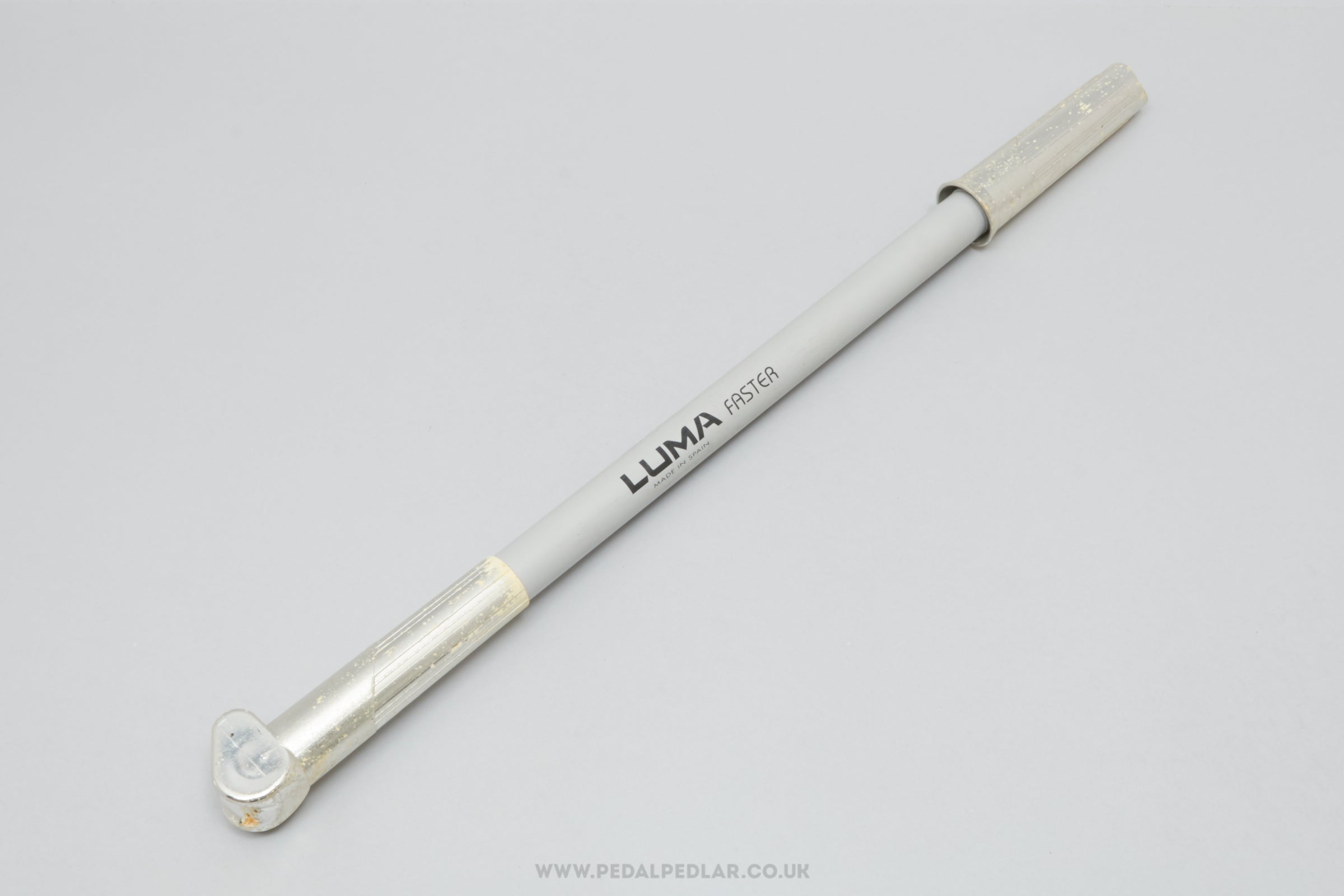


Luma Faster Vintage Grey 47 - 52 cm Frame Fit Bike Pump
£18.00 £20.00
✓ Original pump - produced in the 1980s
✓ Suitable for historic cycling events such as L'Eroica
✓ Checked & tested
✓ Worldwide shipping
Luma Faster bicycle pump, hailing from Spain and in production during the 1980s. An excellent choice for vintage cycling enthusiasts, but great for cyclists of the non-vintage variety too!
If you're taking part in L'Eroica or any other vintage event, this is fully compliant - so rest assured, the pre-1987 police won't lock you up for having the wrong pump!
The pump's been thoroughly checked, tested and graded as good condition, but do take a good look at the detailed photos so you can see the cosmetic condition before you buy.OVERVIEW
Production Era - 1980s
Country - Spanish
Material - Plastic
Weight - 165 g
Stock Code - U-PM-F17V
TECHNICAL INFO
Colour* - Grey
Valve Type - Presta
Pump Mount Type - Frame Fit (With Peg Holes Both Ends)
Mount Location** - Seat Tube
Length (Min-Max) - 47 - 52 cm
*The colour description is just a guide, please check the photos too as we make sure these are as close to the true colour as possible.
**See help section.
-
▼SHIPPING, TAXES & RETURNS
-
We've been safely sending orders around the world since 2010. Orders are carefully packed, sent with tracking & insurance, and normally collected around midday on Tuesdays and Fridays. Larger items may occasionally require an extra day or two to prepare.
We accept returns, please notify us within 14 days and ensure the item arrives back with us no later than 30 days after the order was received.
EU orders under €150 (excluding shipping) - import VAT and the new €3 customs duty are paid as part of your order, so there's nothing further to pay on delivery.
EU orders over €150 (excluding shipping) - import fees are payable to the carrier before delivery, with nothing collected at checkout.
USA orders - import fees are collected at checkout for all orders to the USA, so there won’t be any surprise charges when your order arrives.
Other international orders - local import fees may apply and are not collected by us. Please check your country's import rules before purchasing.
-
▼HELP SECTION
-
Valve Type - there are 3 types of valves; Presta are thin with a little knurled nut on the end, Schrader are wider (the same as you would find on a car), and the less common Woods (aka "Dunlop"). Pumps designed for Presta valves can be used on Woods valves. Some pumps use hose connectors, these are available for all valve types.
Pump Mount Type - 'peg fit' pumps require pump pegs or 'umbrella' clips to fit to the frame, 'frame fit 'pumps are designed with curved ends to mount between two tubes (although these often have holes for pegs too). If mounting directly you'll need the correct length to fit your frame, or a clip/peg to hold one end.
Mount Location - frame fit pumps usually mount to the seat tube with the ends compressed between the top and down tube, they can however be mounted on other tubes as long as there's something supporting the handle end. Some head tubes have a little nipple or a small enough gap for under top tube mounting (this can be replcated with a simple strap or cable tie), and of course pump pegs or clips can be fitted anywhere!
Length (Min-Max) - the length of the pump fully compressed and uncompressed, measured at the points of support. The space you to intend to mount the pump should be within 1 cm of the minimum or maximum length to allow the pump to be securely mounted and dismounted.


Lyotard 36 NOS Vintage Town/City Pedals
£100.00
✓ Original pedals - in production from the 1950s to the 1960s
✓ New old stock! Still unused after all these years
✓ Suitable for historic cycling events such as L'Eroica
✓ Worldwide shipping
Lyotard 36 pedals, hailing from France and in production from the 1950s to the 1960s (yet still new & unused after all this time!). Made from steel and weighing in at 484 grams. A fine choice for keeping your vintage bike authentic, but also great for any other compatible bike too.
If you're taking part in L'Eroica, Anjou Velo, Velo Retro or another similar vintage cycling event, this is fully compliant - so rest assured, the pre-1987 police won't lock you up for having the wrong pedals!
OVERVIEW
Bearing/Race Condition - New Old Stock*
Production Era - 1950s & 1960s
Country - French
Material - Steel
Weight - 484 g
Stock Code - D-PD46V
*New old stock items may have marks from storage over the years, and as we often have multiples they can vary from piece to piece, but they are always genuine new & unused items.
TECHNICAL INFO
Pedal Type - Town/City
Pedal Threads - Standard (9/16" x 20 TPI)
-
▼SHIPPING, TAXES & RETURNS
-
We've been safely sending orders around the world since 2010. Orders are carefully packed, sent with tracking & insurance, and normally collected around midday on Tuesdays and Fridays. Larger items may occasionally require an extra day or two to prepare.
We accept returns, please notify us within 14 days and ensure the item arrives back with us no later than 30 days after the order was received.
EU orders under €150 (excluding shipping) - import VAT and the new €3 customs duty are paid as part of your order, so there's nothing further to pay on delivery.
EU orders over €150 (excluding shipping) - import fees are payable to the carrier before delivery, with nothing collected at checkout.
USA orders - import fees are collected at checkout for all orders to the USA, so there won’t be any surprise charges when your order arrives.
Other international orders - local import fees may apply and are not collected by us. Please check your country's import rules before purchasing.
-
▼HELP SECTION
-
Pedal Type - this is just a guide to give you an idea of the pedal type, but any pedal can technically be used for any purpose. Track pedals are designed without the pointed 'quill' for safety though, so it's best to only use track pedals for this purpose. Most track pedals, along with quill & aero road pedals are designed to be used with toe clips & straps for best performance.
Pedal Threads - this must match the thread on your cranks. Sometimes it's stamped on the end of the crank arm, but most bikes use a standard thread of 9/16” x 20 tpi. The exceptions being older French bikes, bikes with cheaper one-piece type chainsets and Shimano’s Dyna Drive system (easily identifiable as the pedal holes are about an inch wide!).


Macleans Featherweight Vintage 27" 1" Threaded Steel Forks
£131.25 £175.00
✓ Original vintage forks - produced in the 1940s
✓ Suitable for historic cycling events such as L'Eroica
✓ Thoroughly checked over & photographed in detail
✓ Worldwide shipping
Macleans Featherweight forks, hailing from Great Britain and in production during the 1940s. Made from steel and weighing in at 972 grams. A fine choice for keeping your vintage bike authentic, but also great for any other compatible bike too.
If you're taking part in L'Eroica, Anjou Velo, Velo Retro or another similar vintage cycling event, these are fully compliant - so rest assured, the pre-1987 police won't lock you up for having the wrong forks!
The forks have been carefully checked by one of our mechanics to confirm there's no damage or alignment issues. If there are any minor defects worth noting we will do so in the overview section below. Please take a good look at the detailed photos so you can see the cosmetic condition of the forks before you buy.OVERVIEW
Production Era - 1940s
Country - British
Material - Steel
Weight - 972 g
Stock Code - U-FK33V
NB - For headclip headsets only
TECHNICAL INFO
Wheel Size - 27"
Steerer Type - 1" Threaded
Quill Stem Size - 22.2 mm (Standard)
Fork Crown Race - 27.0 mm (JIS)
Brake Drop - 50 mm
Brake Fixing - External Hex Nut
Steerer Length - 246 mm
Threaded Section - 12 mm
Headset Thread - Standard ISO (24 TPI - British/Italian)
-
▼SHIPPING, TAXES & RETURNS
-
We've been safely sending orders around the world since 2010. Orders are carefully packed, sent with tracking & insurance, and normally collected around midday on Tuesdays and Fridays. Larger items may occasionally require an extra day or two to prepare.
We accept returns, please notify us within 14 days and ensure the item arrives back with us no later than 30 days after the order was received.
EU orders under €150 (excluding shipping) - import VAT and the new €3 customs duty are paid as part of your order, so there's nothing further to pay on delivery.
EU orders over €150 (excluding shipping) - import fees are payable to the carrier before delivery, with nothing collected at checkout.
USA orders - import fees are collected at checkout for all orders to the USA, so there won’t be any surprise charges when your order arrives.
Other international orders - local import fees may apply and are not collected by us. Please check your country's import rules before purchasing.


Madison Anatomic Vintage Black Leather Saddle
£31.50 £35.00
✓ Original saddle - produced in the 1980s
✓ Suitable for historic cycling events such as L'Eroica
✓ Thoroughly checked & photographed in detail
✓ Worldwide shipping
Madison Anatomic saddle (or seat if you prefer), hailing from Great Britain and in production during the 1980s. Made from leather/steel material and weighing in at 471 grams. A fine choice for keeping your vintage bike authentic, but also great for any other compatible bike.
If you're taking part in L'Eroica or a similar vintage event, this is fully compliant - so rest assured, the pre-1987 police won't lock you up for having the wrong saddle!
The saddle's been checked over and graded as good condition, but do take a good look at the detailed photos so you can see the cosmetic condition before you buy.OVERVIEW
Production Era - 1980s
Country - British
Material - Leather / Steel
Weight - 471 g
Stock Code - U-SA237V
TECHNICAL INFO
Colour* - Black
Cover Material - Leather
Length - 275 mm
Width (Widest Point) - 170 mm
*The colour description is just a guide, please check the photos too as we make sure these are as close to the true colour as possible.
-
▼SHIPPING, TAXES & RETURNS
-
We've been safely sending orders around the world since 2010. Orders are carefully packed, sent with tracking & insurance, and normally collected around midday on Tuesdays and Fridays. Larger items may occasionally require an extra day or two to prepare.
We accept returns, please notify us within 14 days and ensure the item arrives back with us no later than 30 days after the order was received.
EU orders under €150 (excluding shipping) - import VAT and the new €3 customs duty are paid as part of your order, so there's nothing further to pay on delivery.
EU orders over €150 (excluding shipping) - import fees are payable to the carrier before delivery, with nothing collected at checkout.
USA orders - import fees are collected at checkout for all orders to the USA, so there won’t be any surprise charges when your order arrives.
Other international orders - local import fees may apply and are not collected by us. Please check your country's import rules before purchasing.
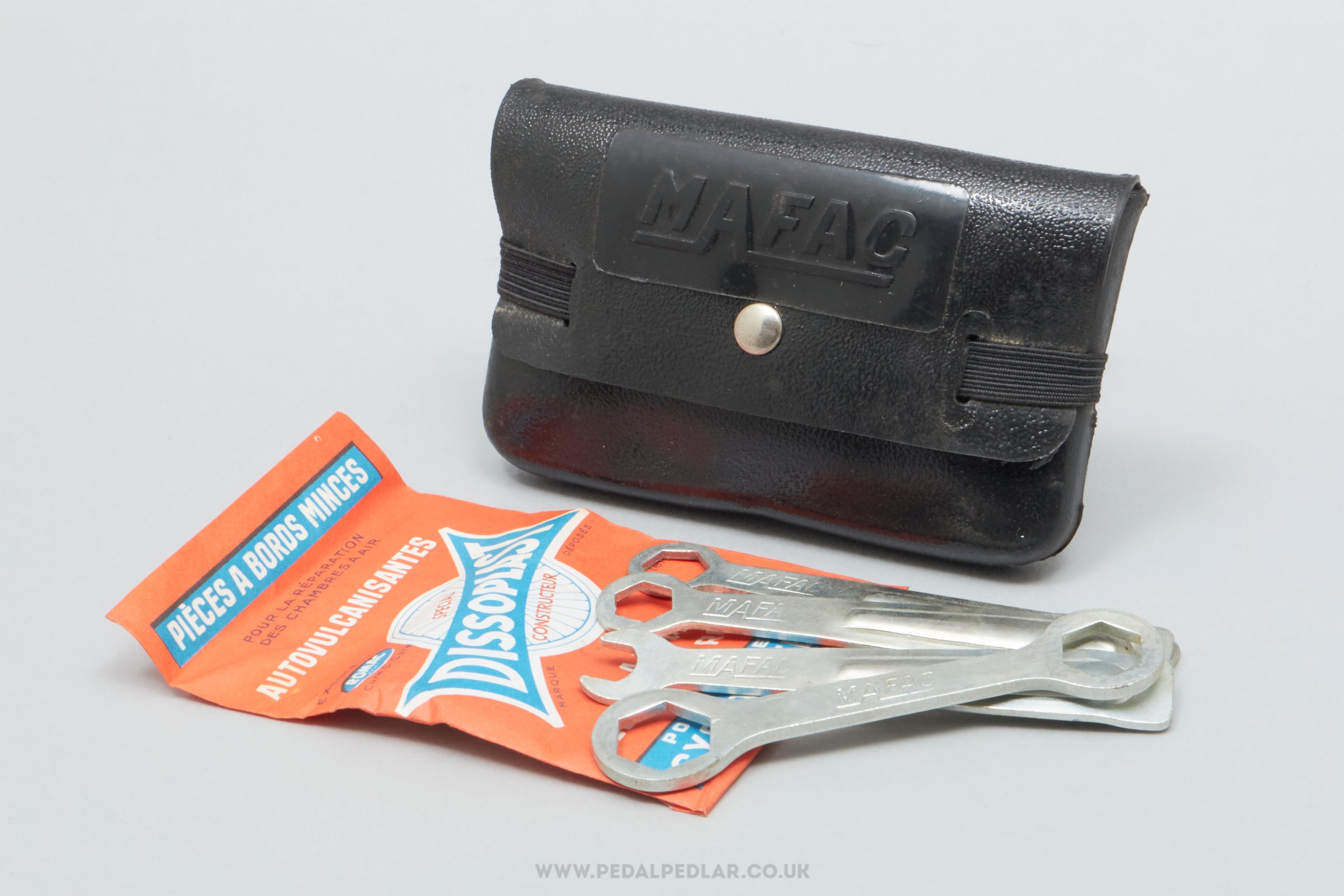


Mafac 5 Piece Tool Kit NOS Vintage Black Saddle Bag
£34.00 £40.00
✓ Original saddle bag - produced in the 1970s
✓ New old stock! Still unused after all these years
✓ Worldwide shipping
Mafac saddle bag (or seat pack if you prefer), hailing from France and in production during the 1970s (yet still new & unused after all this time). An excellent choice for vintage bikes, but great for bikes of the non-vintage variety too!
OVERVIEW
Production Era - 1970s
Country - French
Material - Plastic / Steel
Weight - 114 g
Stock Code - D-BAG-S28V
NB - Includes: Patch in packet; set of steel spanners
*New old stock items may have marks from storage over the years, and as we often have multiples they can vary from piece to piece, but they are always genuine new & unused items.
TECHNICAL INFO
Colour* - Black
Dimensions (L x W x D) - 11 x 6.5 x 2 cm
*The colour description is just a guide, please check the photos too as we make sure these are as close to the true colour as possible.
-
▼SHIPPING, TAXES & RETURNS
-
We've been safely sending orders around the world since 2010. Orders are carefully packed, sent with tracking & insurance, and normally collected around midday on Tuesdays and Fridays. Larger items may occasionally require an extra day or two to prepare.
We accept returns, please notify us within 14 days and ensure the item arrives back with us no later than 30 days after the order was received.
EU orders under €150 (excluding shipping) - import VAT and the new €3 customs duty are paid as part of your order, so there's nothing further to pay on delivery.
EU orders over €150 (excluding shipping) - import fees are payable to the carrier before delivery, with nothing collected at checkout.
USA orders - import fees are collected at checkout for all orders to the USA, so there won’t be any surprise charges when your order arrives.
Other international orders - local import fees may apply and are not collected by us. Please check your country's import rules before purchasing.


Mafac Course (119) Vintage Drop Bar Brake Levers
£46.75 £55.00
✓ Original levers - in production from the 1970s to the 1980s
✓ Suitable for historic cycling events such as L'Eroica
✓ Thoroughly checked & cleaned
✓ Worldwide shipping
Mafac Course brake levers, hailing from France and in production from the 1970s to the 1980s. Made from aluminium/plastic/rubber and weighing in at 230 grams. A fine choice for keeping your vintage bike authentic, but also great for any other compatible bike too.
If you're taking part in L'Eroica or any other vintage event, these are fully compliant - so rest assured, the pre-1987 police won't lock you up for having the wrong brake levers!
The brake levers have been cleaned, checked by one of our mechanics and graded as good condition, but do take a good look at the detailed photos so you can see the cosmetic condition before you buy.OVERVIEW
Condition Notes - Original gum hoods are splitting
Model ID - 119
Production Era - 1970s & 1980s
Country - French
Material - Aluminium / Plastic / Rubber
Weight - 230 g
Stock Code - U-LEV-D86V
TECHNICAL INFO
Cable Routing - Non-Aero
Bar Clamp Size - 23.8 mm - 24.2 mm
-
▼SHIPPING, TAXES & RETURNS
-
We've been safely sending orders around the world since 2010. Orders are carefully packed, sent with tracking & insurance, and normally collected around midday on Tuesdays and Fridays. Larger items may occasionally require an extra day or two to prepare.
We accept returns, please notify us within 14 days and ensure the item arrives back with us no later than 30 days after the order was received.
EU orders under €150 (excluding shipping) - import VAT and the new €3 customs duty are paid as part of your order, so there's nothing further to pay on delivery.
EU orders over €150 (excluding shipping) - import fees are payable to the carrier before delivery, with nothing collected at checkout.
USA orders - import fees are collected at checkout for all orders to the USA, so there won’t be any surprise charges when your order arrives.
Other international orders - local import fees may apply and are not collected by us. Please check your country's import rules before purchasing.
-
▼HELP SECTION
-
Cable Routing - non-aero means the cables come out at the top of the brake levers, meaning the cables are on show. With aero levers the cable comes out of a small hole by the handlebar, allowing the cables to be hidden under the handlebar tape.
Bar Clamp Size - this should be close to the outside diameter of your handlebars at the point the brake levers will be fitted. This will rarely present a problem with drop bars as 23.8 mm is standard, and a 24.2 mm clamp will fit just fine as they do have a little adjustment in them. There are some older sizes to watch out for but these will be noticeably different.


Mafac Course (121) Vintage Drop Bar Brake Levers
£55.25 £65.00
✓ Original levers - produced in the 1980s
✓ Suitable for historic cycling events such as L'Eroica
✓ Thoroughly checked & cleaned
✓ Worldwide shipping
Mafac Course brake levers, hailing from France and in production during the 1980s. Made from aluminium/rubber and weighing in at 233 grams. A fine choice for keeping your vintage bike authentic, but also great for any other compatible bike too.
If you're taking part in L'Eroica or any other vintage event, these are fully compliant - so rest assured, the pre-1987 police won't lock you up for having the wrong brake levers!
The brake levers have been cleaned, checked by one of our mechanics and graded as good condition, but do take a good look at the detailed photos so you can see the cosmetic condition before you buy.OVERVIEW
Model ID - 121
Production Era - 1980s
Country - French
Material - Aluminium / Rubber
Weight - 233 g
Stock Code - U-LEV-D106V
TECHNICAL INFO
Cable Routing - Non-Aero
Bar Clamp Size - 23.8 mm
-
▼SHIPPING, TAXES & RETURNS
-
We've been safely sending orders around the world since 2010. Orders are carefully packed, sent with tracking & insurance, and normally collected around midday on Tuesdays and Fridays. Larger items may occasionally require an extra day or two to prepare.
We accept returns, please notify us within 14 days and ensure the item arrives back with us no later than 30 days after the order was received.
EU orders under €150 (excluding shipping) - import VAT and the new €3 customs duty are paid as part of your order, so there's nothing further to pay on delivery.
EU orders over €150 (excluding shipping) - import fees are payable to the carrier before delivery, with nothing collected at checkout.
USA orders - import fees are collected at checkout for all orders to the USA, so there won’t be any surprise charges when your order arrives.
Other international orders - local import fees may apply and are not collected by us. Please check your country's import rules before purchasing.
-
▼HELP SECTION
-
Cable Routing - non-aero means the cables come out at the top of the brake levers, meaning the cables are on show. With aero levers the cable comes out of a small hole by the handlebar, allowing the cables to be hidden under the handlebar tape.
Bar Clamp Size - this should be close to the outside diameter of your handlebars at the point the brake levers will be fitted. This will rarely present a problem with drop bars as 23.8 mm is standard, and a 24.2 mm clamp will fit just fine as they do have a little adjustment in them. There are some older sizes to watch out for but these will be noticeably different.


Mafac Ville (715 / VDA B) Vintage Randonneur Brake Levers
£40.50 £45.00
✓ Original levers - in production from the 1970s to the 1980s
✓ Suitable for historic cycling events such as L'Eroica
✓ Professionally checked & cleaned
✓ Worldwide shipping
Mafac Ville flat bar brake levers (or handles if you prefer), hailing from France and in production from the 1970s to the 1980s. Made from aluminium/resin and weighing in at 148 grams. A fine choice for keeping your vintage bike authentic, but also great for any other compatible bike.
If you're taking part in L'Eroica or any other vintage event, these are fully compliant - so rest assured, the pre-1987 police won't lock you up for having the wrong brake levers!
The brake levers have been cleaned, checked by one of our mechanics and graded as good condition, but do take a good look at the detailed photos so you can see the cosmetic condition before you buy.OVERVIEW
Model ID - 715 / VDA B
Production Era - 1970s & 1980s
Country - French
Material - Aluminium / Resin
Weight - 148 g
Stock Code - U-LEV-F14V
TECHNICAL INFO
Bike Type - Randonneur
Brake Type - Calipers
Bar Clamp Size - 23.8 mm
-
▼SHIPPING, TAXES & RETURNS
-
We've been safely sending orders around the world since 2010. Orders are carefully packed, sent with tracking & insurance, and normally collected around midday on Tuesdays and Fridays. Larger items may occasionally require an extra day or two to prepare.
We accept returns, please notify us within 14 days and ensure the item arrives back with us no later than 30 days after the order was received.
EU orders under €150 (excluding shipping) - import VAT and the new €3 customs duty are paid as part of your order, so there's nothing further to pay on delivery.
EU orders over €150 (excluding shipping) - import fees are payable to the carrier before delivery, with nothing collected at checkout.
USA orders - import fees are collected at checkout for all orders to the USA, so there won’t be any surprise charges when your order arrives.
Other international orders - local import fees may apply and are not collected by us. Please check your country's import rules before purchasing.
-
▼HELP SECTION
-
Bike Type - this is just a guide, any brake levers can technically be used on any bike as long as everything's compatible.
Brake Type - if you’re running direct pull cantilevers (V-Brakes), you’ll need compatible brake levers. For calipers, cantilevers and mini V-brakes you’ll need levers designed to be used with these as the cable pull is different.
Bar Clamp Size - this should be close to the outside diameter of your handlebars at the point the brake levers will be fitted. 23.8 mm is standard for drop bars and 22.2 mm is standard for 'flat' bars (including risers & swept-back types), but they can differ so this should be checked.


Magistroni Vintage 1" Threaded Headset
£63.75 £85.00
✓ Original part - in production from the 1940s to the 1950s
✓ Suitable for historic cycling events such as L'Eroica
✓ Professionally checked & cleaned
✓ Worldwide shipping
Magistroni headset, hailing from Italy and in production from the 1940s to the 1950s. Made from steel and weighing in at 182 grams. A fine choice for keeping your vintage bike authentic, but also great for any other compatible bike too.
If you're taking part in L'Eroica or a similar vintage event, this is fully compliant - so rest assured, the pre-1987 police won't lock you up for having the wrong headset!
The headset's been carefully cleaned, thoroughly checked by one of our mechanics and graded as OK condition, but do take a good look at the detailed photos so you can see the cosmetic condition before you buy.OVERVIEW
Bearing / Race Condition - Good
Production Era - 1940s & 1950s
Country - Italian
Material - Steel
Weight - 182 g
Stock Code - U-HS82V
TECHNICAL INFO
Headset Type - 1" Threaded (ISO Standard 24 TPI)
Cup Size (OD) - 30.2 mm
Crown Race (ID) - 26.6 mm
Stack Height - 39 mm
-
▼SHIPPING, TAXES & RETURNS
-
We've been safely sending orders around the world since 2010. Orders are carefully packed, sent with tracking & insurance, and normally collected around midday on Tuesdays and Fridays. Larger items may occasionally require an extra day or two to prepare.
We accept returns, please notify us within 14 days and ensure the item arrives back with us no later than 30 days after the order was received.
EU orders under €150 (excluding shipping) - import VAT and the new €3 customs duty are paid as part of your order, so there's nothing further to pay on delivery.
EU orders over €150 (excluding shipping) - import fees are payable to the carrier before delivery, with nothing collected at checkout.
USA orders - import fees are collected at checkout for all orders to the USA, so there won’t be any surprise charges when your order arrives.
Other international orders - local import fees may apply and are not collected by us. Please check your country's import rules before purchasing.
-
▼HELP SECTION
-
Headset Type - the 1" size relates to the outside diameter of your fork's steerer column which should measure 25.4 mm, if it's 25.0 mm your forks should be French threaded. Although it's generally recommended to match threaded parts exactly, with headsets you can technically mix and match, unless you have French or the obscure old Raleigh threads, in which case you need to stick to that type. If you're replacing an old headset the thread may be stamped on there. Oversized 1 1/8" & 1 1/4" sizes are easily identifiable due to their size and the threads are all standard.
Cup Size (OD) - the outside diameter of the cups, this must match the inside diameter of your frame's headtube closely for a good fit. For 1" headsets this should be around 30.2 mm unless you require a JIS headset which will be 30.0 mm.
Crown Race (ID) - the inside diameter of the crown race where it sits on the fork steerer, this needs to be close to the outside diameter of your fork steerer at the base to ensure a proper fit.
Stack Height - the overall height of the headset. To check the minimum stack height you require, measure the length of your frame’s head tube & subtract this from the length of the fork steerer column. You can always add spacers if you have a little too much steerer tube but you can't fit a headset with a greater stack height than the space you have available.
For further help with 1" threaded headsets head to our journal.


Maillard / Raleigh Chromed Vintage 27" Clincher Town/City Front Wheel
£33.75 £45.00
✓ Original vintage wheel - produced in the 1980s
✓ Suitable for historic cycling events such as L'Eroica
✓ Professionally checked & serviced
✓ Worldwide shipping
Maillard / Raleigh Chromed front wheel, the hub hailing from France and in production during the 1980s. Made from steel/aluminium and weighing in at 1299 grams. A fine choice for keeping your vintage bike authentic, but also great for any other compatible bike too.
If you're taking part in L'Eroica or a similar vintage event, this is fully compliant - so rest assured, the pre-1987 police won't lock you up for having the wrong wheel!
The wheel's been serviced, checked by one of our mechanics and graded as good condition, but do take a good look at the detailed photos so you can see the cosmetic condition before you buy.OVERVIEW
Rim Condition - Good
Production Era - 1980s
Country - French
Material - Steel/Aluminium
Weight - 1299 g
Stock Code - U-W-SF25V
TECHNICAL INFO
Rim Size - 27" Clincher
Bike Type - Town/City
Drilling - 36 Hole
Spacing (O.L.D.) - 96 mm
-
▼SHIPPING, TAXES & RETURNS
-
We've been safely sending orders around the world since 2010. Orders are carefully packed, sent with tracking & insurance, and normally collected around midday on Tuesdays and Fridays. Larger items may occasionally require an extra day or two to prepare.
We accept returns, please notify us within 14 days and ensure the item arrives back with us no later than 30 days after the order was received.
EU orders under €150 (excluding shipping) - import VAT and the new €3 customs duty are paid as part of your order, so there's nothing further to pay on delivery.
EU orders over €150 (excluding shipping) - import fees are payable to the carrier before delivery, with nothing collected at checkout.
USA orders - import fees are collected at checkout for all orders to the USA, so there won’t be any surprise charges when your order arrives.
Other international orders - local import fees may apply and are not collected by us. Please check your country's import rules before purchasing.


Maillard / Unbranded Vintage 700c Clincher Road Front Wheel
£33.75 £45.00
✓ Original vintage wheel - produced in the 1980s
✓ Professionally checked & serviced
✓ Worldwide shipping
Maillard / Unbranded front wheel, the hub hailing from France and in production during the 1980s. Made from aluminium/steel and weighing in at 1010 grams. A fine choice for keeping your vintage bike authentic, but also great for any other compatible bike too.
The wheel's been serviced, checked by one of our mechanics and graded as OK condition, but do take a good look at the detailed photos so you can see the cosmetic condition before you buy.OVERVIEW
Rim Condition - Good
Production Era - 1980s
Country - French
Material - Aluminium/Steel
Weight - 1010 g
Stock Code - U-W-SF23V
TECHNICAL INFO
Rim Size - 700c Clincher
Bike Type - Road
Drilling - 36 Hole
Spacing (O.L.D.) - 97 mm
-
▼SHIPPING, TAXES & RETURNS
-
We've been safely sending orders around the world since 2010. Orders are carefully packed, sent with tracking & insurance, and normally collected around midday on Tuesdays and Fridays. Larger items may occasionally require an extra day or two to prepare.
We accept returns, please notify us within 14 days and ensure the item arrives back with us no later than 30 days after the order was received.
EU orders under €150 (excluding shipping) - import VAT and the new €3 customs duty are paid as part of your order, so there's nothing further to pay on delivery.
EU orders over €150 (excluding shipping) - import fees are payable to the carrier before delivery, with nothing collected at checkout.
USA orders - import fees are collected at checkout for all orders to the USA, so there won’t be any surprise charges when your order arrives.
Other international orders - local import fees may apply and are not collected by us. Please check your country's import rules before purchasing.


Maillard 700 Compact Super Vintage 6 Speed 15-20 Freewheel
£37.50 £50.00
✓ Original part - in production from the 1970s to the 1980s
✓ Suitable for historic cycling events such as L'Eroica
✓ Professionally checked & carefully cleaned
✓ Worldwide shipping
Maillard 700 Compact Super freewheel, hailing from France and in production from the 1970s to the 1980s. Made from aluminium/steel and weighing in at 418 grams. A fine choice for keeping your vintage bike authentic, but also great for any other compatible bike too.
If you're taking part in L'Eroica or a similar vintage event, this is fully compliant - so rest assured, the pre-1987 police won't lock you up for having the wrong freewheel!
The freewheel's been carefully cleaned, thoroughly checked by one of our mechanics and graded as very good condition, but do take a good look at the detailed photos so you can see the cosmetic condition before you buy, and please consider that freewheels wear with chains, so used freewheels can occasionally skip when partnered with new (and some used) chains. This can usually be avoided by using a compatible used chain of similar age, but there is no way for us to confirm which chain will work with which freewheel.OVERVIEW
Production Era - 1970s & 1980s
Country - French
Material - Aluminium/Steel
Weight - 418 g
Stock Code - U-FW88V
TECHNICAL INFO
Speed - 6 Speed
Range - 15-20
Threading - English/ISO: 1.375 x 24 TPI
Stack Height - 30 mm
Chain Width - 3/32"
-
▼SHIPPING, TAXES & RETURNS
-
We've been safely sending orders around the world since 2010. Orders are carefully packed, sent with tracking & insurance, and normally collected around midday on Tuesdays and Fridays. Larger items may occasionally require an extra day or two to prepare.
We accept returns, please notify us within 14 days and ensure the item arrives back with us no later than 30 days after the order was received.
EU orders under €150 (excluding shipping) - import VAT and the new €3 customs duty are paid as part of your order, so there's nothing further to pay on delivery.
EU orders over €150 (excluding shipping) - import fees are payable to the carrier before delivery, with nothing collected at checkout.
USA orders - import fees are collected at checkout for all orders to the USA, so there won’t be any surprise charges when your order arrives.
Other international orders - local import fees may apply and are not collected by us. Please check your country's import rules before purchasing.
-
▼HELP SECTION
-
Speed - the number of cogs on the freewheel.
Range - the number of teeth on the smalles and largest cogs, this gives you an indication of how hard or easy the gearing will be, the lower the number the harder the gears. The tooth count of the cogs inbetween are usually evenly spaced, ie: a 6 speed 14-24 freewheel would likely have cog sizes 14, 16, 18, 20, 22 & 24.
Threading - this needs to match the thread of your rear hub. ISO is the modern standard and is almost exactly the same as older English/British and Italian thread, allowing you to mix and match between these thread types as long as it's not going to be under extreme force, in which case it's best to stick to an exact match. Hubs with a French thread must be used with a French threaded freewheel.
Stack Height - the total height (or width if you're looking at it when installed) of the freewheel, this is measured from the base (back of the largest cog) to the top (front of the smallest cog).
Chain width - this is mainly relevant for singlespeed and some older 3 or 4 speed freewheels - if this is ⅛” then you must use a ⅛” chain, but most freewheels (especially multiple speed ones) will use a standard 3/32” chain.
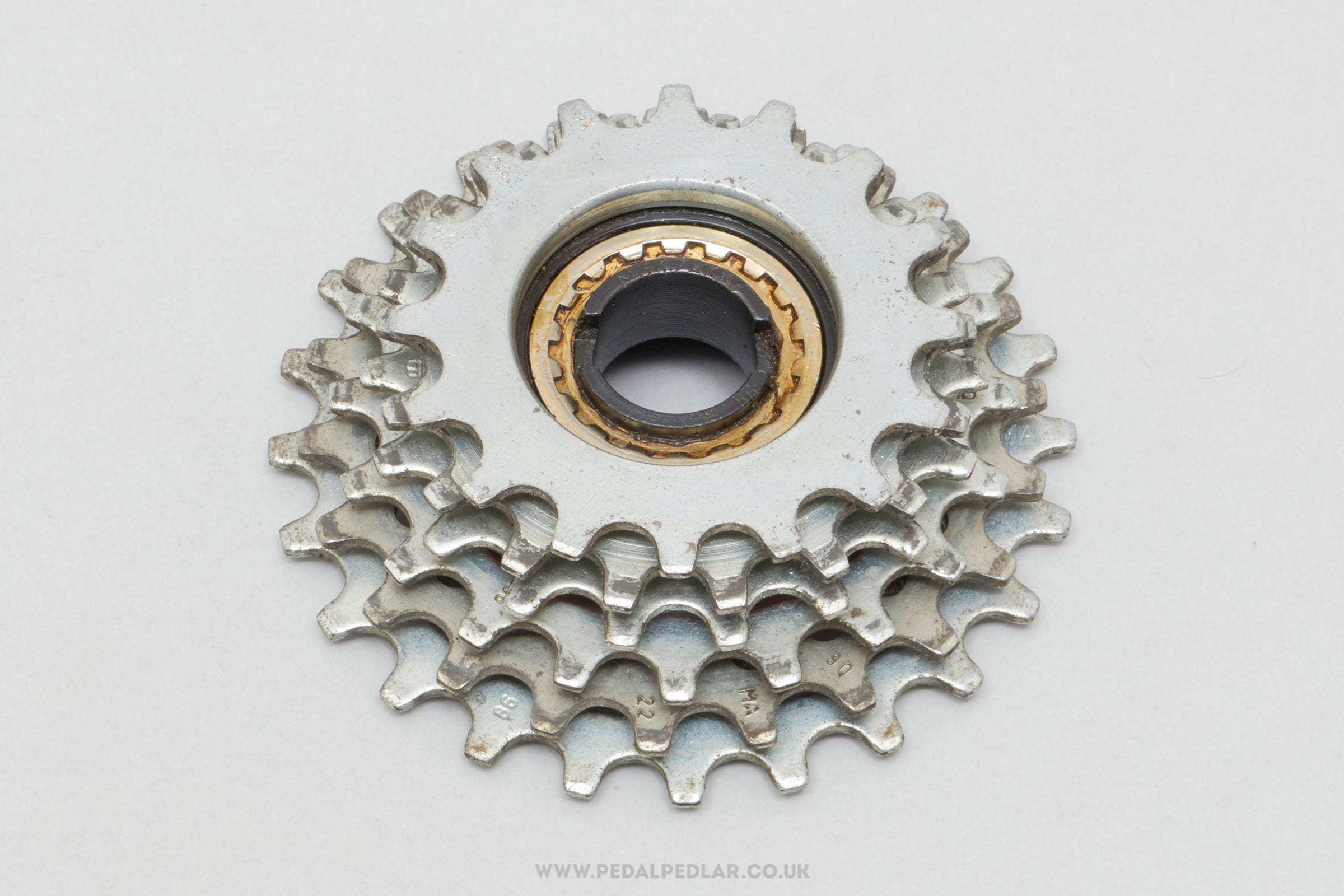


Maillard 700 Course Super c.1986 Vintage 6 Speed 16-24 Freewheel
£34.00 £40.00
✓ Original part - in production from the 1970s to the 1980s
✓ Suitable for historic cycling events such as L'Eroica
✓ Professionally checked & carefully cleaned
✓ Worldwide shipping
Maillard 700 Course freewheel, hailing from France and dating back to 1986. Made from steel and weighing in at 465 grams. A fine choice for keeping your vintage bike authentic, but also great for any other compatible bike.
If you're taking part in L'Eroica or a similar vintage event, this is fully compliant - so rest assured, the pre-1987 police won't lock you up for having the wrong freewheel!
The freewheel's been carefully cleaned, thoroughly checked by one of our mechanics and graded as good condition, but do take a good look at the detailed photos so you can see the cosmetic condition before you buy, and please consider that freewheels wear with chains, so used freewheels can occasionally skip when partnered with new (and some used) chains. This can usually be avoided by using a compatible used chain of similar age, but there is no way for us to confirm which chain will work with which freewheel.OVERVIEW
Production Era - 1970s & 1980s
Country - French
Material - Steel
Weight - 465 g
Stock Code - U-FW177V
TECHNICAL INFO
Speed - 6 Speed
Range - 16-24
Threading - French: 1.366 x 25.4 TPI
Stack Height - 32 mm
Cog Width - 3/32" (Standard)
-
▼SHIPPING, TAXES & RETURNS
-
We've been safely sending orders around the world since 2010. Orders are carefully packed, sent with tracking & insurance, and normally collected around midday on Tuesdays and Fridays. Larger items may occasionally require an extra day or two to prepare.
We accept returns, please notify us within 14 days and ensure the item arrives back with us no later than 30 days after the order was received.
EU orders under €150 (excluding shipping) - import VAT and the new €3 customs duty are paid as part of your order, so there's nothing further to pay on delivery.
EU orders over €150 (excluding shipping) - import fees are payable to the carrier before delivery, with nothing collected at checkout.
USA orders - import fees are collected at checkout for all orders to the USA, so there won’t be any surprise charges when your order arrives.
Other international orders - local import fees may apply and are not collected by us. Please check your country's import rules before purchasing.
-
▼HELP SECTION
-
Speed - the number of cogs on the freewheel.
Range - the number of teeth on the smalles and largest cogs, this gives you an indication of how hard or easy the gearing will be, the lower the number the harder the gears. The tooth count of the cogs inbetween are usually evenly spaced, ie: a 6 speed 14-24 freewheel would likely have cog sizes 14, 16, 18, 20, 22 & 24.
Threading - this needs to match the thread of your rear hub. ISO is the modern standard and is almost exactly the same as older English/British and Italian thread, allowing you to mix and match between these thread types as long as it's not going to be under extreme force, in which case it's best to stick to an exact match. Hubs with a French thread must be used with a French threaded freewheel.
Stack Height - the total height (or width if you're looking at it when installed) of the freewheel, this is measured from the base (back of the largest cog) to the top (front of the smallest cog).
Cog width - this is mainly relevant for singlespeed and some older 3 or 4 speed freewheels - if this is ⅛” then you must use a ⅛” chain, but most freewheels (especially multiple speed ones) will use a standard 3/32” chain.


Maillard 700 Sprint "Super" NOS Vintage 5 Speed 13-17 Freewheel
£63.00 £70.00
✓ Original part - produced in the 1980s
✓ New old stock! Still unused after all these years
✓ Suitable for historic cycling events such as L'Eroica
✓ Worldwide shipping
Maillard 700 Sprint freewheel, hailing from France and in production during the 1980s (yet still new & unused after all this time!). Made from steel and weighing in at 290 grams. A fine choice for keeping your vintage bike authentic, but also great for any other compatible bike.
If you're taking part in L'Eroica or a similar vintage event, this is fully compliant - so rest assured, the pre-1987 police won't lock you up for having the wrong freewheel!
OVERVIEW
Production Era - 1980s
Country - French
Material - Steel
Weight - 290 g
Stock Code - D-FW155V
*New old stock items may have marks from storage over the years, and as we often have multiples they can vary from piece to piece, but they are always genuine new & unused items.
TECHNICAL INFO
Speed - 5 Speed
Range - 13-17
Threading - English/ISO: 1.375 x 24 TPI
Stack Height - 27 mm
Cog Width - 3/32" (Standard)
-
▼SHIPPING, TAXES & RETURNS
-
We've been safely sending orders around the world since 2010. Orders are carefully packed, sent with tracking & insurance, and normally collected around midday on Tuesdays and Fridays. Larger items may occasionally require an extra day or two to prepare.
We accept returns, please notify us within 14 days and ensure the item arrives back with us no later than 30 days after the order was received.
EU orders under €150 (excluding shipping) - import VAT and the new €3 customs duty are paid as part of your order, so there's nothing further to pay on delivery.
EU orders over €150 (excluding shipping) - import fees are payable to the carrier before delivery, with nothing collected at checkout.
USA orders - import fees are collected at checkout for all orders to the USA, so there won’t be any surprise charges when your order arrives.
Other international orders - local import fees may apply and are not collected by us. Please check your country's import rules before purchasing.
-
▼HELP SECTION
-
Speed - the number of cogs on the freewheel.
Range - the number of teeth on the smalles and largest cogs, this gives you an indication of how hard or easy the gearing will be, the lower the number the harder the gears. The tooth count of the cogs inbetween are usually evenly spaced, ie: a 6 speed 14-24 freewheel would likely have cog sizes 14, 16, 18, 20, 22 & 24.
Threading - this needs to match the thread of your rear hub. ISO is the modern standard and is almost exactly the same as older English/British and Italian thread, allowing you to mix and match between these thread types as long as it's not going to be under extreme force, in which case it's best to stick to an exact match. Hubs with a French thread must be used with a French threaded freewheel.
Stack Height - the total height (or width if you're looking at it when installed) of the freewheel, this is measured from the base (back of the largest cog) to the top (front of the smallest cog).
Cog width - this is mainly relevant for singlespeed and some older 3 or 4 speed freewheels - if this is ⅛” then you must use a ⅛” chain, but most freewheels (especially multiple speed ones) will use a standard 3/32” chain.


Maillard CXC 650 NOS Vintage Aero Road Pedals
£56.25 £75.00
✓ Original pedals - produced in the 1980s
✓ New old stock! Still unused after all these years
✓ Suitable for historic cycling events such as L'Eroica
✓ Worldwide shipping
Maillard CXC 650 pedals, hailing from France and in production during the 1980s (yet still new & unused after all this time!). Made from aluminium/steel and weighing in at 375 grams. A fine choice for keeping your vintage bike authentic, but also great for any other compatible bike too.
If you're taking part in L'Eroica, Anjou Velo, Velo Retro or another similar vintage cycling event, this is fully compliant - so rest assured, the pre-1987 police won't lock you up for having the wrong pedals!
OVERVIEW
Bearing/Race Condition - New Old Stock*
Production Era - 1980s
Country - French
Material - Aluminium/Steel
Weight - 375 g
Stock Code - D-PD42V
*New old stock items may have marks from storage over the years, and as we often have multiples they can vary from piece to piece, but they are always genuine new & unused items.
TECHNICAL INFO
Pedal Type - Aero Road
Pedal Threads - Standard (9/16" x 20 TPI)
-
▼SHIPPING, TAXES & RETURNS
-
We've been safely sending orders around the world since 2010. Orders are carefully packed, sent with tracking & insurance, and normally collected around midday on Tuesdays and Fridays. Larger items may occasionally require an extra day or two to prepare.
We accept returns, please notify us within 14 days and ensure the item arrives back with us no later than 30 days after the order was received.
EU orders under €150 (excluding shipping) - import VAT and the new €3 customs duty are paid as part of your order, so there's nothing further to pay on delivery.
EU orders over €150 (excluding shipping) - import fees are payable to the carrier before delivery, with nothing collected at checkout.
USA orders - import fees are collected at checkout for all orders to the USA, so there won’t be any surprise charges when your order arrives.
Other international orders - local import fees may apply and are not collected by us. Please check your country's import rules before purchasing.
-
▼HELP SECTION
-
Pedal Type - this is just a guide to give you an idea of the pedal type, but any pedal can technically be used for any purpose. Track pedals are designed without the pointed 'quill' for safety though, so it's best to only use track pedals for this purpose. Most track pedals, along with quill & aero road pedals are designed to be used with toe clips & straps for best performance.
Pedal Threads - this must match the thread on your cranks. Sometimes it's stamped on the end of the crank arm, but most bikes use a standard thread of 9/16” x 20 tpi. The exceptions being older French bikes, bikes with cheaper one-piece type chainsets and Shimano’s Dyna Drive system (easily identifiable as the pedal holes are about an inch wide!).


Maillard IRCOS NOS Classic 6 Speed 13-24 Freewheel
£71.25 £95.00
✓ Original part - produced in the 1990s
✓ New old stock! Still unused after all these years
✓ Worldwide shipping
Maillard IRCOS freewheel, hailing from France and in production during the 1990s (yet still new & unused after all this time!). Made from steel and weighing in at 389 grams. A fine choice for keeping your classic bike authentic, but also great for any other compatible bike too.
OVERVIEW
Production Era - 1990s
Country - French
Material - Steel
Weight - 389 g
Stock Code - D-FW58C
*New old stock items may have marks from storage over the years, and as we often have multiples they can vary from piece to piece, but they are always genuine new & unused items.
TECHNICAL INFO
Speed - 6 Speed
Range - 13-24
Threading - English/ISO: 1.375 x 24 TPI
Stack Height - 32 mm
Chain Width - 3/32"
-
▼SHIPPING, TAXES & RETURNS
-
We've been safely sending orders around the world since 2010. Orders are carefully packed, sent with tracking & insurance, and normally collected around midday on Tuesdays and Fridays. Larger items may occasionally require an extra day or two to prepare.
We accept returns, please notify us within 14 days and ensure the item arrives back with us no later than 30 days after the order was received.
EU orders under €150 (excluding shipping) - import VAT and the new €3 customs duty are paid as part of your order, so there's nothing further to pay on delivery.
EU orders over €150 (excluding shipping) - import fees are payable to the carrier before delivery, with nothing collected at checkout.
USA orders - import fees are collected at checkout for all orders to the USA, so there won’t be any surprise charges when your order arrives.
Other international orders - local import fees may apply and are not collected by us. Please check your country's import rules before purchasing.


Maillard Large Flange c.1982 Vintage 36h Front Hub
£22.50 £30.00
✓ Original hub - in production from the 1970s to the 1980s
✓ Suitable for historic cycling events such as L'Eroica
✓ Professionally checked, cleaned & serviced
✓ Worldwide shipping
Maillard front hub, hailing from France and dating back to 1982. Made from aluminium/steel and weighing in at 249 grams. A fine choice for keeping your vintage bike authentic, but also great for any other compatible bike too.
If you're taking part in L'Eroica or a similar vintage event, this is fully compliant - so rest assured, the pre-1987 police won't lock you up for having the wrong hub!
The hub's been carefully cleaned, thoroughly serviced by one of our mechanics and graded as very good condition, but do take a good look at the detailed photos so you can see the cosmetic condition before you buy.OVERVIEW
Bearing / Race Condition - Good
Production Era - 1970s & 1980s
Country - French
Material - Aluminium / Steel
Weight - 249 g
Stock Code - U-HU-F46V
TECHNICAL INFO
Spoke Drilling - 36 Hole
Spacing (O.L.D.) - 97 mm
-
▼SHIPPING, TAXES & RETURNS
-
We've been safely sending orders around the world since 2010. Orders are carefully packed, sent with tracking & insurance, and normally collected around midday on Tuesdays and Fridays. Larger items may occasionally require an extra day or two to prepare.
We accept returns, please notify us within 14 days and ensure the item arrives back with us no later than 30 days after the order was received.
EU orders under €150 (excluding shipping) - import VAT and the new €3 customs duty are paid as part of your order, so there's nothing further to pay on delivery.
EU orders over €150 (excluding shipping) - import fees are payable to the carrier before delivery, with nothing collected at checkout.
USA orders - import fees are collected at checkout for all orders to the USA, so there won’t be any surprise charges when your order arrives.
Other international orders - local import fees may apply and are not collected by us. Please check your country's import rules before purchasing.
-
▼HELP SECTION
-
Spoke Drilling - the number of holes for the spokes, your wheel rim needs to match the hub exactly.
Spacing (O.L.D.) - the width of the hub measured at its widest point, from the outside of the locking end nuts (O.L.D. = Over Locknut Dimension), not including the hub axle. This measurement needs to match the inside of your fork's dropouts. Steel forks can be stretched or squeezed a few mm but it's always best to avoid this if possible, aluminium or carbon forks should never be stretched.


Maillard M M Atom Vintage Quick Release Rear Skewer
£19.13 £23.00
✓ Original skewer - in production from the 1970s to the 1980s
✓ Suitable for historic cycling events such as L'Eroica
✓ Checked & cleaned
✓ Worldwide shipping
Maillard M M Atom rear skewer, hailing from France and in production from the 1970s to the 1980s. Made from steel/plastic and weighing in at 97 grams. A fine choice for keeping your vintage bike authentic, but also great for any other compatible bike too.
If you're taking part in L'Eroica or any other vintage event, this is fully compliant - so rest assured, the pre-1987 police won't lock you up for having the wrong skewer!
The skewer's been cleaned, checked by one of our mechanics and graded as good condition, but do take a good look at the detailed photos so you can see the cosmetic condition before you buy.OVERVIEW
Production Era - 1970s & 1980s
Country - French
Material - Steel / Plastic
Weight - 97 g
Stock Code - U-SKW-R44V
TECHNICAL INFO
Skewer Type - Quick Release
Spacing* - 134 mm
Threaded Section - 23 mm
End Nut Length - 16 mm
*See help section.
-
▼SHIPPING, TAXES & RETURNS
-
We've been safely sending orders around the world since 2010. Orders are carefully packed, sent with tracking & insurance, and normally collected around midday on Tuesdays and Fridays. Larger items may occasionally require an extra day or two to prepare.
We accept returns, please notify us within 14 days and ensure the item arrives back with us no later than 30 days after the order was received.
EU orders under €150 (excluding shipping) - import VAT and the new €3 customs duty are paid as part of your order, so there's nothing further to pay on delivery.
EU orders over €150 (excluding shipping) - import fees are payable to the carrier before delivery, with nothing collected at checkout.
USA orders - import fees are collected at checkout for all orders to the USA, so there won’t be any surprise charges when your order arrives.
Other international orders - local import fees may apply and are not collected by us. Please check your country's import rules before purchasing.
-
▼HELP SECTION
-
Skewer type - quick release skewers allow you to remove the wheel without any tools, whereas allen key and security skewers require a tool to allow the wheel to be removed.
*Spacing - this should be within a few milimetres of your frame's outer dropout spacing (measured from the outside where the skewers clamp down). The measurement provided was taken with the exiting hole of the end nut flush with the end of the skewer. There will be some wiggle room to allow a narrower or wider dropout spacing to fit, we've provided the threaded section and end nut measurements to give you an indication of how much.
Threaded section - the amount of thread on the skewers for the end nut to be threaded onto.
End nut length - the total length of the nut from end to end.


Maillard Normandy Large Flange / Nisi Pista c.1976 Vintage 28"/700c Tubular Track/Singlespeed Rear Wheel
£52.50 £70.00
✓ Original vintage wheel - produced in the 1970s
✓ Lightweight for the era - just 984 grams
✓ Professionally checked & serviced
✓ Worldwide shipping
Maillard Normandy Large Flange / Nisi Pista rear wheel, the hub hailing from France and dating back to 1976. Made from aluminium/steel and weighing in at 984 grams - pretty lightweight for a rear wheel at that time. A fine choice for keeping your vintage bike authentic, but also great for any other compatible bike too.
The wheel's been serviced, checked by one of our mechanics and graded as OK condition, but do take a good look at the detailed photos so you can see the cosmetic condition before you buy.OVERVIEW
Rim Condition - Very Good
Production Era - 1970s
Country - French
Material - Aluminium/Steel
Weight - 984 g
Stock Code - U-W-SR30V
TECHNICAL INFO
Rim Size - 28"/700c Tubular
Bike Type - Track/Singlespeed
Drilling - 36 Hole
Spacing (O.L.D.) - 116 mm
Speed - Single Speed
Sprocket Fitting - Screw On (English/ISO: 1.375 x 24 TPI)
-
▼SHIPPING, TAXES & RETURNS
-
We've been safely sending orders around the world since 2010. Orders are carefully packed, sent with tracking & insurance, and normally collected around midday on Tuesdays and Fridays. Larger items may occasionally require an extra day or two to prepare.
We accept returns, please notify us within 14 days and ensure the item arrives back with us no later than 30 days after the order was received.
EU orders under €150 (excluding shipping) - import VAT and the new €3 customs duty are paid as part of your order, so there's nothing further to pay on delivery.
EU orders over €150 (excluding shipping) - import fees are payable to the carrier before delivery, with nothing collected at checkout.
USA orders - import fees are collected at checkout for all orders to the USA, so there won’t be any surprise charges when your order arrives.
Other international orders - local import fees may apply and are not collected by us. Please check your country's import rules before purchasing.


Maillard Normandy NOS Vintage 6 Speed 14-24 Freewheel
£45.00 £50.00
✓ Original part - in production from the 1970s to the 1980s
✓ New old stock! Still unused after all these years
✓ Suitable for historic cycling events such as L'Eroica
✓ Worldwide shipping
Maillard Normandy freewheel, hailing from France and in production from the 1970s to the 1980s (yet still new & unused after all this time!). Made from steel and weighing in at 412 grams. A fine choice for keeping your vintage bike authentic, but also great for any other compatible bike.
If you're taking part in L'Eroica or a similar vintage event, this is fully compliant - so rest assured, the pre-1987 police won't lock you up for having the wrong freewheel!
OVERVIEW
Production Era - 1970s & 1980s
Country - French
Material - Steel
Weight - 412 g
Stock Code - D-FW143V
*New old stock items may have marks from storage over the years, and as we often have multiples they can vary from piece to piece, but they are always genuine new & unused items.
TECHNICAL INFO
Speed - 6 Speed
Range - 14-24
Threading - English/ISO: 1.375 x 24 TPI
Stack Height - 31 mm
Cog Width - 3/32" (Standard)
-
▼SHIPPING, TAXES & RETURNS
-
We've been safely sending orders around the world since 2010. Orders are carefully packed, sent with tracking & insurance, and normally collected around midday on Tuesdays and Fridays. Larger items may occasionally require an extra day or two to prepare.
We accept returns, please notify us within 14 days and ensure the item arrives back with us no later than 30 days after the order was received.
EU orders under €150 (excluding shipping) - import VAT and the new €3 customs duty are paid as part of your order, so there's nothing further to pay on delivery.
EU orders over €150 (excluding shipping) - import fees are payable to the carrier before delivery, with nothing collected at checkout.
USA orders - import fees are collected at checkout for all orders to the USA, so there won’t be any surprise charges when your order arrives.
Other international orders - local import fees may apply and are not collected by us. Please check your country's import rules before purchasing.
-
▼HELP SECTION
-
Speed - the number of cogs on the freewheel.
Range - the number of teeth on the smalles and largest cogs, this gives you an indication of how hard or easy the gearing will be, the lower the number the harder the gears. The tooth count of the cogs inbetween are usually evenly spaced, ie: a 6 speed 14-24 freewheel would likely have cog sizes 14, 16, 18, 20, 22 & 24.
Threading - this needs to match the thread of your rear hub. ISO is the modern standard and is almost exactly the same as older English/British and Italian thread, allowing you to mix and match between these thread types as long as it's not going to be under extreme force, in which case it's best to stick to an exact match. Hubs with a French thread must be used with a French threaded freewheel.
Stack Height - the total height (or width if you're looking at it when installed) of the freewheel, this is measured from the base (back of the largest cog) to the top (front of the smallest cog).
Cog width - this is mainly relevant for singlespeed and some older 3 or 4 speed freewheels - if this is ⅛” then you must use a ⅛” chain, but most freewheels (especially multiple speed ones) will use a standard 3/32” chain.


Maillard Normandy Sport High Flange c.1979 NOS Vintage 36h Front Hub
£25.00
✓ Original hub - in production from the 1960s to the 1980s
✓ New old stock! Still unused after all these years
✓ Super lightweight for the era - only 160 grams!
✓ Suitable for historic cycling events such as L'Eroica
✓ Worldwide shipping
Maillard Normandy Sport front hub, hailing from France and in production from the 1960s to the 1980s (yet still new & unused after all this time!). Made from aluminium/steel and weighing in at 160 grams - incredibly lightweight for a front hub at that time. A fine choice for keeping your vintage bike authentic, but also great for any other compatible bike too.
If you're taking part in L'Eroica or a similar vintage event, this is fully compliant - so rest assured, the pre-1987 police won't lock you up for having the wrong hub!
OVERVIEW
Bearing / Race Condition - New Old Stock*
Condition Notes - Grease has dried up over the years, leaving the bearings feeling dry
Production Era - 1960s - 1980s
Country - French
Material - Aluminium/Steel
Weight - 160 g
Stock Code - D-HU-F25V
*New old stock items may have marks from storage over the years, and as we often have multiples they can vary from piece to piece, but they are always genuine new & unused items.
TECHNICAL INFO
Drilling - 36 Hole
Spacing (O.L.D.) - 96 mm
-
▼SHIPPING, TAXES & RETURNS
-
We've been safely sending orders around the world since 2010. Orders are carefully packed, sent with tracking & insurance, and normally collected around midday on Tuesdays and Fridays. Larger items may occasionally require an extra day or two to prepare.
We accept returns, please notify us within 14 days and ensure the item arrives back with us no later than 30 days after the order was received.
EU orders under €150 (excluding shipping) - import VAT and the new €3 customs duty are paid as part of your order, so there's nothing further to pay on delivery.
EU orders over €150 (excluding shipping) - import fees are payable to the carrier before delivery, with nothing collected at checkout.
USA orders - import fees are collected at checkout for all orders to the USA, so there won’t be any surprise charges when your order arrives.
Other international orders - local import fees may apply and are not collected by us. Please check your country's import rules before purchasing.


Maillard Normandy Sport High Flange NOS Vintage 32h Front Hub
£18.75 £25.00
✓ Original hub - in production from the 1960s to the 1980s
✓ New old stock! Still unused after all these years
✓ Super lightweight for the era - only 177 grams!
✓ Suitable for historic cycling events such as L'Eroica
✓ Worldwide shipping
Maillard Normandy Sport front hub, hailing from France and dating back to 1981 (yet still new & unused after all this time!). Made from aluminium/steel and weighing in at 177 grams - incredibly lightweight for a front hub at that time. A fine choice for keeping your vintage bike authentic, but also great for any other compatible bike too.
If you're taking part in L'Eroica or a similar vintage event, this is fully compliant - so rest assured, the pre-1987 police won't lock you up for having the wrong hub!
OVERVIEW
Bearing / Race Condition - New Old Stock*
Condition Notes - Grease has dried up over the years, leaving the bearings feeling dry
Production Era - 1960s - 1980s
Country - French
Material - Aluminium/Steel
Weight - 177 g
Stock Code - D-HU-F39V
*New old stock items may have marks from storage over the years, and as we often have multiples they can vary from piece to piece, but they are always genuine new & unused items.
TECHNICAL INFO
Drilling - 32 Hole
Spacing (O.L.D.) - 96 mm
-
▼SHIPPING, TAXES & RETURNS
-
We've been safely sending orders around the world since 2010. Orders are carefully packed, sent with tracking & insurance, and normally collected around midday on Tuesdays and Fridays. Larger items may occasionally require an extra day or two to prepare.
We accept returns, please notify us within 14 days and ensure the item arrives back with us no later than 30 days after the order was received.
EU orders under €150 (excluding shipping) - import VAT and the new €3 customs duty are paid as part of your order, so there's nothing further to pay on delivery.
EU orders over €150 (excluding shipping) - import fees are payable to the carrier before delivery, with nothing collected at checkout.
USA orders - import fees are collected at checkout for all orders to the USA, so there won’t be any surprise charges when your order arrives.
Other international orders - local import fees may apply and are not collected by us. Please check your country's import rules before purchasing.


Maillard Normandy Sport High Flange NOS Vintage 32h Front Hub
£21.50
✓ Original hub - in production from the 1960s to the 1980s
✓ New old stock! Still unused after all these years
✓ Super lightweight for the era - only 168 grams!
✓ Suitable for historic cycling events such as L'Eroica
✓ Worldwide shipping
Maillard Normandy Sport front hub, hailing from France and in production from the 1960s to the 1980s (yet still new & unused after all this time!). Made from aluminium/steel and weighing in at 168 grams - incredibly lightweight for a front hub at that time. A fine choice for keeping your vintage bike authentic, but also great for any other compatible bike too.
If you're taking part in L'Eroica or a similar vintage event, this is fully compliant - so rest assured, the pre-1987 police won't lock you up for having the wrong hub!
OVERVIEW
Bearing / Race Condition - New Old Stock*
Condition Notes - Grease has dried up over the years, leaving the bearings feeling dry
Production Era - 1960s - 1980s
Country - French
Material - Aluminium/Steel
Weight - 168 g
Stock Code - D-HU-F40V
*New old stock items may have marks from storage over the years, and as we often have multiples they can vary from piece to piece, but they are always genuine new & unused items.
TECHNICAL INFO
Drilling - 32 Hole
Spacing (O.L.D.) - 97 mm
-
▼SHIPPING, TAXES & RETURNS
-
We've been safely sending orders around the world since 2010. Orders are carefully packed, sent with tracking & insurance, and normally collected around midday on Tuesdays and Fridays. Larger items may occasionally require an extra day or two to prepare.
We accept returns, please notify us within 14 days and ensure the item arrives back with us no later than 30 days after the order was received.
EU orders under €150 (excluding shipping) - import VAT and the new €3 customs duty are paid as part of your order, so there's nothing further to pay on delivery.
EU orders over €150 (excluding shipping) - import fees are payable to the carrier before delivery, with nothing collected at checkout.
USA orders - import fees are collected at checkout for all orders to the USA, so there won’t be any surprise charges when your order arrives.
Other international orders - local import fees may apply and are not collected by us. Please check your country's import rules before purchasing.


Maillard Small Flange / Velotech by Mavic c.1986 Vintage 700c Clincher Road Front Wheel
£52.50 £70.00
✓ Original vintage wheel - produced in the 1980s
✓ Lightweight for the era - just 884 grams
✓ Suitable for historic cycling events such as L'Eroica
✓ Professionally checked & serviced
✓ Worldwide shipping
Maillard Small Flange / Velotech by Mavic front wheel, the hub hailing from France and dating back to 1986. Made from aluminium/steel and weighing in at 884 grams - pretty lightweight for a front wheel at that time. A fine choice for keeping your vintage bike authentic, but also great for any other compatible bike too.
If you're taking part in L'Eroica or a similar vintage event, this is fully compliant - so rest assured, the pre-1987 police won't lock you up for having the wrong wheel!
The wheel's been serviced, checked by one of our mechanics and graded as good condition, but do take a good look at the detailed photos so you can see the cosmetic condition before you buy.OVERVIEW
Rim Condition - Good
Production Era - 1980s
Country - French
Material - Aluminium/Steel
Weight - 884 g
Stock Code - U-W-SF17V
TECHNICAL INFO
Rim Size - 700c Clincher
Bike Type - Road
Drilling - 36 Hole
Spacing (O.L.D.) - 99 mm
-
▼SHIPPING, TAXES & RETURNS
-
We've been safely sending orders around the world since 2010. Orders are carefully packed, sent with tracking & insurance, and normally collected around midday on Tuesdays and Fridays. Larger items may occasionally require an extra day or two to prepare.
We accept returns, please notify us within 14 days and ensure the item arrives back with us no later than 30 days after the order was received.
EU orders under €150 (excluding shipping) - import VAT and the new €3 customs duty are paid as part of your order, so there's nothing further to pay on delivery.
EU orders over €150 (excluding shipping) - import fees are payable to the carrier before delivery, with nothing collected at checkout.
USA orders - import fees are collected at checkout for all orders to the USA, so there won’t be any surprise charges when your order arrives.
Other international orders - local import fees may apply and are not collected by us. Please check your country's import rules before purchasing.


Maloya Elite Black/Tan Vintage 700 x 22c Road Tyre
£18.75 £25.00
✓ Original tyre - produced in the 1980s
✓ Suitable for historic cycling events such as L'Eroica
✓ Thoroughly checked over
✓ Worldwide shipping
Maloya Elite tyre, hailing from Switzerland and in production during the 1980s. Made from rubber and weighing in at 385 grams. A fine choice for keeping your vintage bike authentic, but also great for any other compatible bike too.
If you're taking part in L'Eroica, Anjou Velo, Velo Retro or another similar vintage cycling event, this is fully compliant - so rest assured, the pre-1987 police won't lock you up for having the wrong tyre!
The tyre's been thoroughly checked by one of our mechanics and graded as good condition, but do take a good look at the detailed photos so you can see the cosmetic condition before you buy.OVERVIEW
Production Era - 1980s
Country - Swiss
Material - Rubber
Weight - 385 g
Stock Code - U-TY-R47V
TECHNICAL INFO
Size - 700 x 22c
Bike Type - Road
ISO Diameter - 622 mm (700c/28")
-
▼SHIPPING, TAXES & RETURNS
-
We've been safely sending orders around the world since 2010. Orders are carefully packed, sent with tracking & insurance, and normally collected around midday on Tuesdays and Fridays. Larger items may occasionally require an extra day or two to prepare.
We accept returns, please notify us within 14 days and ensure the item arrives back with us no later than 30 days after the order was received.
EU orders under €150 (excluding shipping) - import VAT and the new €3 customs duty are paid as part of your order, so there's nothing further to pay on delivery.
EU orders over €150 (excluding shipping) - import fees are payable to the carrier before delivery, with nothing collected at checkout.
USA orders - import fees are collected at checkout for all orders to the USA, so there won’t be any surprise charges when your order arrives.
Other international orders - local import fees may apply and are not collected by us. Please check your country's import rules before purchasing.
-
▼HELP SECTION
-
Size - this is the manufacturer’s sizing and must match the size or your wheel. This can be confusing as tyres have had different sizing systems over the years, and there are many (sometimes conflicting) sizes available. For this reason it’s important to check the ISO diameter too for clarification, especially for 26” wheels.
Bike Type - the type of bike the tyre was designed to be used on. Road tyres will generally be narrow with minimal tread, touring tyres wider with a bit more grip in the tread, and cyclocross & MTB tyres wider still (especially the latter), with a much more pronounced tread pattern.
ISO Diameter - this relates to the diameter of the wheel rim at the point where the tyre is seated (bead seat diameter). This is a universal measurement, often displayed on tyres as 28-622 or similar, 28 referring to the tyre width and 622 being the ISO diameter in millimetres.
TPI - stands for threads per inch and refers to the thread count of the tyre casing. A high thread count usually means a more supple and lighter tyre, this can be anything as high as 320 tpi. We can’t always provide this information however, as it’s not always possible to know for sure.


Marchisio Classic 8 Speed Campagnolo Exa-Drive 14-24 Cassette
£63.75 £85.00
✓ Original part - in production from the 1990s to the 2000s
✓ Professionally checked & cleaned
✓ Worldwide shipping
Marchisio cassette, in production from the 1990s to the 2000s. Made from steel and weighing in at 290 grams. A fine choice for keeping your classic bike authentic, but also great for any other compatible bike too.
The cassette's been carefully cleaned, thoroughly checked by one of our mechanics and graded as excellent condition, but do take a good look at the detailed photos so you can see the cosmetic condition before you buy.OVERVIEW
Condition - Excellent
Production Era - 1990s & 2000s
Country - Italian
Material - Steel
Weight - 290 g
Stock Code - U-CAS23C
TECHNICAL INFO
Speed - 8 Speed
Spline Pattern - Campagnolo Exa-Drive
Range - 14-24
-
▼SHIPPING, TAXES & RETURNS
-
We've been safely sending orders around the world since 2010. Orders are carefully packed, sent with tracking & insurance, and normally collected around midday on Tuesdays and Fridays. Larger items may occasionally require an extra day or two to prepare.
We accept returns, please notify us within 14 days and ensure the item arrives back with us no later than 30 days after the order was received.
EU orders under €150 (excluding shipping) - import VAT and the new €3 customs duty are paid as part of your order, so there's nothing further to pay on delivery.
EU orders over €150 (excluding shipping) - import fees are payable to the carrier before delivery, with nothing collected at checkout.
USA orders - import fees are collected at checkout for all orders to the USA, so there won’t be any surprise charges when your order arrives.
Other international orders - local import fees may apply and are not collected by us. Please check your country's import rules before purchasing.


Marchisio Classic 8 Speed Campagnolo Exa-Drive 14-24 Cassette
£63.75 £85.00
✓ Original part - in production from the 1990s to the 2000s
✓ Professionally checked & cleaned
✓ Worldwide shipping
Marchisio cassette, in production from the 1990s to the 2000s. Made from steel and weighing in at 330 grams. A fine choice for keeping your classic bike authentic, but also great for any other compatible bike too.
The cassette's been carefully cleaned, thoroughly checked by one of our mechanics and graded as excellent condition, but do take a good look at the detailed photos so you can see the cosmetic condition before you buy.OVERVIEW
Condition - Excellent
Production Era - 1990s & 2000s
Country - Italian
Material - Steel
Weight - 330 g
Stock Code - U-CAS22C
TECHNICAL INFO
Speed - 8 Speed
Spline Pattern - Campagnolo Exa-Drive
Range - 14-24
-
▼SHIPPING, TAXES & RETURNS
-
We've been safely sending orders around the world since 2010. Orders are carefully packed, sent with tracking & insurance, and normally collected around midday on Tuesdays and Fridays. Larger items may occasionally require an extra day or two to prepare.
We accept returns, please notify us within 14 days and ensure the item arrives back with us no later than 30 days after the order was received.
EU orders under €150 (excluding shipping) - import VAT and the new €3 customs duty are paid as part of your order, so there's nothing further to pay on delivery.
EU orders over €150 (excluding shipping) - import fees are payable to the carrier before delivery, with nothing collected at checkout.
USA orders - import fees are collected at checkout for all orders to the USA, so there won’t be any surprise charges when your order arrives.
Other international orders - local import fees may apply and are not collected by us. Please check your country's import rules before purchasing.
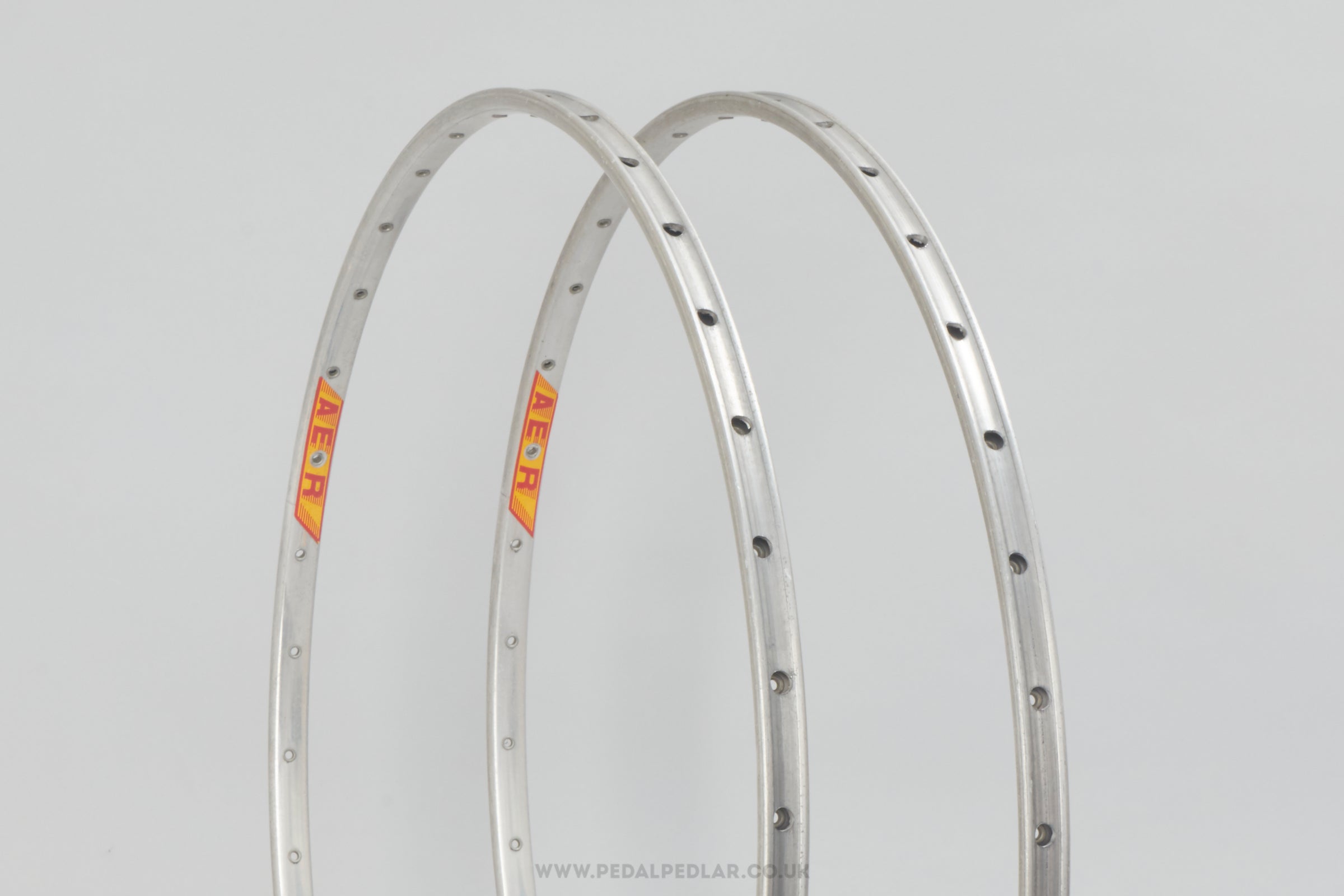


Martano AER Silver NOS Vintage 36h 28"/700c Tubular Rims
£86.25 £115.00
✓ Original pair of rims - in production from the 1970s to the 1980s
✓ New old stock! Still unused after all these years
✓ Lightweight for the era - just 915 grams
✓ Suitable for historic cycling events such as L'Eroica
✓ Worldwide shipping
Martano AER wheel rims, hailing from Italy and in production from the 1970s to the 1980s (yet still new & unused after all this time!). Made from aluminium and weighing in at 915 grams (the weight and price displayed are for a pair of rims) - pretty lightweight for a pair of rims at that time. A fine choice for keeping your vintage bike authentic, but also great for any other compatible bike.
If you're taking part in L'Eroica or a similar vintage event, these are fully compliant - so rest assured, the pre-1987 police won't lock you up for having the wrong rims!
OVERVIEW
Condition Notes - Valve holes are untidy from manufacture, some storage marks
Production Era - 1970s & 1980s
Country - Italian
Material - Aluminium
Weight - 915 g
Stock Code - D-RP20V
*New old stock items may have marks from storage over the years, and as we often have multiples they can vary from piece to piece, but they are always genuine new & unused items.
TECHNICAL INFO
Drilling - 36 Hole
Rim Size - 28"/700c Tubular
ISO Diameter - 622 mm (700c/28")
Valve Type - Presta
Rim Width (OD) - 21 mm
Rim Height - 12 mm
-
▼SHIPPING, TAXES & RETURNS
-
We've been safely sending orders around the world since 2010. Orders are carefully packed, sent with tracking & insurance, and normally collected around midday on Tuesdays and Fridays. Larger items may occasionally require an extra day or two to prepare.
We accept returns, please notify us within 14 days and ensure the item arrives back with us no later than 30 days after the order was received.
EU orders under €150 (excluding shipping) - import VAT and the new €3 customs duty are paid as part of your order, so there's nothing further to pay on delivery.
EU orders over €150 (excluding shipping) - import fees are payable to the carrier before delivery, with nothing collected at checkout.
USA orders - import fees are collected at checkout for all orders to the USA, so there won’t be any surprise charges when your order arrives.
Other international orders - local import fees may apply and are not collected by us. Please check your country's import rules before purchasing.
-
▼HELP SECTION
-
Drilling - the number of holes for the spokes.
Rim Size - the sizing given by the manufacturer, these can be confusing so we also give the ISO diameter too for clarification.
ISO Diameter - the diameter of the rim at the point where the tyre is seated (bead seat diameter). This is a universal measurement, often displayed on tyres as 28-622 or similar, 28 referring to the tyre width and 622 being the ISO diameter in millimetres.
Valve Type - presta valves are the thin ones and Schrader are the fatter ones. Schrader valve holes will also accept the older Dunlop/Woods type valves.
Rim Width (OD) - the width of the rim, measured from the outside of one wall to the other.
Rim Height - the overall height of the rim, measured to the highest point of the rim’s profile.


Martinage Annemasse TAC Blue and Yellow Large Vintage Cycling Jersey
£35.00
✓ Original vintage jersey - 1980s/90s style!
✓ Thoroughly checked & honestly graded
✓ Great alternative to buying new
✓ Worldwide shipping
Martinage Annemasse TAC cycling jersey, hailing from France and likely made in the 1980s/1990s given the style. An excellent choice for wearing on your vintage bike (or any occasion you fancy of course), and also a great alternative to buying brand new cycling kit!
The jersey’s been thoroughly checked over and graded as good condition. If there are any issues worth noting we’ll do so in the overview section below, but please take a good look at the photos so you can see the condition yourself before you buy.OVERVIEW
Condition - Good
Material - Polyester
Stock Code - U-G6-JS154V
**This is just an estimate based on the chest measurement alone so please check the actual measurements before buying, the best way to get the right fit is to compare them with those of a garment that fits well. Please use all the measurements provided as some vintage jerseys can have irregular sizing, and we find that some of the orignal size labels can be very different to the actual size.
DETAIL & MEASUREMENTS
Pit to Pit (Laid Flat) - 55 cm
Top to Bottom (Front) - 61 cm
Top to Bottom (Back) - 73 cm
Shoulder Seam to Sleeve End (Oustide) - 23 cm
Across Neck (Laid Flat) - 22 cm
Across Sleeve End (Laid Flat) - 16 cm
NB: Check the help section to see how we take these measurements, so you can get a good comparison to your own.
-
▼SHIPPING, TAXES & RETURNS
-
We've been safely sending orders around the world since 2010. Orders are carefully packed, sent with tracking & insurance, and normally collected around midday on Tuesdays and Fridays. Larger items may occasionally require an extra day or two to prepare.
We accept returns, please notify us within 14 days and ensure the item arrives back with us no later than 30 days after the order was received.
EU orders under €150 (excluding shipping) - import VAT and the new €3 customs duty are paid as part of your order, so there's nothing further to pay on delivery.
EU orders over €150 (excluding shipping) - import fees are payable to the carrier before delivery, with nothing collected at checkout.
USA orders - import fees are collected at checkout for all orders to the USA, so there won’t be any surprise charges when your order arrives.
Other international orders - local import fees may apply and are not collected by us. Please check your country's import rules before purchasing.
-
▼SAFETY & COMPLIANCE
- This product complies with the EU General Product Safety Regulation (GPSR).
EU Authorised Representative - Global Trade Department NI Ltd, Office 834, Unit 6, 100 Lisburn Road, Belfast BT9 6AG, Northern Ireland
-
▼HELP SECTION
- We've provided reference below to illustrate how we take the measurements.
Pit to Pit - this measurement is taken from the centre of one armpit to the other, across the chest with the jersey laid flat.
Top to Bottom - this will always be from the very top of the collar to the very bottom hem, we provide measurements for both the front and back, always taken with the jersey laid flat.
Shoulder Seam to Sleeve End - this measurement is taken from the shoulder seam down to the very end of the sleeve on the outside.
Across Neck - for consistency on all neck shapes we gather the front and back together and lay them flat, then measure across the stitching (as shown in the supporting photos).
Across Sleeve End - measured across the sleeve end, laid flat.
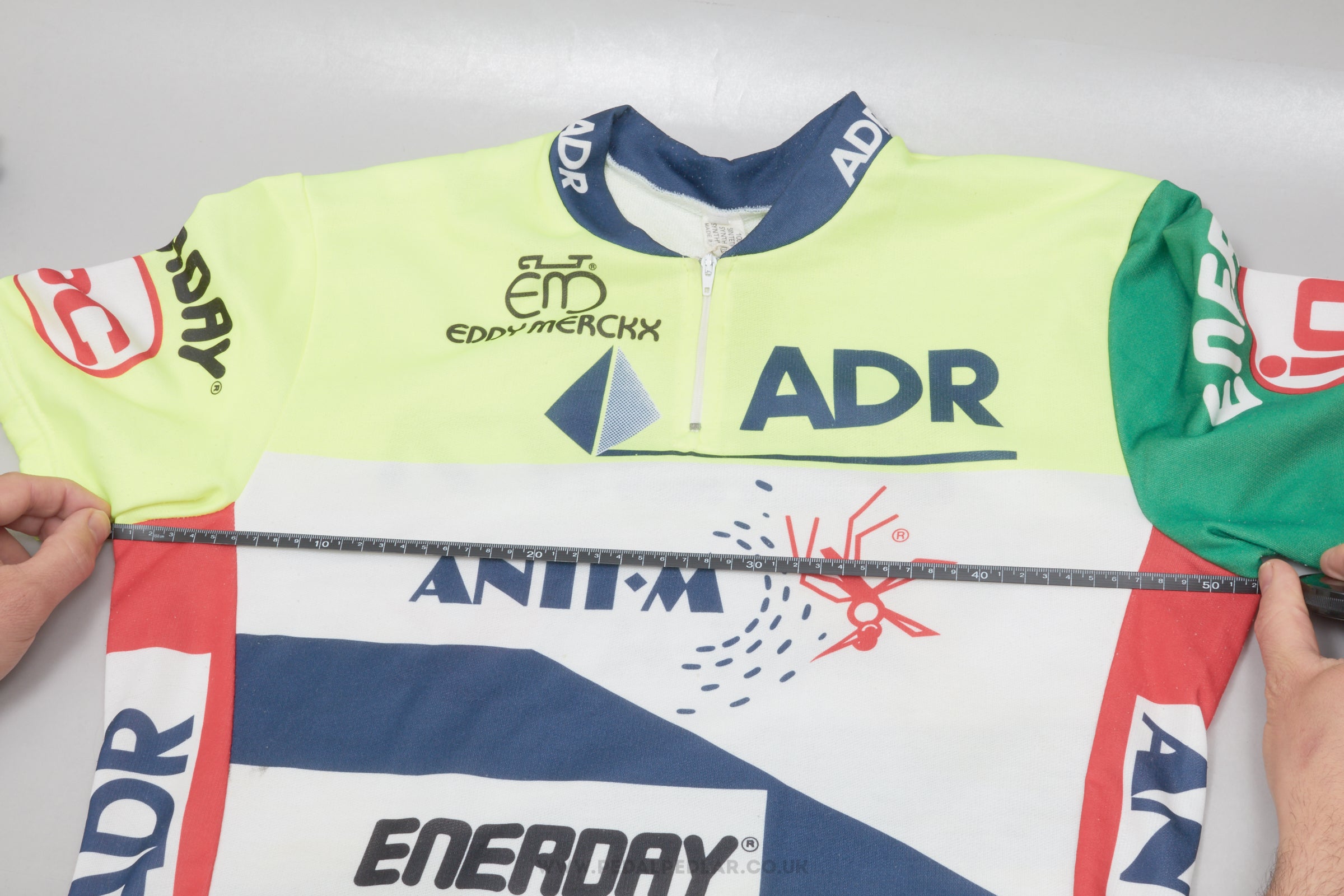
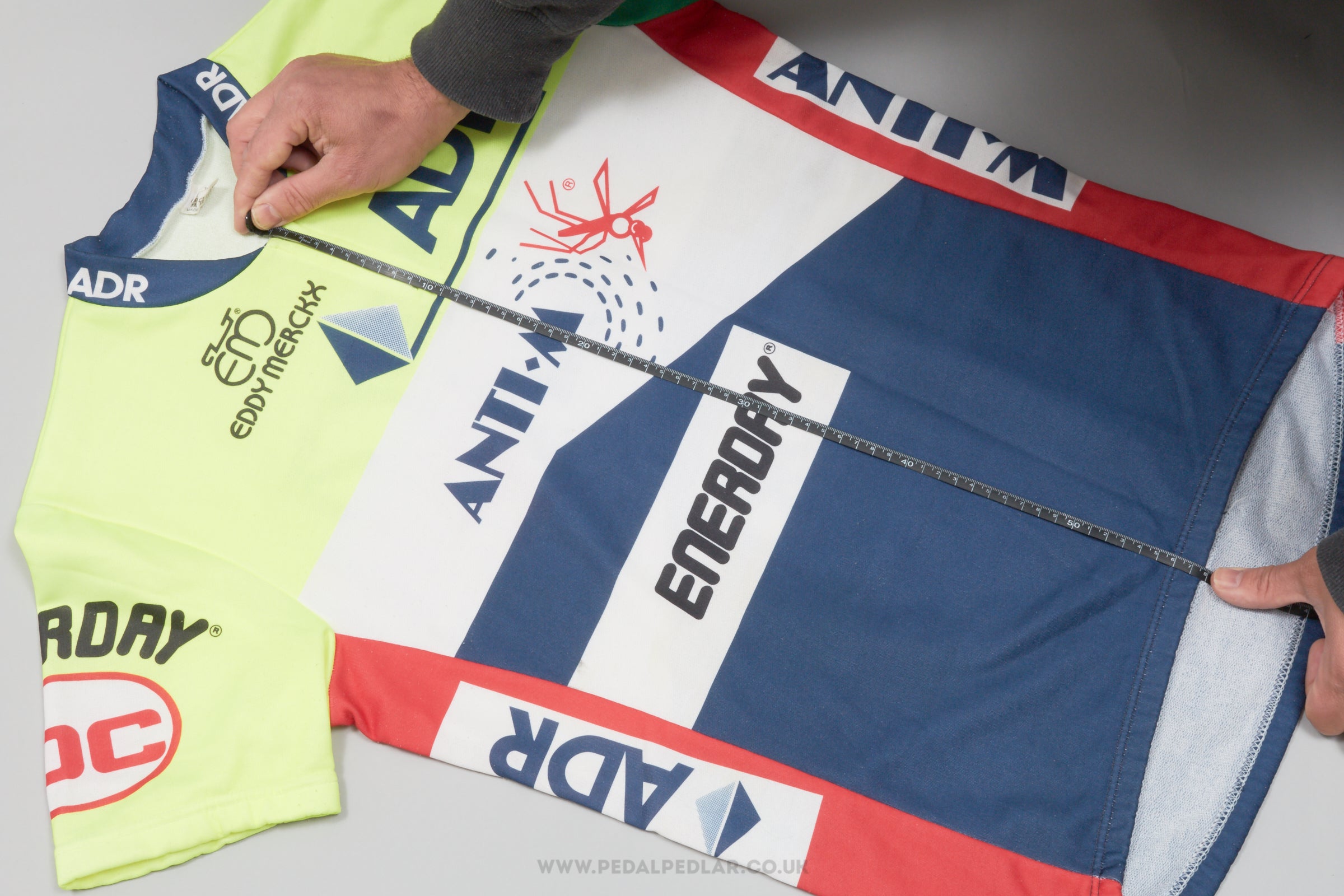
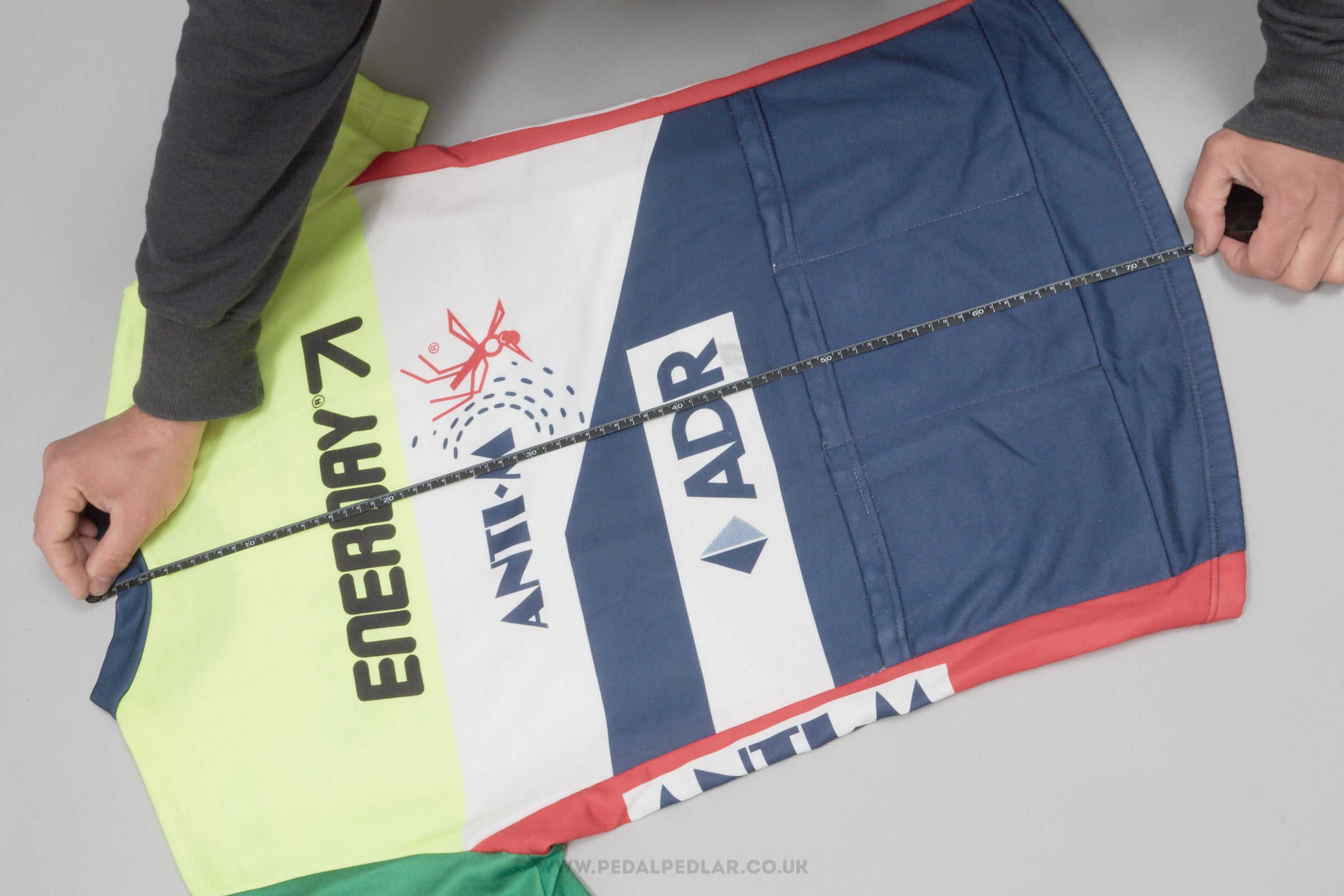
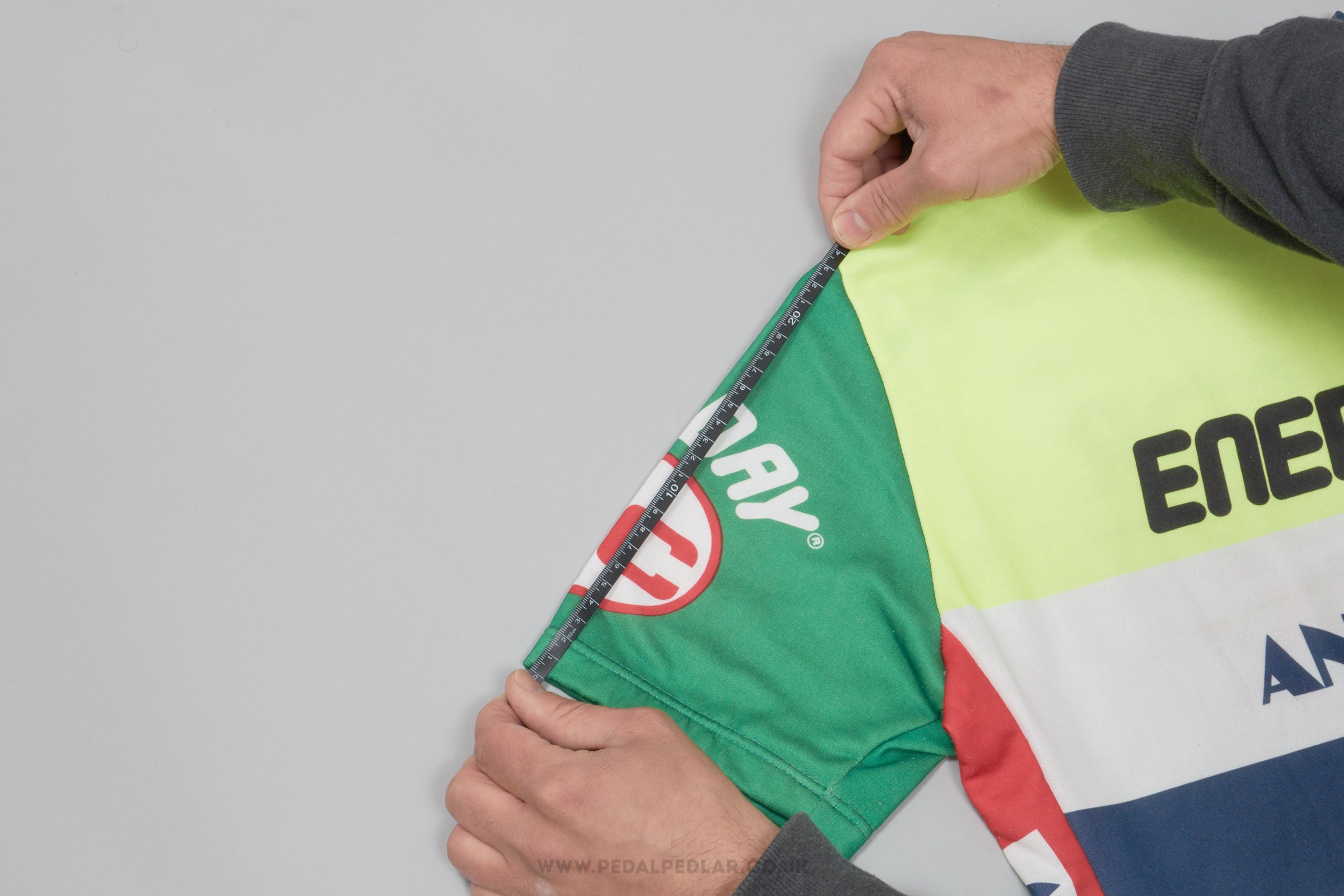


Mavic 'License Longhi' Vintage 32h 28"/700c Tubular Rim
£48.75 £65.00
✓ Original rim - produced in the 1950s
✓ Super lightweight for the era - only 370 grams!
✓ Suitable for historic cycling events such as L'Eroica
✓ Checked, cleaned & tub glue removed
✓ Worldwide shipping
Mavic 'License Longhi' rim, hailing from France and in production during the 1950s. Made from aluminium and weighing in at 370 grams - incredibly lightweight for a rim at that time. A fine choice for keeping your vintage bike authentic, but also great for any other compatible bike too.
If you're taking part in L'Eroica or a similar vintage event, this is fully compliant - so rest assured, the pre-1987 police won't lock you up for having the wrong rim!
The rim’s been throughly checked by one of our mechanics, cleaned, stubborn old tub glue removed and graded as OK condition, but do take a good look at the detailed photos so you can see the cosmetic condition before you buy.OVERVIEW
Production Era - 1950s
Country - French
Material - Aluminium
Weight - 370 g
Stock Code - U-RS89V
TECHNICAL INFO
Drilling - 32 Hole
Rim Size - 28"/700c Tubular
ISO Diameter - 622 mm (700c/28")
Valve Type - Presta
Rim Width (OD) - 21 mm
Rim Height - 11 mm
-
▼SHIPPING, TAXES & RETURNS
-
We've been safely sending orders around the world since 2010. Orders are carefully packed, sent with tracking & insurance, and normally collected around midday on Tuesdays and Fridays. Larger items may occasionally require an extra day or two to prepare.
We accept returns, please notify us within 14 days and ensure the item arrives back with us no later than 30 days after the order was received.
EU orders under €150 (excluding shipping) - import VAT and the new €3 customs duty are paid as part of your order, so there's nothing further to pay on delivery.
EU orders over €150 (excluding shipping) - import fees are payable to the carrier before delivery, with nothing collected at checkout.
USA orders - import fees are collected at checkout for all orders to the USA, so there won’t be any surprise charges when your order arrives.
Other international orders - local import fees may apply and are not collected by us. Please check your country's import rules before purchasing.
-
▼HELP SECTION
-
Drilling - the number of holes for the spokes.
Rim Size - the sizing given by the manufacturer, these can be confusing so we also give the ISO diameter too for clarification.
ISO Diameter - the diameter of the rim at the point where the tyre is seated (bead seat diameter). This is a universal measurement, often displayed on tyres as 28-622 or similar, 28 referring to the tyre width and 622 being the ISO diameter in millimetres.
Valve Type - presta valves are the thin ones and Schraeder are the fatter ones. Schraeder valve holes will also accept the older Dunlop/Woods type valves.
Rim Width (OD) - the width of the rim, measured from the outside of one wall to the other.
Rim Height - the overall height of the rim, measured to the highest point of the rim’s profile.


Mavic 305 (Zap) Vintage 1" Threaded Headset
£65.00
✓ Original part - in production from the 1980s to the 1990s
✓ Suitable for historic cycling events such as L'Eroica
✓ Professionally checked & cleaned
✓ Worldwide shipping
Mavic 305 headset, hailing from France and in production from the 1980s to the 1990s. Made from aluminum and weighing in at 116 grams - pretty lightweight for a headset at that time. A fine choice for keeping your vintage bike authentic, but also great for any other compatible bike.
If you're taking part in L'Eroica or a similar vintage event, this is fully compliant - so rest assured, the pre-1987 police won't lock you up for having the wrong headset!
The headset's been carefully cleaned, thoroughly checked by one of our mechanics and graded as very good condition, but do take a good look at the detailed photos so you can see the cosmetic condition before you buy.OVERVIEW
Bearing / Race Condition - Good
Condition Notes - Upper plastic cover is missing
Model ID - Zap
Production Era - 1980s & 1990s
Country - French
Material - Aluminum
Weight - 116 g
Stock Code - U-G1-HS164V
TECHNICAL INFO
Headset Type - 1" Threaded (ISO Standard 24 TPI)
Cup Size (OD) - 30.2 mm
Crown Race (ID) - 26.4 mm
Stack Height - 44 mm
-
▼SHIPPING, TAXES & RETURNS
-
We've been safely sending orders around the world since 2010. Orders are carefully packed, sent with tracking & insurance, and normally collected around midday on Tuesdays and Fridays. Larger items may occasionally require an extra day or two to prepare.
We accept returns, please notify us within 14 days and ensure the item arrives back with us no later than 30 days after the order was received.
EU orders under €150 (excluding shipping) - import VAT and the new €3 customs duty are paid as part of your order, so there's nothing further to pay on delivery.
EU orders over €150 (excluding shipping) - import fees are payable to the carrier before delivery, with nothing collected at checkout.
USA orders - import fees are collected at checkout for all orders to the USA, so there won’t be any surprise charges when your order arrives.
Other international orders - local import fees may apply and are not collected by us. Please check your country's import rules before purchasing.
-
▼SAFETY & COMPLIANCE
- This product complies with the EU General Product Safety Regulation (GPSR). Professional installation and regular inspections are strongly recommended. Due to the product's age, extra care should be taken during use.
Product Manufacturer - Mavic, 44 Rue Saturne, 74650 Chavanod, France
EU Authorised Representative - Global Trade Department NI Ltd, Office 834, Unit 6, 100 Lisburn Road, Belfast BT9 6AG, Northern Ireland
-
▼HELP SECTION
-
Headset Type - the 1" size relates to the outside diameter of your fork's steerer column which should measure 25.4 mm, if it's 25.0 mm your forks should be French threaded. Although it's generally recommended to match threaded parts exactly, with headsets you can technically mix and match, unless you have French or the obscure old Raleigh threads, in which case you need to stick to that type. If you're replacing an old headset the thread may be stamped on there. Oversized 1 1/8" & 1 1/4" sizes are easily identifiable due to their size and the threads are all standard. Headclip headsets were made to fit fork steerers with 1" or the reduced 31/32" size steerers, as well as 1 1/8" versions for tandems.
Cup Size (OD) - the outside diameter of the cups, this must match the inside diameter of your frame's headtube closely for a good fit. For 1" headsets this should be around 30.2 mm unless you require a JIS headset which will be 30.0 mm.
Crown Race (ID) - the inside diameter of the crown race where it sits on the fork steerer, this needs to be close to the outside diameter of your fork steerer at the base to ensure a proper fit.
Stack Height - the overall height of the headset. To check the minimum stack height you require, measure the length of your frame’s head tube & subtract this from the length of the fork steerer column. You can always add spacers if you have a little too much steerer tube but you can't fit a headset with a greater stack height than the space you have available.
For further help with 1" threaded headsets head to our journal.


Mavic 500 / 550 / GP 4 Vintage Tubular Road Wheels
£273.75 £365.00
✓ Original vintage wheels - produced in the 1970s
✓ Super lightweight for the era - only 1.8 kg (for the pair)!
✓ Professionally serviced, cleaned & tub glue removed*
✓ Worldwide shipping
Mavic 500 / 550 wheels built with Mavic GP 4 rims, the hubs hailing from France and in production during the 1970s. Made from aluminium/steel and weighing in at 1.8 kg - incredibly lightweight for a pair of wheels at that time. A fine choice for keeping your vintage bike authentic, but also great for any other compatible bike too.
The wheels have been serviced, excess glue residue removed and graded as excellent condition, but do take a good look at the detailed photos so you can see the cosmetic condition before you buy.*Heavily bonded glue residue may be left on the rims as new glue can be applied to this. If using tape please check the brand guidelines as some manufacturers recommend removing all traces of old glue, even if extremely well bonded.
OVERVIEW
Rim Condition - Very Good
Hubs - Mavic 500 / 550
Rims - Mavic GP 4
Production Era - 1970s
Material - Aluminium / Steel
Weight - 1.81 kg
Stock Code - U-W-PR77V
TECHNICAL INFO
Rim Size - 28"/700c Tubular
Bike Type - Road
Drilling (F/R) - 32/32 Hole
Spacing (O.L.D.) (F/R) - 100 mm / 126 mm
Speed - 5 Speed, 6 Speed, 7 Speed
Sprocket Fitting - Screw On (English/ISO: 1.375 x 24 TPI)
-
▼SHIPPING, TAXES & RETURNS
-
We've been safely sending orders around the world since 2010. Orders are carefully packed, sent with tracking & insurance, and normally collected around midday on Tuesdays and Fridays. Larger items may occasionally require an extra day or two to prepare.
We accept returns, please notify us within 14 days and ensure the item arrives back with us no later than 30 days after the order was received.
EU orders under €150 (excluding shipping) - import VAT and the new €3 customs duty are paid as part of your order, so there's nothing further to pay on delivery.
EU orders over €150 (excluding shipping) - import fees are payable to the carrier before delivery, with nothing collected at checkout.
USA orders - import fees are collected at checkout for all orders to the USA, so there won’t be any surprise charges when your order arrives.
Other international orders - local import fees may apply and are not collected by us. Please check your country's import rules before purchasing.
-
▼HELP SECTION
-
Rim Size - this should match the size your bike frame is designed to fit. Standard/full size tubulars only come in one wheel size, these are often referred to as 28" or 700c (sometimes even 27"). These are all the same size, the next size down is 26", so any rims larger than 26" will be standard/full size tubulars.
Bike Type - this is really just a guide, as technically any wheels can be used on any bike as long as everything's compatible. Within reason of course - we wouldn't recommend riding a set of skinny tubular road wheels down a mountain!
Drilling (F/R) - the number of spokes in each wheel (front/rear).
Spacing (O.L.D.) (F/R) - the width of the hubs measured at their widest point, from the outside of the locking end nuts (O.L.D. = Over Locknut Dimension), not including the hub axle. These measurements need to match the inside of your frame and fork’s dropouts. Steel frames can be stretched or squeezed a few mm but it's always best to avoid this if possible, aluminium or carbon frames should never be stretched.
Speed - the number of cogs the rear hub was designed to be used with.
Sprocket Fitting - for cassette hubs this refers to the spline pattern (the shape of the cogs where they slide on to the hub) and this must match the cassette you intend to use. With freewheel hubs it refers to the thread, ISO is the modern standard and is almost exactly the same as older English/British and Italian thread, allowing you to mix and match between these thread types as long as it's not going to be under extreme force, in which case it's best to stick to an exact match. Freewheel hubs with a French thread must be used with a French threaded freewheel.


Mavic 500 Vintage 36h Front Hub
£30.00 £40.00
✓ Original part - in production from the 1970s to the 1980s
✓ Suitable for historic cycling events such as L'Eroica
✓ Made in France
✓ Worldwide shipping
Mavic 500 front hub, in production from the 1970s to the 1980s. Made from aluminium/steel and weighing in at 242 grams. A fine choice for keeping your vintage bike authentic, but also great for any other compatible bike too.
If you're taking part in L'Eroica or any other vintage event, this is fully compliant - so rest assured, the pre-1987 police won't lock you up for having the wrong front hub!
The hub's been carefully cleaned, thoroughly serviced by one of our mechanics and graded as OK condition, but do take a good look at the detailed photos so you can see the cosmetic condition before you buy.OVERVIEW
Bearing / Race Condition - Mint
Production Era - 1970s & 1980s
Country - French
Material - Aluminium/Steel
Weight - 242 grams
Stock Code - U-HU-F11V
TECHNICAL INFO
Drilling - 36 Hole
Spacing (O.L.D.) - 100 mm
-
▼SHIPPING, TAXES & RETURNS
-
We've been safely sending orders around the world since 2010. Orders are carefully packed, sent with tracking & insurance, and normally collected around midday on Tuesdays and Fridays. Larger items may occasionally require an extra day or two to prepare.
We accept returns, please notify us within 14 days and ensure the item arrives back with us no later than 30 days after the order was received.
EU orders under €150 (excluding shipping) - import VAT and the new €3 customs duty are paid as part of your order, so there's nothing further to pay on delivery.
EU orders over €150 (excluding shipping) - import fees are payable to the carrier before delivery, with nothing collected at checkout.
USA orders - import fees are collected at checkout for all orders to the USA, so there won’t be any surprise charges when your order arrives.
Other international orders - local import fees may apply and are not collected by us. Please check your country's import rules before purchasing.


Mavic 500 Vintage Quick Release Skewers
£34.00 £40.00
✓ Original skewers - produced in the 1980s
✓ Suitable for historic cycling events such as L'Eroica
✓ Checked & cleaned
✓ Worldwide shipping
Mavic 500 skewers, hailing from France and in production during the 1980s. Made from steel and weighing in at 166 grams. A fine choice for keeping your vintage bike authentic, but also great for any other compatible bike too.
If you're taking part in L'Eroica or any other vintage event, these are fully compliant - so rest assured, the pre-1987 police won't lock you up for having the wrong skewers!
The skewers have been cleaned, checked by one of our mechanics and graded as OK condition, but do take a good look at the detailed photos so you can see the cosmetic condition before you buy.OVERVIEW
Production Era - 1980s
Country - French
Material - Steel
Weight - 166 g
Stock Code - U-SKW5V
TECHNICAL INFO
Skewer Type - Quick Release
Spacing* (F/R) - 113 mm / 141 mm
Threaded Section - 29 mm / 23 mm
End Nut Length - 14 mm
*See help section.
-
▼SHIPPING, TAXES & RETURNS
-
We've been safely sending orders around the world since 2010. Orders are carefully packed, sent with tracking & insurance, and normally collected around midday on Tuesdays and Fridays. Larger items may occasionally require an extra day or two to prepare.
We accept returns, please notify us within 14 days and ensure the item arrives back with us no later than 30 days after the order was received.
EU orders under €150 (excluding shipping) - import VAT and the new €3 customs duty are paid as part of your order, so there's nothing further to pay on delivery.
EU orders over €150 (excluding shipping) - import fees are payable to the carrier before delivery, with nothing collected at checkout.
USA orders - import fees are collected at checkout for all orders to the USA, so there won’t be any surprise charges when your order arrives.
Other international orders - local import fees may apply and are not collected by us. Please check your country's import rules before purchasing.
-
▼HELP SECTION
-
Skewer type - quick release skewers allow you to remove the wheel without any tools, whereas allen key and security skewers require a tool to allow the wheel to be removed.
*Spacing - this should be within a few milimetres of your frame & fork's outer dropout spacing (measured from the outside where the skewers clamp down). The measurement provided was taken with the exiting hole of the end nut flush with the end of the skewer. There will be some wiggle room to allow a narrower or wider dropout spacing to fit, we've provided the threaded section and end nut measurements to give you an indication of how much.
Threaded section - the amount of thread on the skewers for the end nut to be threaded onto.
End nut length - the total length of the nut from end to end.


Mavic 500/550 / Galli Paris Roubaix Vintage 28"/700c Tubular Road Wheels
£311.25 £415.00
✓ Original vintage wheels - produced in the 1970s
✓ Super lightweight for the era - only 1.8 kg (for the pair)!
✓ Suitable for historic cycling events such as L'Eroica
✓ Professionally checked & serviced
✓ Worldwide shipping
Mavic 500/550 wheels built with Galli Paris Roubaix rims, the hubs hailing from France and in production during the 1970s. Made from aluminium/steel and weighing in at 1.8 kg - incredibly lightweight for a pair of wheels at that time. A fine choice for keeping your vintage bike authentic, but also great for any other compatible bike too.
If you're taking part in L'Eroica or a similar vintage event, these are fully compliant - so rest assured, the pre-1987 police won't lock you up for having the wrong wheels!
The wheels have been serviced, checked by one of our mechanics and graded as mint condition, but do take a good look at the detailed photos so you can see the cosmetic condition before you buy.OVERVIEW
Rim Condition - Excellent
Production Era - 1970s
Country - French
Material - Aluminium/Steel
Weight - 1.842 kg
Stock Code - U-W-PR20V
TECHNICAL INFO
Rim Size - 28"/700c Tubular
Bike Type - Road
Drilling (F/R) - 28/28 Hole
Spacing (O.L.D.) F/R - 100 mm / 126 mm
Speed - 5 Speed, 6 Speed, 7 Speed
Sprocket Fitting - Screw On (French: 1.366 x 25.4 TPI)
-
▼SHIPPING, TAXES & RETURNS
-
We've been safely sending orders around the world since 2010. Orders are carefully packed, sent with tracking & insurance, and normally collected around midday on Tuesdays and Fridays. Larger items may occasionally require an extra day or two to prepare.
We accept returns, please notify us within 14 days and ensure the item arrives back with us no later than 30 days after the order was received.
EU orders under €150 (excluding shipping) - import VAT and the new €3 customs duty are paid as part of your order, so there's nothing further to pay on delivery.
EU orders over €150 (excluding shipping) - import fees are payable to the carrier before delivery, with nothing collected at checkout.
USA orders - import fees are collected at checkout for all orders to the USA, so there won’t be any surprise charges when your order arrives.
Other international orders - local import fees may apply and are not collected by us. Please check your country's import rules before purchasing.


Mavic 610 RD/URD (610 002) Vintage Bottom Bracket Lockring
£15.00
✓ Original BB lockring - in production from the 1980s to the 1990s
✓ Suitable for historic cycling events such as L'Eroica
✓ Checked & cleaned
✓ Worldwide shipping
Mavic 610 RD/URD bottom bracket lockring (or locking ring if you prefer), hailing from France and in production from the 1980s to the 1990s. Made from magnesium and weighing in at 18 grams. A fine choice for keeping your vintage bike authentic, but also great for any other compatible bike.
If you're taking part in L'Eroica or any other vintage event, this is fully compliant - so rest assured, the pre-1987 police won't lock you up for having the wrong lockring
The lockring's been checked, cleaned and graded as good condition, but do take a good look at the detailed photos so you can see the cosmetic condition before you buy.OVERVIEW
Model ID - 610 002
Production Era - 1980s & 1990s
Country - French
Material - Magnesium
Weight - 18 g
Stock Code - U-G5-BB-L1V
TECHNICAL INFO
Bottom Bracket Thread Type - Threadless (Mavic)
Thread Direction - Right
Thickness - 7 mm
-
▼SHIPPING, TAXES & RETURNS
-
We've been safely sending orders around the world since 2010. Orders are carefully packed, sent with tracking & insurance, and normally collected around midday on Tuesdays and Fridays. Larger items may occasionally require an extra day or two to prepare.
We accept returns, please notify us within 14 days and ensure the item arrives back with us no later than 30 days after the order was received.
EU orders under €150 (excluding shipping) - import VAT and the new €3 customs duty are paid as part of your order, so there's nothing further to pay on delivery.
EU orders over €150 (excluding shipping) - import fees are payable to the carrier before delivery, with nothing collected at checkout.
USA orders - import fees are collected at checkout for all orders to the USA, so there won’t be any surprise charges when your order arrives.
Other international orders - local import fees may apply and are not collected by us. Please check your country's import rules before purchasing.
-
▼SAFETY & COMPLIANCE
- This product complies with the EU General Product Safety Regulation (GPSR). Due to the product's age, extra care should be taken during installation and use.
Product Manufacturer - Mavic, 44 Rue Saturne, 74650 Chavanod, France
EU Authorised Representative - Global Trade Department NI Ltd, Office 834, Unit 6, 100 Lisburn Road, Belfast BT9 6AG, Northern Ireland
-
▼HELP SECTION
-
Bottom Bracket Thread Type - this must match the thread of your bottom bracket for the lockring to fit.
Thread Direction - most bottom brackets only have an adjustable cup on the non-driveside of the bike, so lockrings mostly thread to the right (clockwise), regardless of the thread type. However, some bottom brackets have adjustable cups on both sides so the thread direction may be different.
Thickness - this is rounded to the nearest 0.5 mm.


Mavic 610 RD/URD (610 002) Vintage Bottom Bracket Lockring
£17.50
✓ Original BB lockring - in production from the 1980s to the 1990s
✓ Suitable for historic cycling events such as L'Eroica
✓ Checked & cleaned
✓ Worldwide shipping
Mavic 610 RD/URD bottom bracket lockring (or locking ring if you prefer), hailing from France and in production from the 1980s to the 1990s. Made from magnesium and weighing in at 18 grams. A fine choice for keeping your vintage bike authentic, but also great for any other compatible bike.
If you're taking part in L'Eroica or any other vintage event, this is fully compliant - so rest assured, the pre-1987 police won't lock you up for having the wrong lockring
The lockring's been checked, cleaned and graded as very good condition, but do take a good look at the detailed photos so you can see the cosmetic condition before you buy.OVERVIEW
Model ID - 610 002
Production Era - 1980s & 1990s
Country - French
Material - Magnesium
Weight - 18 g
Stock Code - U-G5-BB-L2V
TECHNICAL INFO
Bottom Bracket Thread Type - Threadless (Mavic)
Thread Direction - Right
Thickness - 7 mm
-
▼SHIPPING, TAXES & RETURNS
-
We've been safely sending orders around the world since 2010. Orders are carefully packed, sent with tracking & insurance, and normally collected around midday on Tuesdays and Fridays. Larger items may occasionally require an extra day or two to prepare.
We accept returns, please notify us within 14 days and ensure the item arrives back with us no later than 30 days after the order was received.
EU orders under €150 (excluding shipping) - import VAT and the new €3 customs duty are paid as part of your order, so there's nothing further to pay on delivery.
EU orders over €150 (excluding shipping) - import fees are payable to the carrier before delivery, with nothing collected at checkout.
USA orders - import fees are collected at checkout for all orders to the USA, so there won’t be any surprise charges when your order arrives.
Other international orders - local import fees may apply and are not collected by us. Please check your country's import rules before purchasing.
-
▼SAFETY & COMPLIANCE
- This product complies with the EU General Product Safety Regulation (GPSR). Due to the product's age, extra care should be taken during installation and use.
Product Manufacturer - Mavic, 44 Rue Saturne, 74650 Chavanod, France
EU Authorised Representative - Global Trade Department NI Ltd, Office 834, Unit 6, 100 Lisburn Road, Belfast BT9 6AG, Northern Ireland
-
▼HELP SECTION
-
Bottom Bracket Thread Type - this must match the thread of your bottom bracket for the lockring to fit.
Thread Direction - most bottom brackets only have an adjustable cup on the non-driveside of the bike, so lockrings mostly thread to the right (clockwise), regardless of the thread type. However, some bottom brackets have adjustable cups on both sides so the thread direction may be different.
Thickness - this is rounded to the nearest 0.5 mm.


Mavic 640 SSC Vintage Quill Road Pedals
£135.00 £150.00
✓ Original pedals - produced in the 1980s
✓ Suitable for historic cycling events such as L'Eroica
✓ Professionally checked & cleaned
✓ Worldwide shipping
Mavic 640 SSC pedals (or peddles if you prefer), hailing from France and in production during the 1980s. Made from aluminium and weighing in at 344 grams - pretty lightweight for pedals at that time. A fine choice for keeping your vintage bike authentic, but also great for any other compatible bike.
If you're taking part in L'Eroica, Anjou Velo, Velo Retro or another similar vintage cycling event, this is fully compliant - so rest assured, the pre-1987 police won't lock you up for having the wrong pedals!
The pedals have been carefully cleaned, thoroughly checked by one of our mechanics and graded as good condition, but do take a good look at the detailed photos so you can see the cosmetic condition before you buy.OVERVIEW
Bearing/Race Condition - Excellent
Production Era - 1980s
Country - French
Material - Aluminium
Weight - 344 g
Stock Code - U-PD101V
TECHNICAL INFO
Pedal Type - Quill Road
Pedal Threads - Standard (9/16" x 20 TPI)
-
▼SHIPPING, TAXES & RETURNS
-
We've been safely sending orders around the world since 2010. Orders are carefully packed, sent with tracking & insurance, and normally collected around midday on Tuesdays and Fridays. Larger items may occasionally require an extra day or two to prepare.
We accept returns, please notify us within 14 days and ensure the item arrives back with us no later than 30 days after the order was received.
EU orders under €150 (excluding shipping) - import VAT and the new €3 customs duty are paid as part of your order, so there's nothing further to pay on delivery.
EU orders over €150 (excluding shipping) - import fees are payable to the carrier before delivery, with nothing collected at checkout.
USA orders - import fees are collected at checkout for all orders to the USA, so there won’t be any surprise charges when your order arrives.
Other international orders - local import fees may apply and are not collected by us. Please check your country's import rules before purchasing.
-
▼HELP SECTION
-
Pedal Type - this is just a guide to give you an idea of the pedal type, but any pedal can technically be used for any purpose. Track pedals are designed without the pointed 'quill' for safety though, so it's best to only use track pedals for this purpose. Most track pedals, along with quill & aero road pedals are designed to be used with toe clips & straps for best performance.
Pedal Threads - this must match the thread on your cranks. Sometimes it's stamped on the end of the crank arm, but most bikes use a standard thread of 9/16” x 20 tpi. The exceptions being older French bikes, bikes with cheaper one-piece type chainsets and Shimano’s Dyna Drive system (easily identifiable as the pedal holes are about an inch wide!).


Mavic Composite Classic Quick Release Rear Skewer
£21.25 £25.00
✓ Original skewer - produced in the 2000s
✓ Checked & cleaned
✓ Worldwide shipping
Mavic rear skewer, hailing from France and in production during the 2000s. Made from steel/composite and weighing in at 55 grams. A fine choice for keeping your classic bike authentic, but also great for any other compatible bike too.
The skewer's been cleaned, checked by one of our mechanics and graded as good condition, but do take a good look at the detailed photos so you can see the cosmetic condition before you buy.OVERVIEW
Production Era - 2000s
Country - French
Material - Steel / Composite
Weight - 55 g
Stock Code - U-SKW-R37C
TECHNICAL INFO
Skewer Type - Quick Release
Spacing* - 141 mm
Threaded Section - 27 mm
End Nut Length - 18 mm
*See help section.
-
▼SHIPPING, TAXES & RETURNS
-
We've been safely sending orders around the world since 2010. Orders are carefully packed, sent with tracking & insurance, and normally collected around midday on Tuesdays and Fridays. Larger items may occasionally require an extra day or two to prepare.
We accept returns, please notify us within 14 days and ensure the item arrives back with us no later than 30 days after the order was received.
EU orders under €150 (excluding shipping) - import VAT and the new €3 customs duty are paid as part of your order, so there's nothing further to pay on delivery.
EU orders over €150 (excluding shipping) - import fees are payable to the carrier before delivery, with nothing collected at checkout.
USA orders - import fees are collected at checkout for all orders to the USA, so there won’t be any surprise charges when your order arrives.
Other international orders - local import fees may apply and are not collected by us. Please check your country's import rules before purchasing.
-
▼HELP SECTION
-
Skewer type - quick release skewers allow you to remove the wheel without any tools, whereas allen key and security skewers require a tool to allow the wheel to be removed.
*Spacing - this should be within a few milimetres of your frame's outer dropout spacing (measured from the outside where the skewers clamp down). The measurement provided was taken with the exiting hole of the end nut flush with the end of the skewer. There will be some wiggle room to allow a narrower or wider dropout spacing to fit, we've provided the threaded section and end nut measurements to give you an indication of how much.
Threaded section - the amount of thread on the skewers for the end nut to be threaded onto.
End nut length - the total length of the nut from end to end.

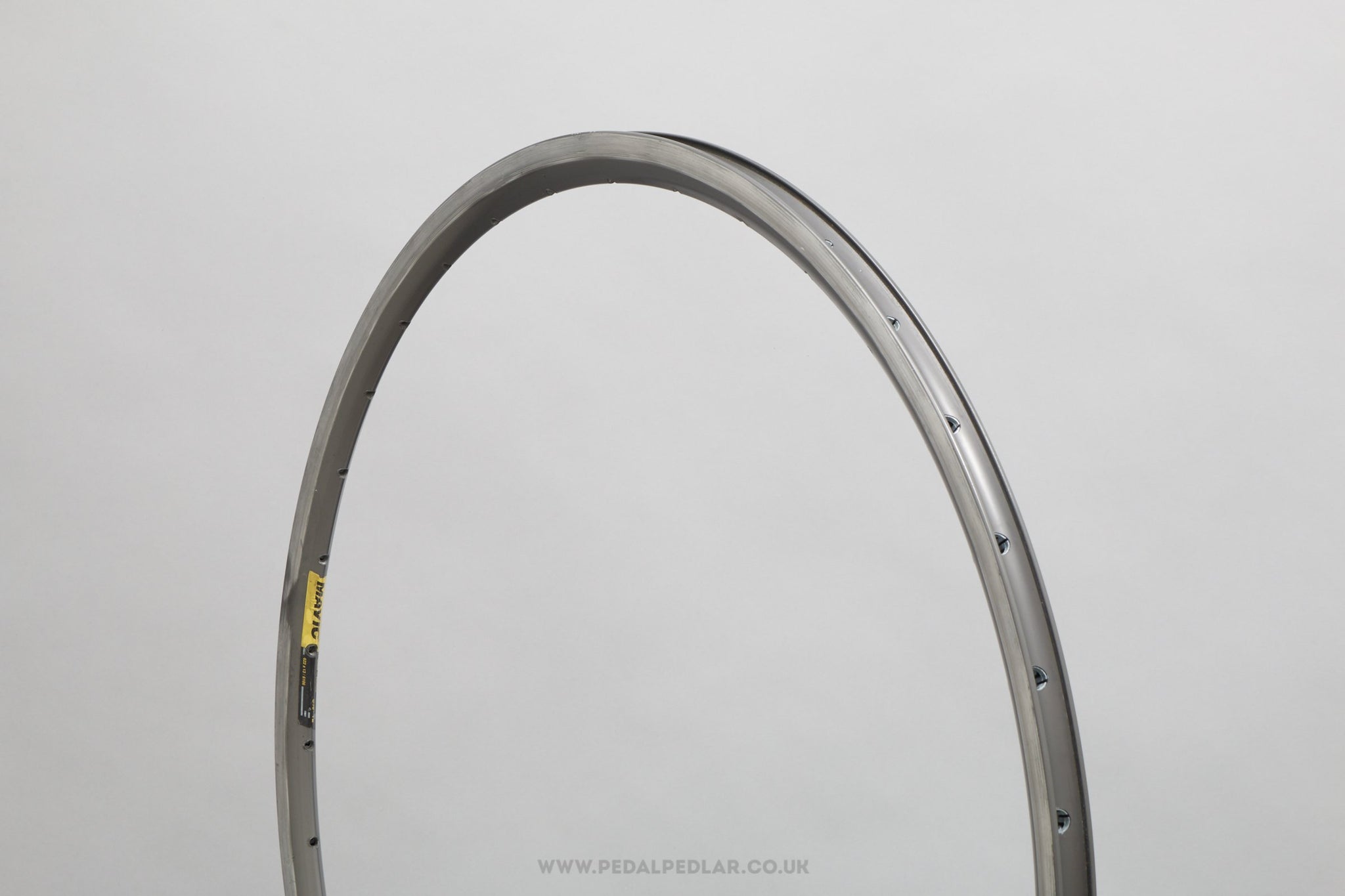


Mavic CXP12 Classic 36h 700c Clincher Rim
£30.00 £40.00
✓ Original part - produced in the 1990s
✓ Professionally checked & cleaned
✓ Worldwide shipping
Mavic CXP12 rim, hailing from France and in production during the 1990s. Made from aluminium and weighing in at 514 grams. A fine choice for keeping your classic bike authentic, but also great for any other compatible bike too.
The rim's been carefully cleaned, thoroughly checked by one of our mechanics and graded as good condition, but do take a good look at the detailed photos so you can see the cosmetic condition before you buy.OVERVIEW
Production Era - 1990s
Country - French
Material - Aluminium
Weight - 514 grams
Stock Code - U-RS21C
TECHNICAL INFO
Drilling - 36 Hole
Rim Size - 700c Clincher
ISO Diameter - 622 mm
Valve Type - Presta
Rim Width (OD) - 20 mm
Rim Height - 24 mm
-
▼SHIPPING, TAXES & RETURNS
-
We've been safely sending orders around the world since 2010. Orders are carefully packed, sent with tracking & insurance, and normally collected around midday on Tuesdays and Fridays. Larger items may occasionally require an extra day or two to prepare.
We accept returns, please notify us within 14 days and ensure the item arrives back with us no later than 30 days after the order was received.
EU orders under €150 (excluding shipping) - import VAT and the new €3 customs duty are paid as part of your order, so there's nothing further to pay on delivery.
EU orders over €150 (excluding shipping) - import fees are payable to the carrier before delivery, with nothing collected at checkout.
USA orders - import fees are collected at checkout for all orders to the USA, so there won’t be any surprise charges when your order arrives.
Other international orders - local import fees may apply and are not collected by us. Please check your country's import rules before purchasing.


Mavic GEL 280 NOS Vintage 36h 28"/700c Tubular Rim
£56.25 £75.00
✓ Original rim - produced in the 1980s
✓ New old stock! Still unused after all these years
✓ Super lightweight for the era - only 310 grams!
✓ Suitable for historic cycling events such as L'Eroica
✓ Worldwide shipping
Mavic GEL 280 rim, hailing from France and in production during the 1980s (yet still new & unused after all this time!). Made from aluminium and weighing in at 310 grams - incredibly lightweight for a rim at that time. A fine choice for keeping your vintage bike authentic, but also great for any other compatible bike too.
If you're taking part in L'Eroica or a similar vintage event, this is fully compliant - so rest assured, the pre-1987 police won't lock you up for having the wrong rim!
OVERVIEW
Production Era - 1980s
Country - French
Material - Aluminium
Weight - 310 g
Stock Code - D-RS61V
*New old stock items may have marks from storage over the years, and as we often have multiples they can vary from piece to piece, but they are always genuine new & unused items.
TECHNICAL INFO
Drilling - 36 Hole
Rim Size - 28"/700c Tubular
ISO Diameter - 622 mm (700c/28")
Valve Type - Presta
Rim Width (OD) - 20.5 mm
Rim Height - 12 mm
-
▼SHIPPING, TAXES & RETURNS
-
We've been safely sending orders around the world since 2010. Orders are carefully packed, sent with tracking & insurance, and normally collected around midday on Tuesdays and Fridays. Larger items may occasionally require an extra day or two to prepare.
We accept returns, please notify us within 14 days and ensure the item arrives back with us no later than 30 days after the order was received.
EU orders under €150 (excluding shipping) - import VAT and the new €3 customs duty are paid as part of your order, so there's nothing further to pay on delivery.
EU orders over €150 (excluding shipping) - import fees are payable to the carrier before delivery, with nothing collected at checkout.
USA orders - import fees are collected at checkout for all orders to the USA, so there won’t be any surprise charges when your order arrives.
Other international orders - local import fees may apply and are not collected by us. Please check your country's import rules before purchasing.
-
▼HELP SECTION
-
Drilling - the number of holes for the spokes.
Rim Size - the sizing given by the manufacturer, these can be confusing so we also give the ISO diameter too for clarification.
ISO Diameter - the diameter of the rim at the point where the tyre is seated (bead seat diameter). This is a universal measurement, often displayed on tyres as 28-622 or similar, 28 referring to the tyre width and 622 being the ISO diameter in millimetres.
Valve Type - presta valves are the thin ones and Schraeder are the fatter ones. Schraeder valve holes will also accept the older Dunlop/Woods type valves.
Rim Width (OD) - the width of the rim, measured from the outside of one wall to the other.
Rim Height - the overall height of the rim, measured to the highest point of the rim’s profile.


Mavic GL330 Red Label Vintage 36h 28"/700c Tubular Rims
£75.00 £100.00
✓ Original rims - in production from the 1970s to the 1980s
✓ Super lightweight for the era - only 712 grams (for the pair)!
✓ Suitable for historic cycling events such as L'Eroica
✓ Checked, cleaned & tub glue removed
✓ Worldwide shipping
Mavic GL330 rims, hailing from France and in production from the 1970s to the 1980s. Made from aluminium and weighing in at 712 grams (for the pair) - incredibly lightweight for a pair of rims at that time. A fine choice for keeping your vintage bike authentic, but also great for any other compatible bike too.
If you're taking part in L'Eroica or a similar vintage event, these are fully compliant - so rest assured, the pre-1987 police won't lock you up for having the wrong rims!
The rims have been throughly checked by one of our mechanics, cleaned, stubborn old tub glue removed and graded as good condition, but do take a good look at the detailed photos so you can see the cosmetic condition before you buy.OVERVIEW
Production Era - 1970s & 1980s
Country - French
Material - Aluminium
Weight - 712 kg
Stock Code - U-RP10V
TECHNICAL INFO
Drilling - 36 Hole
Rim Size - 28"/700c Tubular
ISO Diameter - 622 mm (700c/28")
Valve Type - Presta
Rim Width (OD) - 20.5 mm
Rim Height - 12 mm
-
▼SHIPPING, TAXES & RETURNS
-
We've been safely sending orders around the world since 2010. Orders are carefully packed, sent with tracking & insurance, and normally collected around midday on Tuesdays and Fridays. Larger items may occasionally require an extra day or two to prepare.
We accept returns, please notify us within 14 days and ensure the item arrives back with us no later than 30 days after the order was received.
EU orders under €150 (excluding shipping) - import VAT and the new €3 customs duty are paid as part of your order, so there's nothing further to pay on delivery.
EU orders over €150 (excluding shipping) - import fees are payable to the carrier before delivery, with nothing collected at checkout.
USA orders - import fees are collected at checkout for all orders to the USA, so there won’t be any surprise charges when your order arrives.
Other international orders - local import fees may apply and are not collected by us. Please check your country's import rules before purchasing.
-
▼HELP SECTION
-
Drilling - the number of holes for the spokes.
Rim Size - the sizing given by the manufacturer, these can be confusing so we also give the ISO diameter too for clarification.
ISO Diameter - the diameter of the rim at the point where the tyre is seated (bead seat diameter). This is a universal measurement, often displayed on tyres as 28-622 or similar, 28 referring to the tyre width and 622 being the ISO diameter in millimetres.
Valve Type - presta valves are the thin ones and Schraeder are the fatter ones. Schraeder valve holes will also accept the older Dunlop/Woods type valves.
Rim Width (OD) - the width of the rim, measured from the outside of one wall to the other.
Rim Height - the overall height of the rim, measured to the highest point of the rim’s profile.


Mavic GP4 (Red Label) NOS Vintage 40h 28"/700c Tubular Rim
£75.00
✓ Original rim - in production from the 1970s to the 1980s
✓ New old stock! Still unused after all these years
✓ Lightweight for the era - just 414 grams
✓ Suitable for historic cycling events such as L'Eroica
✓ Worldwide shipping
Mavic GP4 rim, hailing from France and in production from the 1970s to the 1980s (yet still new & unused after all this time!). Made from aluminium and weighing in at 414 grams - pretty lightweight for a rim at that time. A fine choice for keeping your vintage bike authentic, but also great for any other compatible bike too.
If you're taking part in L'Eroica or a similar vintage event, this is fully compliant - so rest assured, the pre-1987 police won't lock you up for having the wrong rim!
OVERVIEW
Production Era - 1970s & 1980s
Country - French
Material - Aluminium
Weight - 414 g
Stock Code - D-RS63V
*New old stock items may have marks from storage over the years, and as we often have multiples they can vary from piece to piece, but they are always genuine new & unused items.
TECHNICAL INFO
Drilling - 40 Hole
Rim Size - 28"/700c Tubular
ISO Diameter - 622 mm (700c/28")
Valve Type - Presta
Rim Width (OD) - 20 mm
Rim Height - 12.5 mm
-
▼SHIPPING, TAXES & RETURNS
-
We've been safely sending orders around the world since 2010. Orders are carefully packed, sent with tracking & insurance, and normally collected around midday on Tuesdays and Fridays. Larger items may occasionally require an extra day or two to prepare.
We accept returns, please notify us within 14 days and ensure the item arrives back with us no later than 30 days after the order was received.
EU orders under €150 (excluding shipping) - import VAT and the new €3 customs duty are paid as part of your order, so there's nothing further to pay on delivery.
EU orders over €150 (excluding shipping) - import fees are payable to the carrier before delivery, with nothing collected at checkout.
USA orders - import fees are collected at checkout for all orders to the USA, so there won’t be any surprise charges when your order arrives.
Other international orders - local import fees may apply and are not collected by us. Please check your country's import rules before purchasing.


Mavic GP4 Red Label Vintage 36h 28"/700c Tubular Rim
£37.50 £50.00
✓ Original rim - in production from the 1970s to the 1980s
✓ Lightweight for the era - just 425 grams
✓ Suitable for historic cycling events such as L'Eroica
✓ Checked, cleaned & tub glue removed
✓ Worldwide shipping
Mavic GP4 rim, hailing from France and in production from the 1970s to the 1980s. Made from aluminium and weighing in at 425 grams - pretty lightweight for a rim at that time. A fine choice for keeping your vintage bike authentic, but also great for any other compatible bike too.
If you're taking part in L'Eroica or a similar vintage event, this is fully compliant - so rest assured, the pre-1987 police won't lock you up for having the wrong rim!
The rim’s been throughly checked by one of our mechanics, cleaned, stubborn old tub glue removed and graded as good condition, but do take a good look at the detailed photos so you can see the cosmetic condition before you buy.OVERVIEW
Production Era - 1970s & 1980s
Country - French
Material - Aluminium
Weight - 425 g
Stock Code - U-RS94V
TECHNICAL INFO
Drilling - 36 Hole
Rim Size - 28"/700c Tubular
ISO Diameter - 622 mm (700c/28")
Valve Type - Presta
Rim Width (OD) - 20 mm
Rim Height - 12 mm
-
▼SHIPPING, TAXES & RETURNS
-
We've been safely sending orders around the world since 2010. Orders are carefully packed, sent with tracking & insurance, and normally collected around midday on Tuesdays and Fridays. Larger items may occasionally require an extra day or two to prepare.
We accept returns, please notify us within 14 days and ensure the item arrives back with us no later than 30 days after the order was received.
EU orders under €150 (excluding shipping) - import VAT and the new €3 customs duty are paid as part of your order, so there's nothing further to pay on delivery.
EU orders over €150 (excluding shipping) - import fees are payable to the carrier before delivery, with nothing collected at checkout.
USA orders - import fees are collected at checkout for all orders to the USA, so there won’t be any surprise charges when your order arrives.
Other international orders - local import fees may apply and are not collected by us. Please check your country's import rules before purchasing.
-
▼HELP SECTION
-
Drilling - the number of holes for the spokes.
Rim Size - the sizing given by the manufacturer, these can be confusing so we also give the ISO diameter too for clarification.
ISO Diameter - the diameter of the rim at the point where the tyre is seated (bead seat diameter). This is a universal measurement, often displayed on tyres as 28-622 or similar, 28 referring to the tyre width and 622 being the ISO diameter in millimetres.
Valve Type - presta valves are the thin ones and Schraeder are the fatter ones. Schraeder valve holes will also accept the older Dunlop/Woods type valves.
Rim Width (OD) - the width of the rim, measured from the outside of one wall to the other.
Rim Height - the overall height of the rim, measured to the highest point of the rim’s profile.